


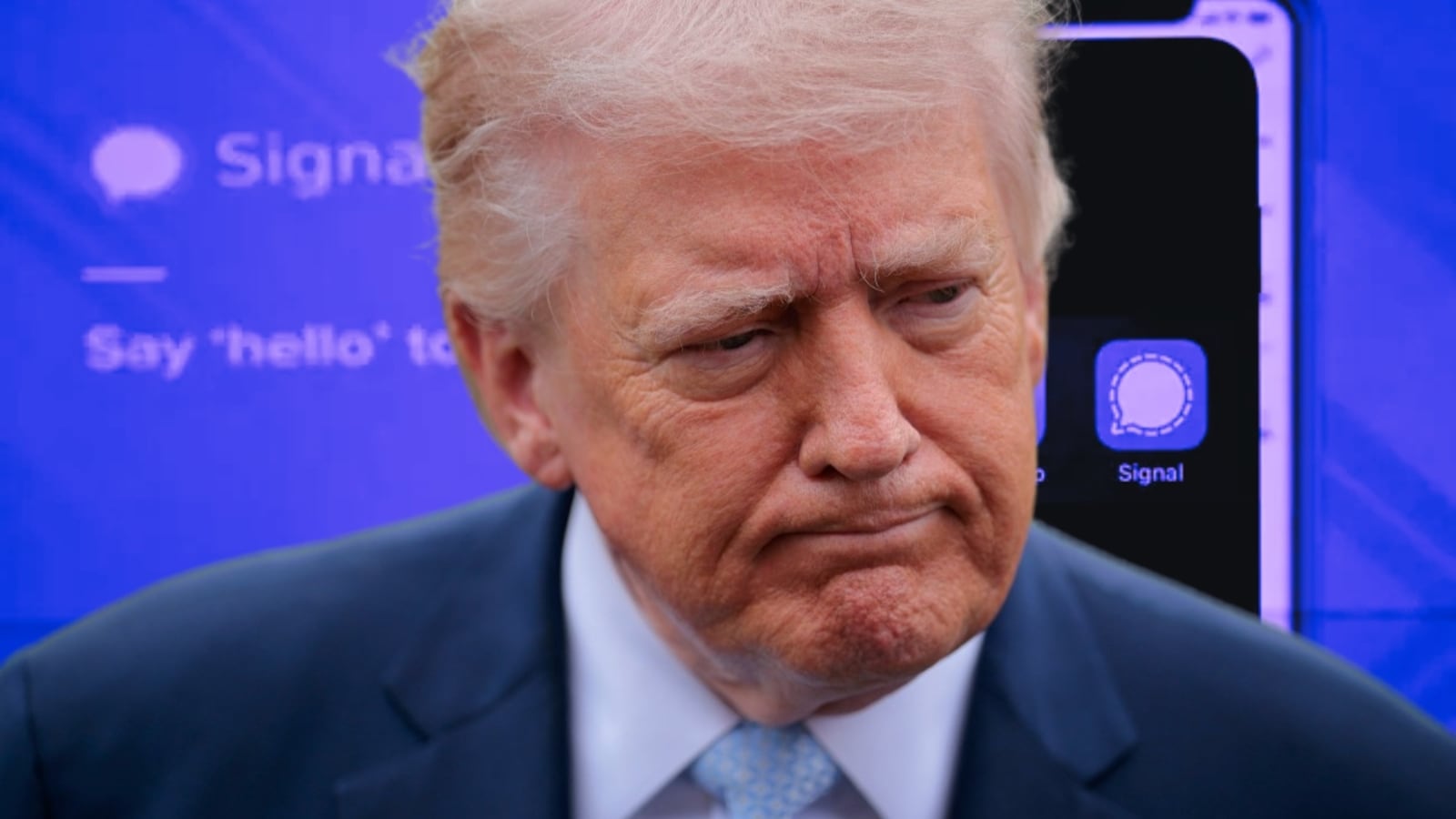
Months after a major Signal leak embarrassed his own government, President Trump had a message for his team: drop the app. New documents show that message went unheard, with officials still using the app, some in groups set to wipe themselves clean within hours.
It all started last year, when top US national security officials accidentally added a journalist, The Atlantic’s editor-in-chief Jeffrey Goldberg, to a Signal group where they were discussing war plans. Weeks later, in the Oval Office, Trump tried to put the episode to rest. “I think we learned, maybe don’t use Signal, okay?” he said on 24 April. “If you want to know the truth, I would frankly tell these people not to use Signal.”
Chats Continued Anyway
His own officials had other ideas. Just ten days after that comment, Mauricio Claver-Carone, then the US special envoy for Latin America, was messaging on Signal with Secretary of State Marco Rubio and Rubio’s then counsellor, Mike Needham, in a group named “MMM”. The three had been talking on the app since at least 15 April.
The State Department released the chat last week, recovered from Rubio and Needham’s phones, after a legal challenge by the campaign group Democracy Forward under freedom of information rules. The release covers 13 Signal chats from the first half of 2025 that had never been made public before.
The screenshots don’t say much about when these groups were formed or what was actually discussed. But they do show who was in them, and the list is longer than anyone realised. Among the group names uncovered were “Iran/Ukraine Planning” and “State USAID”.
The findings raise a bigger question — did Trump officials break the rules that require government conversations to be kept on record? One screenshot from Rubio’s phone shows that Dan Caine, the top US military officer as Chairman of the Joint Chiefs of Staff, ran a Signal group with Defence Secretary Pete Hegseth and Rubio that was set to auto-delete messages after just eight hours.
Another chat, with 17 people in it, including Hegseth, Vice President JD Vance and Commerce Secretary Howard Lutnick, was set to disappear after a week. A third group, involving someone known only as “TB”, had the same setting.
Why Signal Raises Concerns For Government Use
Signal is generally considered one of the safest messaging apps around. It encrypts messages so thoroughly that even the company behind it cannot read them, and it comes with an easy auto-delete tool. The catch is that it isn’t approved for classified government business.
Officials have stood by their use of the app regardless. White House Communications Director Steven Cheung said on 1 May 2025 that “Signal is an approved app that is loaded onto our government phones.”
Back in June last year, a US judge, James Boasberg, ordered Rubio, who at the time also held the role of acting US archivist, to try to recover any messages that might have been lost through use of these apps. This was part of a separate legal fight over the original leaked chat involving Goldberg.
Government lawyers couldn’t confirm to the court that every Signal message had been saved, which led the judge to conclude it was likely some had been improperly deleted. After his ruling, officials said new software had been added to government phones to stop that happening again.
By July, the State Department was telling the court that Rubio himself “does not use the auto-delete functions in third party messaging applications when sending communications that may include federal records.”
Around the same time, the department began rolling out software called LeapXpert on senior officials’ phones, designed to capture Signal messages even when they’re set to vanish. The company markets itself as turning Signal into a “government-grade communication channel” that helps organisations stay on the right side of record-keeping law.



