


New Delhi:
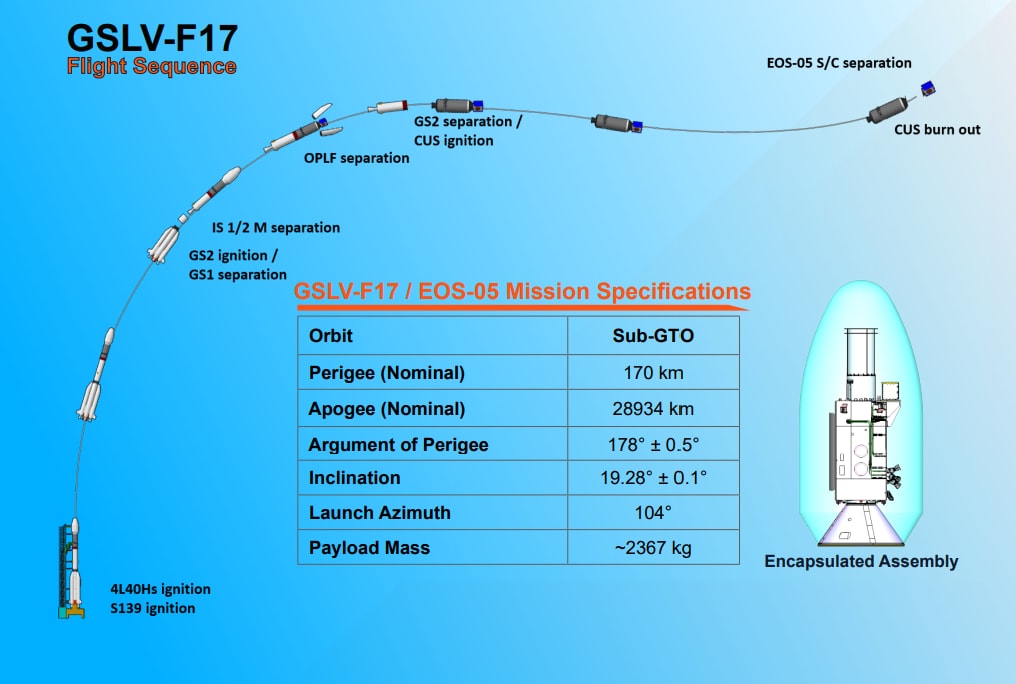
The Indian Space Research Organisation (ISRO) on Friday successfully launched its advanced Earth observation satellite EOS-05 aboard the GSLV-F17 rocket from the Satish Dhawan Space Centre in Andhra Pradesh’s Sriharikota, marking another milestone for India’s Geosynchronous Satellite Launch Vehicle programme. ISRO said GSLV-F17 successfully accomplished its mission by placing EOS-05 into the intended Sub-Geosynchronous Transfer Orbit (Sub-GTO).

GSLV-F17 is the 19th flight of India’s Geosynchronous Satellite Launch Vehicle (GSLV). The rocket is configured with a 4-metre-diameter ogive composite payload fairing.
What Is EOS-05?
EOS-05 is a state-of-the-art Earth observation spacecraft and India’s first imaging satellite to operate from geosynchronous orbit.
GSLV-F17 Vehicle Characteristics
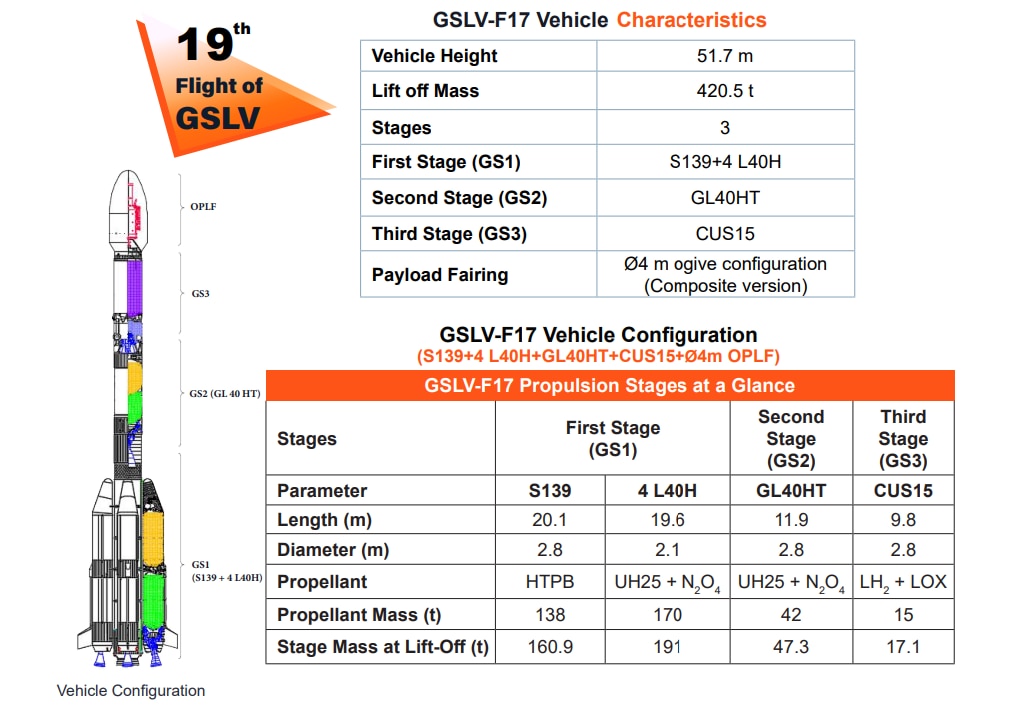
The 51.7-metre GSLV-F17 lifted off from the Second Launch Pad at Satish Dhawan Space Centre at 2:55 am after a 27.5-hour countdown.
The three-stage launch vehicle performed as expected and placed EOS-05 into the designated Sub-GTO.
The approximately 2,367-kg satellite will now undergo a series of orbit-raising manoeuvres before being positioned in its operational orbit.
EOS-05 has been developed to provide advanced Earth imaging capabilities from geosynchronous orbit. Operating at a much higher altitude than conventional low-Earth-orbit observation satellites, the spacecraft will be able to observe large geographical areas.
The satellite aims to enhance India’s ability to monitor the Indian subcontinent and adjoining regions, and provide data for several civilian and strategic applications.
Its observations are expected to support disaster management, agriculture, environmental assessment, natural resource management, and the monitoring of weather-related events.
Its ability to conduct frequent imaging from its operational position could improve the availability of information during rapidly developing natural disasters and other emergencies.
The successful launch marks a significant step in ISRO’s efforts to establish Earth-imaging capabilities from geosynchronous orbit. An earlier GSLV mission, GSLV-F10, carrying the EOS-03 Earth observation satellite, failed in August 2021 after the cryogenic upper stage was unable to complete its planned operation.
With the successful placement of EOS-05 into its intended orbit, ISRO has added another sophisticated platform to its Earth observation programme, which will complement the country’s existing satellite network.


