China has stepped up operational deployments of its frontline J-20 ‘Mighty Dragon’ stealth fighter jets at airbases which are ranged against India.
The satellite images in this report, sourced from Vantor, show that China had deployed eleven J-20s across two air bases in late June and early July this year.
Advertisement – Scroll to continue
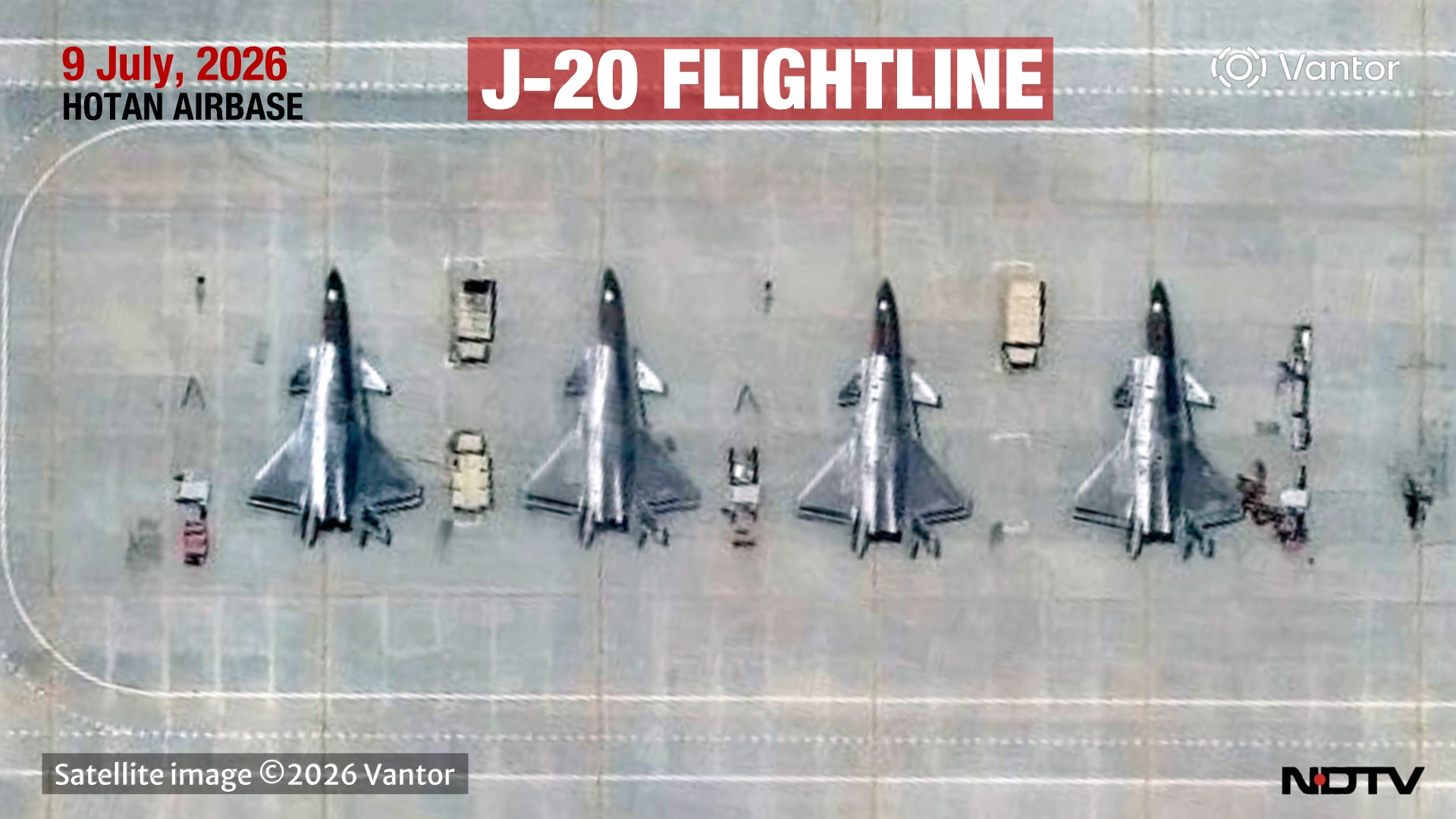
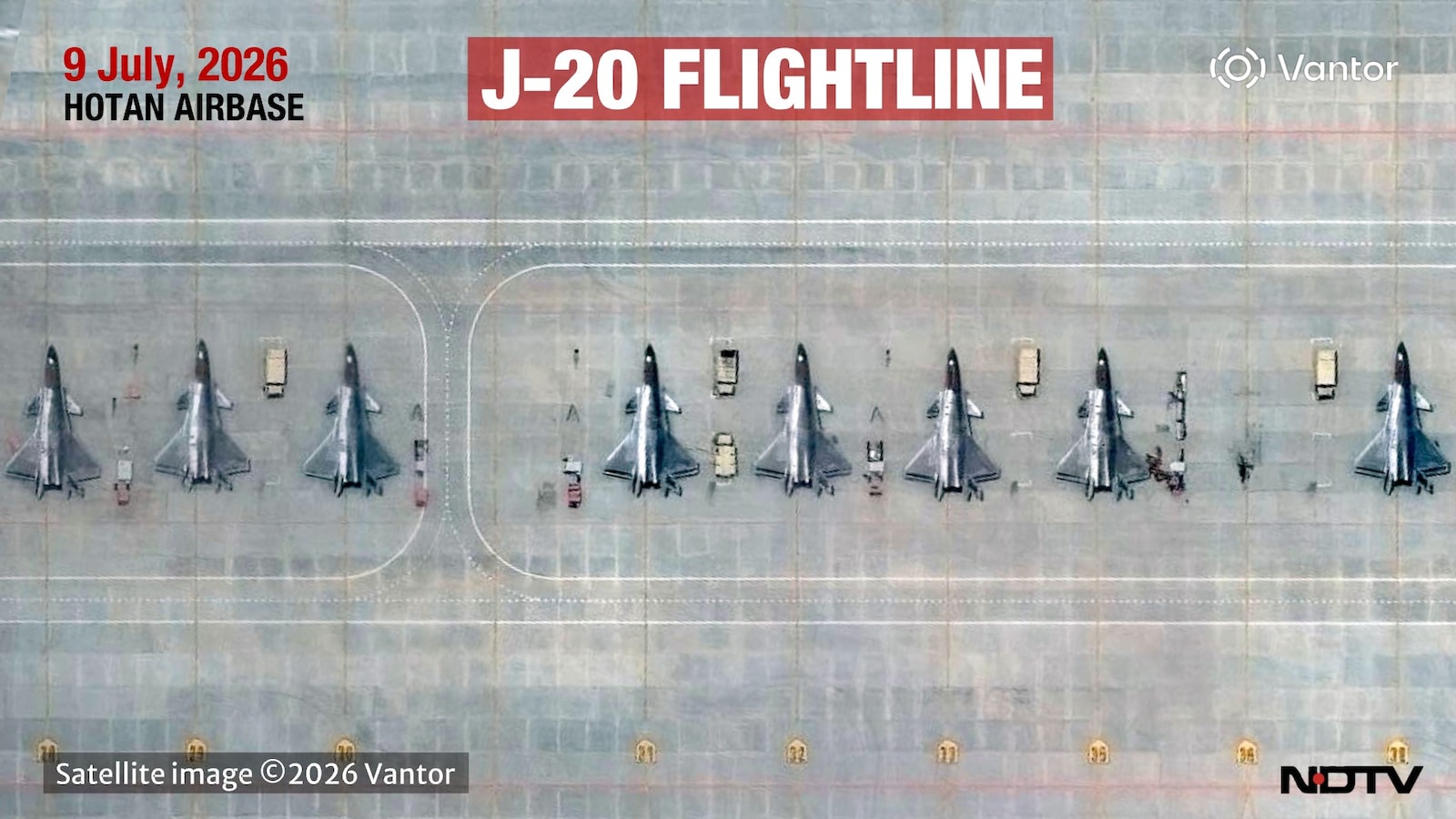
On July 9, seven J-20s were positioned on the tarmac at Hotan, a dual-use (civil and military) airbase in the Xinjiang Uyghur Autonomous Region. The base lies 389 km to the northeast of Leh and just 245 km to the northeast of the Indian Air Force (IAF) airfield at Daulat Beg Oldie in north Ladakh. This appears to be the largest number of J-20s spotted at any Chinese airbase in commercial satellite imagery obtained by the media.
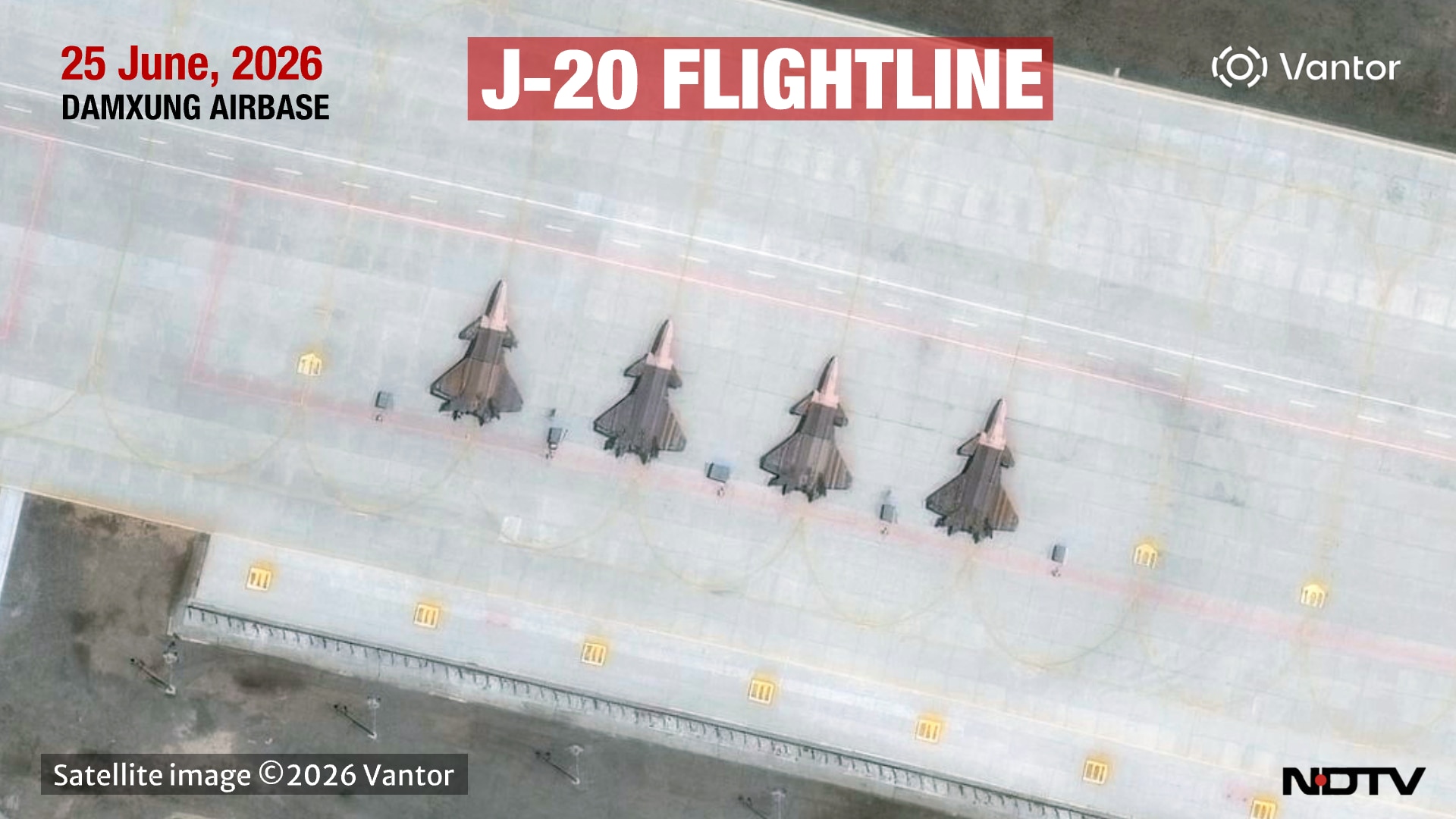
A second image, published in this report, shows four J-20s on the flightline at Damxung airbase, part of the Tibetan Lhasa prefecture. The base lies 344 km northwest of Tawang in Arunachal Pradesh.
“Seven J-20s at Hotan and four at Damxung confirm that fifth-generation operations from high-altitude bases facing India are now routine for the PLAAF, not signalling,” Sameer Joshi, a former fighter pilot and co-founder of NewSpace, among India’s fastest growing aerospace and defence R&D companies, told NDTV. PLAAF is short for People’s Liberation Army Air Force.
“For the IAF, a low-observable threat on the northern front is now the baseline – and that sharpens the urgency of our counter-stealth sensors, integrated air defence and standoff strike capability,” Joshi added.
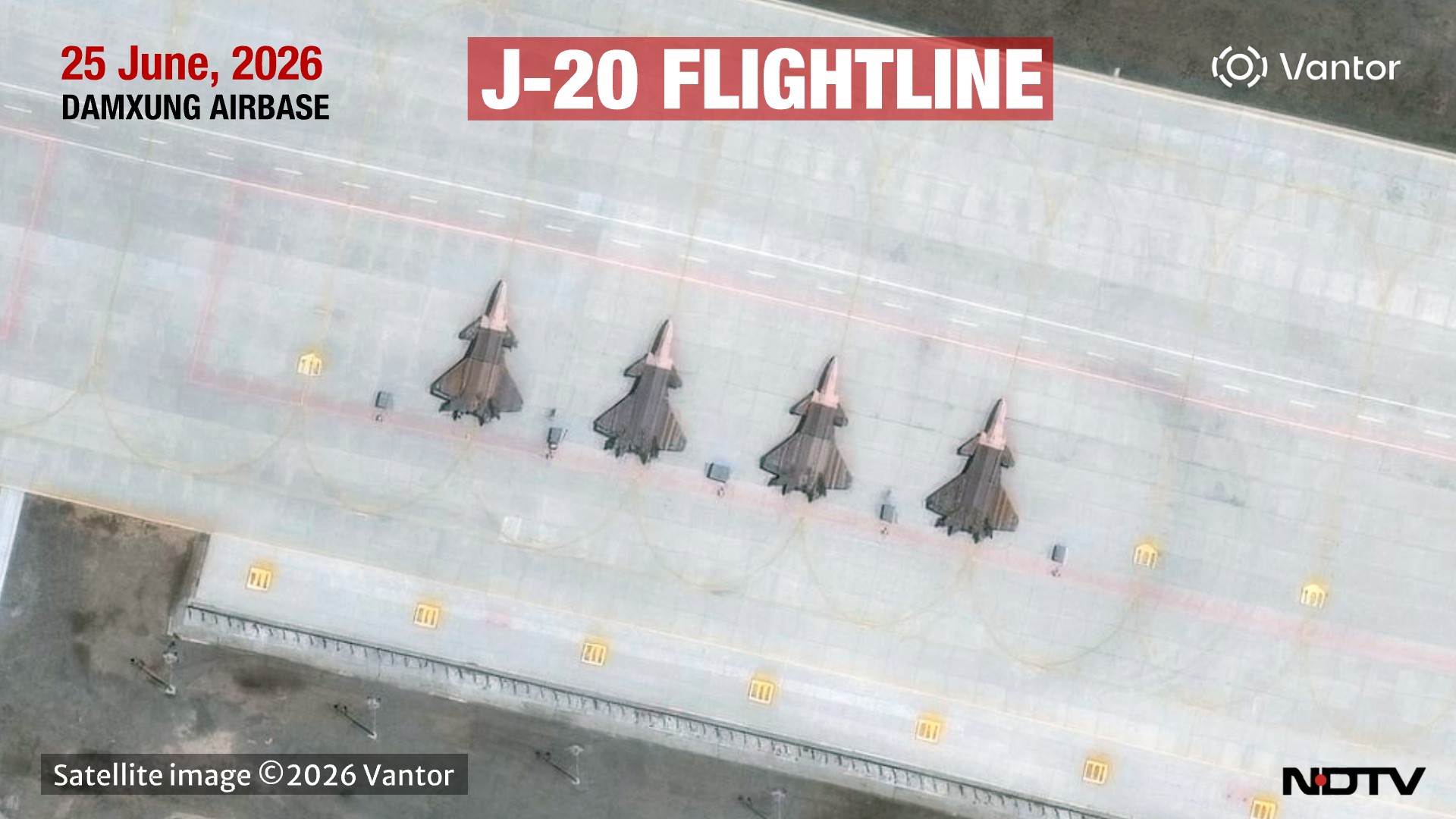
Four J-20s with a protective cover over their canopies spotted at Damxung airbase. High res here
What makes the deployment of the J-20 significant are its stealth characteristics which enable it to dominate contested airspace. With a miniscule radar signature, on account of its advanced stealth shaping, the J-20 retains a significant edge over the IAF’s current generation of fighter jets, including the French-built Dassault Rafale, which are non-stealth platforms.
India currently does not operate any stealth fighters with the homegrown Advanced Medium Combat Aircraft (AMCA) – the country’s first stealth jet – at least a decade away from entering squadron service, assuming key technologies onboard are successfully validated in an extensive flight-test programme.
China’s deployment of modern J-20 fighters came into sharp focus following a report in The War Zone that J-20 numbers have grown steeply: from roughly 50 aircraft in 2019 to about 200 by late 2022, with production estimates doubling in the years after. By late 2025, output was running at around 120 jets a year, pushing the fleet to roughly 300-500 aircraft (depending on the source) across more than a dozen PLAAF units by mid-2026. The UK-based Royal United Services Institute projects China could field around 1,000 J-20s by 2030.
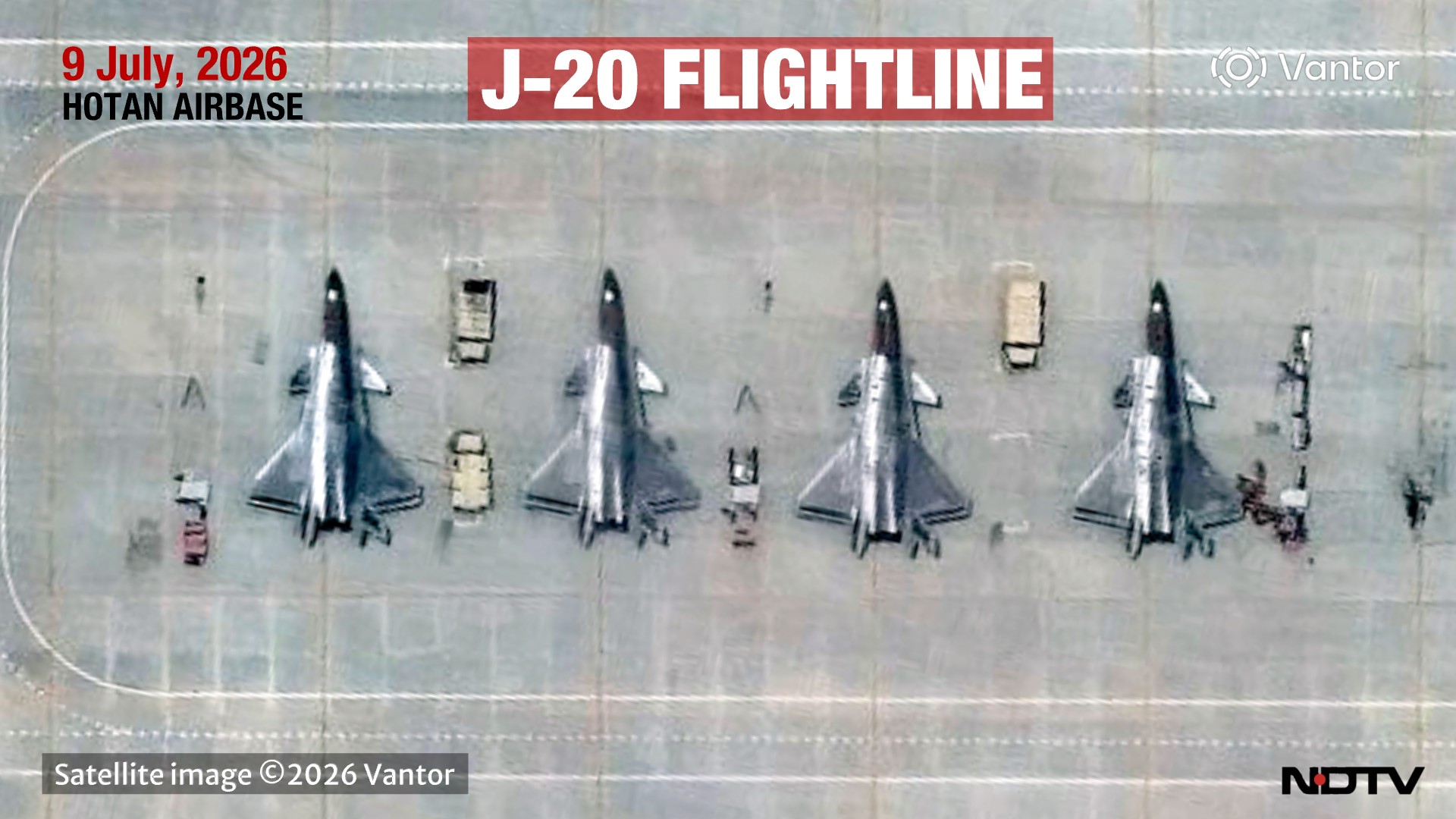
New estimates say China has built and deployed at least 500 J-20s. High res here
“I can only say that having a capacity to produce 125 planes per year speaks volumes of their advanced manufacturing capability,” Air Marshal Narmdeshwar Tiwari (retired) said.
“They are producing it almost like commercial aircraft, which can only happen when the supply chain is fully integrated, very exacting manufacturing tolerances are met by all suppliers and top quality human resource is available to sustain this enterprise,” said Air Marshal Tiwari, who was Vice Chief of the Air Staff during ‘Operation Sindoor’, the 88-hour conflict between India and Pakistan fought in May last year.
“In short, they envisioned a national roadmap, put an empowered team to execute it and provided persistent support to make it happen. To prove to the world that they can compete with the best. It has been a national mission for them. After the first Gulf War, they realised the importance of air power and worked in a mission mode to achieve it,” he said.
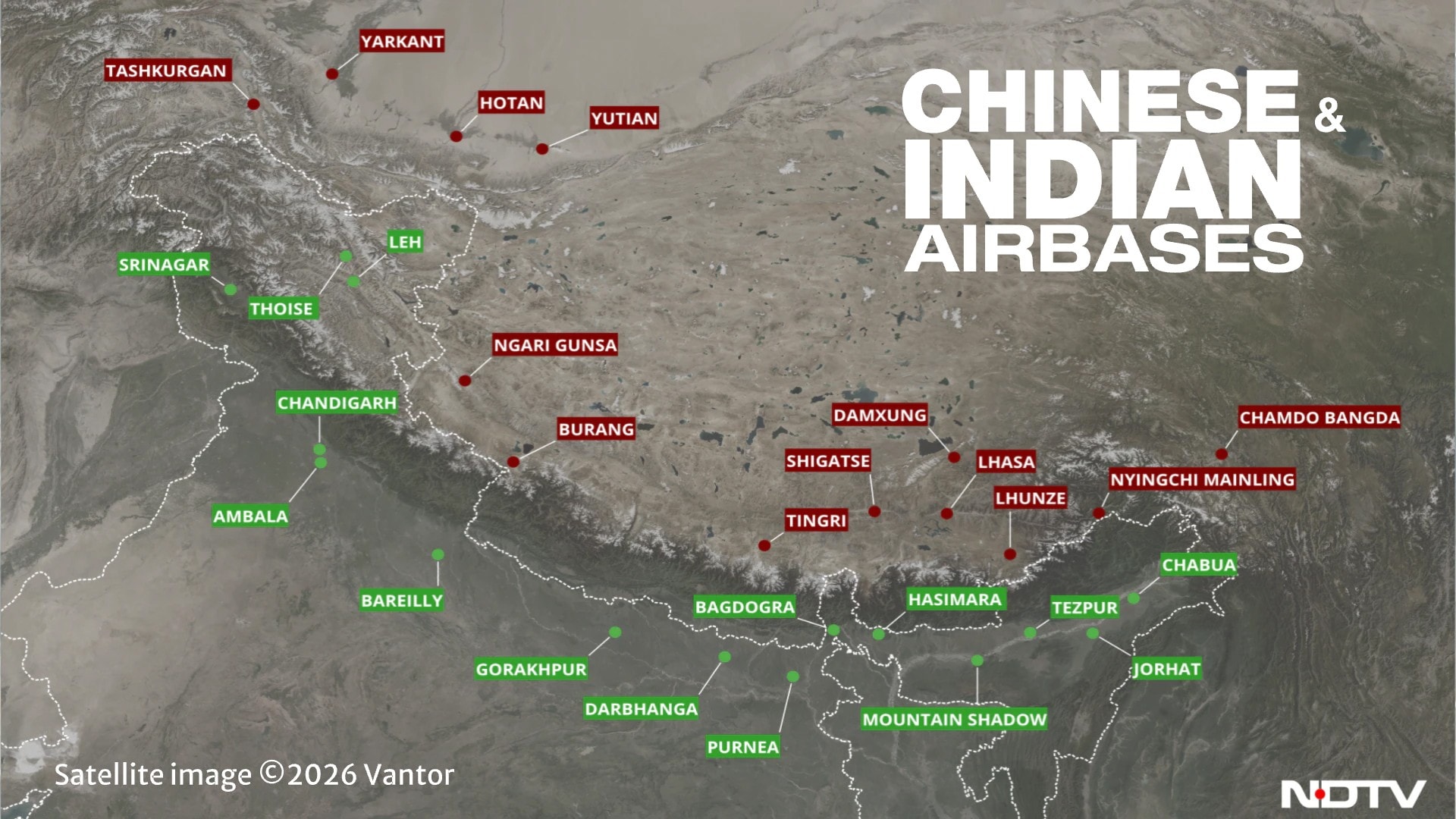
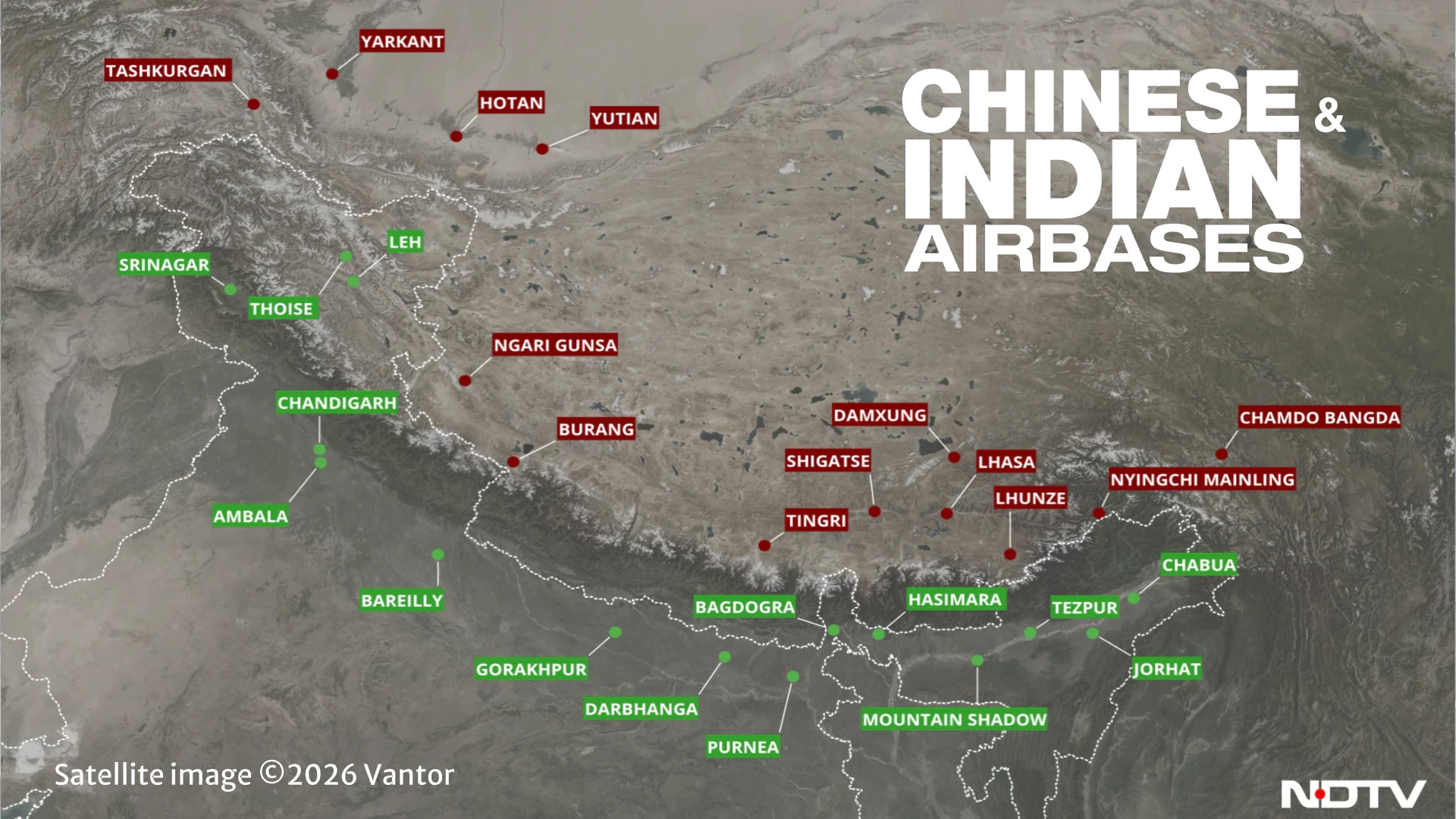
Indian and Chinese airbases ranged against each other along the Himalayan frontier. With inputs: Damien Symon. High res here
Over the last decade, NDTV has reported the progressive increase in the number of J-20s seen at Chinese airbases of particular significance to the IAF. In 2016, the first image emerged of a J-20 parked at the high-altitude Daocheng Yading airport in the high-altitude Tibetan Autonomous Prefecture.
A subsequent May 2024 NDTV report showed J-20s landing at Shigatse airbase, located 150 km north of the Sikkim boundary.
India presently operates just 36 Rafale fighters, spread across two squadrons based in Ambala (Haryana) and Hasimara (Bengal). The Indian Navy has 26 Rafales on order in a $7.5 billion deal and negotiations are underway with Dassault for 114 additional Rafale jets for the IAF in a deal which could be in the range of $36-$40 billion.
The IAF also operates more than 260 Russian-designed Sukhoi-30MKI fighters which are yet to be substantially upgraded in addition to older fighters such as the Mirage 2000 and MiG-29.
NDTV’s queries to the IAF went unanswered.