


Irrespective of one’s stance on the Arab-Israeli conflict, the least you expect from Fauda, the Netflix series co-created by and starring former IDF soldier Lior Raz, are dramatic flair, technical finesse and solid performances.
Season 5 of the Israeli series delivers all these in ample measure. But no matter what it throws into its “Shin Bet agents fighting Hamas terror masterminds” construct, the show struggles to ward off a degree of been-there-done-that kind of fatigue.
“To hell with this world,” says one female operative in Marseille, France, where she is close to busting a terror module. The lady has reason to be peeved. Three rogue agents have embarked on an unapproved personal revenge mission that threatens to scuttle her plans.
There is a great deal going on out there but if you have had your fill of espionage thrillers, Fauda Season 5 is unlikely to send you into raptures even if you manage to sit through it without taking anything resembling a breather.
It is borderline bingeworthy, but at the end of it one is left more exhausted than exhilarated because the show’s ability to shock and surprise is now at a low ebb. Yes, in terms of impact and narrative cohesion, this is nowhere near the best of Fauda – Seasons 1 and 3.
It tries exceedingly, and self-consciously, hard not to come across as one-sided in its presentation of the ramifications of the Arab-Israeli conflict that has escalated alarmingly post-October 7.
The aftermath of October 7 constitutes both the backdrop and the narrative spine of the season. But the attempted balancing act between two sides of the coin does not quite come off. The gaze inevitably remains purely Israeli.
As entertainment stemming from a fictionalised tale derived from and set in a time of severe strife, Fauda continues to divert our attention from the chaos – that is what the Arabic word fauda means – of the real world. But it also explores the human cost of war but does so through only half a prism.
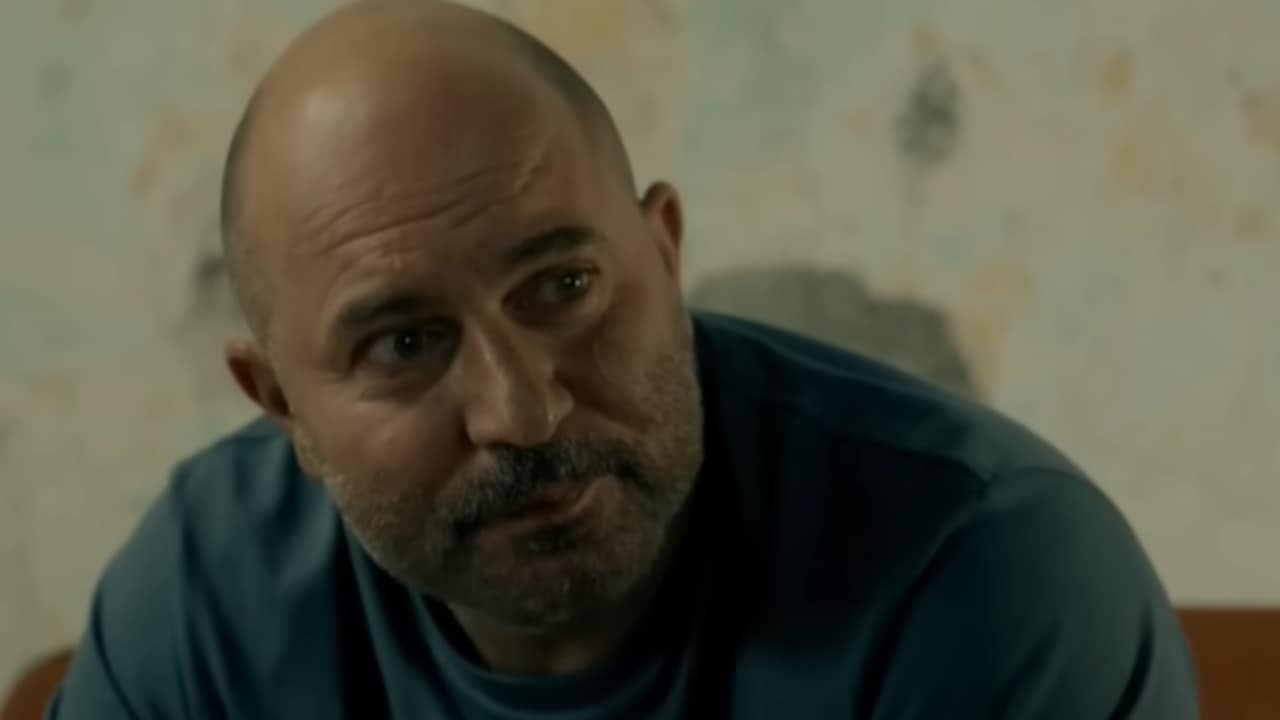
The dichotomy afflicts the pivotal character of Doron Kabilio, played by Lior Raz the most. Given his IDF background, the actor has a sense of how undercover counterterrorism operations work. So, the fictionalisation adheres largely to reality-inspired experiences.
Yet, both the character and the actor struggle to break free from the mould shaped by the previous 48 episodes. Raz knows Doron like the back of his hand but overfamiliarity has a way of breeding debilitating dullness.
Doron, at the behest of wife Gali (Netta Garti), is undergoing therapy. His mind is all messed up. However, that aspect of the person he has become flies out the window once the irrepressible man is sucked back into the universe he had drifted away from.
Other troubled figures in Fauda S5, directed by Omri Givon, get a far better deal from the showrunners (Raz and Avi Issacharoff) and screenwriter Omri Shenhar. These are people who are disconcerted, stressed or rendered overly fragile in the line of duty. Their actions reflect just that.
Among them is Eli Aharon (Yaakov Zada Daniel), Shin Bet man who travels unsanctioned to Marseille along with Salem, Bedouin scout and soldier, to find and eliminate the Hamas man who killed his wife. They are told that their target now runs a restaurant in Marseille.
The encounter that ensues shifts their focus. It turns out that the man Eli is looking for is another Gazan, now married to Frenchwoman Anne (Melanie Laurent, new to the cast and one of this season’s biggest talking points).
The wounds that Eli carries into battle are both physical and psychological. He is in no mood to retreat. Doron and Hertzel “Steve” Pinto (Doron Ben David), just as scarred as everyone else, set out to stop the rogue agents.
Doron and Steve are drawn into an off-grid operation to infiltrate a terror network planning a strike inside Israel. Having spilled a lot of blood, the duo and Eli run afoul of a French intelligence agent.
Their search leads them into the orbit of Saeed el Hatib (Hakim Djaziri, an addition to the cast), who runs a community centre for Palestinian and other Arab refugees, and his accomplice Abu Zaher (Ali Ali). Their philanthropy is a cover for a fight for a larger cause.
One Palestinian tells another: “We are from Gaza. We are born worried.” Their troubles are rooted in over 75 years of occupation. That history is alluded to all right but only as a footnote.
October 7, in contrast, is accorded all of two episodes with a full-on health warning. It reads: Graphic violence ahead – caution is advised, especially if you have been in an emergency situation.
The horrors are driven home. The reprisals are put in context. And then it is back to business as usual for the rest of the series, with the Shin Bet war room going into overdrive.
A string of violent confrontations, several undercover forays into dark areas and one daring extraction mission later, the immediate goals of Shin Bet are achieved – how they get there forms the crux of the story – but the world isn’t any closer to peace.
The world has indeed changed since the previous season of Fauda landed in our midst in early 2023. In the three years since then the Israel-Palestine conflict has nosedived precipitously. Humanity has been pulverised.
Fauda Season 5, which opens two years after the October 7 attacks, takes the repercussions of the violence into account and, in the process, delivers all that one has come to associate with the series – competent writing, impressive execution, explosive action and a cautiously calibrated narrative.
If anything has changed, it is the emphasis. Season 5 looks inwards and mildly militates against the very system that engendered the heroes that the series has lionised. It underscores the wages of surviving an unending war, from the standpoint of the active players as well as of the those on the sidelines who have had to suffer the consequences.
It plays out in a world where simply staying alive and sane is no less difficult than dodging death amid flying bullets and exploding bombs.
Binge watch only if you must. Fauda S5 will probably work better an episode or two at a time. It does have things to say and makes its point forcefully enough.


