


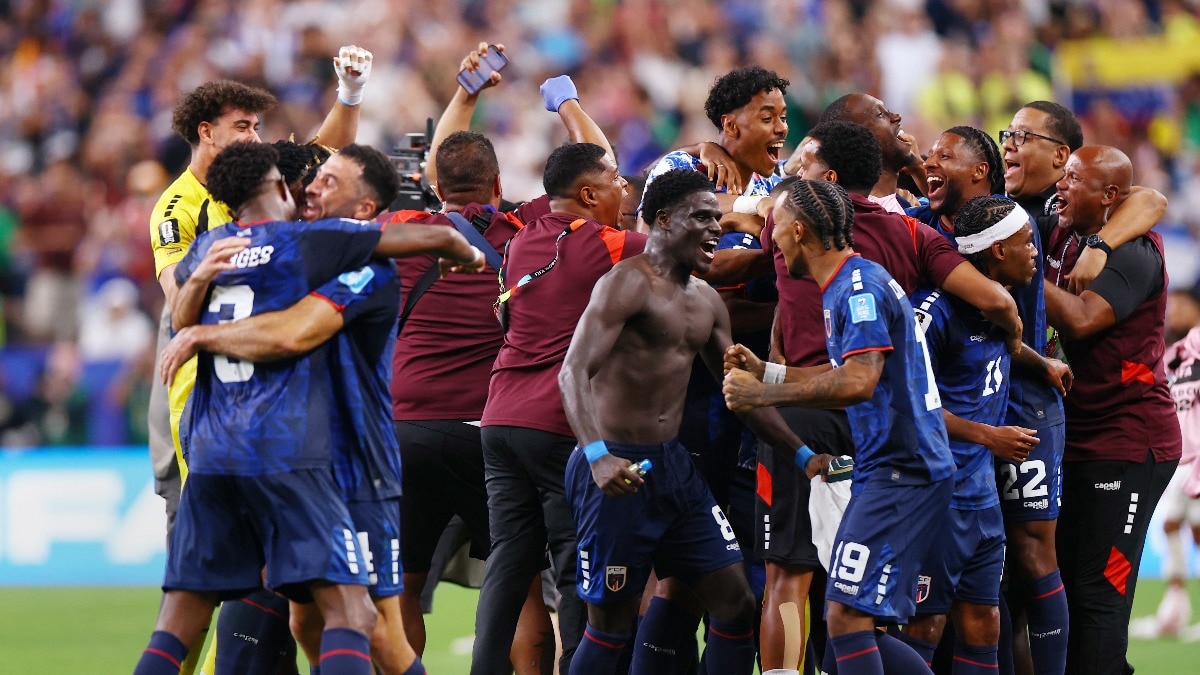
The full-time whistle had blown at Houston Stadium on Saturday, but for the players and coaching staff of Cape Verde, the agony of the wait was only just beginning. Their own assignment was complete, a gruelling, hard-fought 0-0 draw against Saudi Arabia. Yet their World Cup destiny remained entirely out of their hands, suspended some several hundred miles away in Guadalajara, where Spain and Uruguay were still locked in combat.
With their match ending three to four minutes ahead of the concurrent Group H fixture, the pitch instantly transformed into a tense, makeshift viewing gallery. Players and staff hurriedly produced mobile phones, huddling in tight, anxious circles on the grass to stream the final moments of the other game. When the news finally filtered through that European champions Spain had held on to defeat Uruguay 1-0, the tension evaporated, replaced by a collective roar that shook the arena.
Against all plausible odds, the Blue Sharks had done it. With three points compiled from three resilient draws, tournament debutants Cape Verde had officially qualified for the knockout stages of the FIFA World Cup as runners-up of Group H.
RECORD-BREAKING FEAT
In navigating their way out of the group stage, the African archipelago has scripted an unprecedented chapter in footballing folklore. With a population of just 550,000, Cape Verde has officially become the smallest nation in history to reach the knockout phases of a FIFA World Cup.
The scale of the achievement was not lost on the vocal contingent of supporters inside the 68,278-capacity stadium. Long after the majority of the crowd had filed out into the Texas night, many Cape Verdean players lingered on the pitch, daping themselves in national flags, embracing, and taking photographs to immortalise the moment.
In the stands, the celebrations were soundtracked by the relentless banging of traditional drums. One poignant, hand-painted sign held aloft by a fan captured the spirit of the evening: “Small Islands, Big Dreams.”
“I feel like I’m in a dream,” remarked an emotional Deroy Duarte, who was named man of the match for his industrious display in midfield.
“Ever since I was a kid, I’ve always dreamed of playing in a World Cup.”
While compiling three consecutive draws is a high-wire act that offers no guarantee of safe passage at major tournaments, Cape Verde join an elite band of survival specialists. They follow in the footsteps of Wales (1958), the Netherlands and Republic of Ireland (1990), and Chile (1998), who all negotiated the group stage without a single victory.
For veteran goalkeeper Vozinha, the historic qualification carried an added layer of personal significance. Watching the drama unfold from a luxury suite was his mother, Ana Candida Evora, proudly waving a miniature national flag. Having missed her son’s magnificent, seven-save performance against Spain due to administrative visa delays, she was finally able to witness the crowning moment of his international career firsthand.
A DATE WITH ARGENTINA
The celebratory mood, however, will swiftly be tempered by the reality of the monumental task ahead. By securing second place in Group H, Cape Verde’s reward is a mouth-watering Round of 32 clash against reigning world champions Argentina in Miami on July 3.
The squad remains unfazed by the pedigree of their upcoming opponents, choosing instead to lean into the underdog identity that has carried them this far.
“From tomorrow, we’ll focus on the next match,” Duarte added. “It’s against Argentina, isn’t it? A tough match, but let’s believe – anything is possible.”
FIFA World Cup | FIFA World Cup Schedule | FIFA World Cup Points Table | Football News
– Ends



