


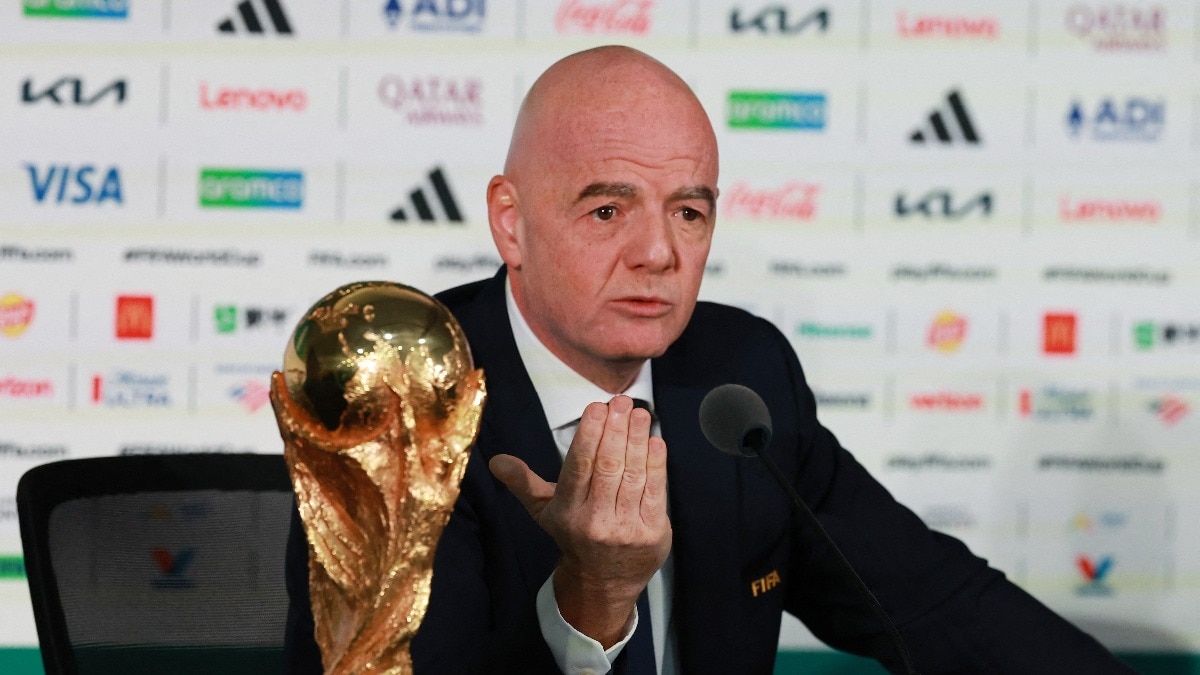
FIFA President Gianni Infantino has defended the governing body’s proposal to sell minority stakes in a new commercial entity that would oversee the FIFA World Cup and its other competitions, describing it as “an opportunity, not an obligation” after the idea sparked a furious backlash from several football authorities.
FIFA announced earlier this week that it plans to establish a $20 billion subsidiary to manage the commercial rights of the FIFA World Cup and its other tournaments. Under the proposal, the governing body would offer up to a 20% stake in the new entity to external investors.
The plan drew strong criticism from football’s regional confederations, which said they had been blindsided by FIFA’s move to bring private investors into the commercial side of the sport. The confederations voiced concerns over both the lack of consultation and the implications of allowing outside investment into football’s biggest competitions.
However, Infantino insisted that strengthening the commercial side of the game is a natural next step in football’s evolution and stressed that the proposal is only the beginning of a wider consultation process.
“It’s part of a democratic process, a consultation process, and, above all, it is an opportunity but not an obligation,” Infantino said in a video provided by FIFA on Wednesday.
“As I said, it kicks off the consultation process.” FIFA is one of the world’s wealthiest sporting organisations, generating billions of dollars in revenue primarily through broadcasting rights, sponsorship deals and other commercial agreements linked to the FIFA World Cup. The governing body believes that creating a dedicated commercial subsidiary could unlock additional long-term investment while supporting the growth of its global competitions.
Responding to concerns that private investment could influence football’s governance, Infantino maintained that fans would remain at the heart of the sport and that FIFA’s independence would not be compromised.
“FIFA obviously continues to govern football without any external interference,” Infantino said.
“And the flagship tournaments it organises, like the FIFA World Cup or the FIFA Women’s World Cup, will always remain.”
The controversy comes only weeks after the conclusion of the expanded 48-team FIFA World Cup 2026, yet discussions over the competition’s future are already gathering pace. Spain lifted the trophy after defeating Argentina in the final, but despite the tournament’s commercial success and global reach, it was also accompanied by criticism over a number of organisational issues.
With the dust barely settled on the 2026 edition, FIFA’s proposal to reshape the commercial structure of the World Cup has opened a fresh debate over the balance between attracting investment and preserving the governance and integrity of football’s most prestigious tournament.
– Ends



