


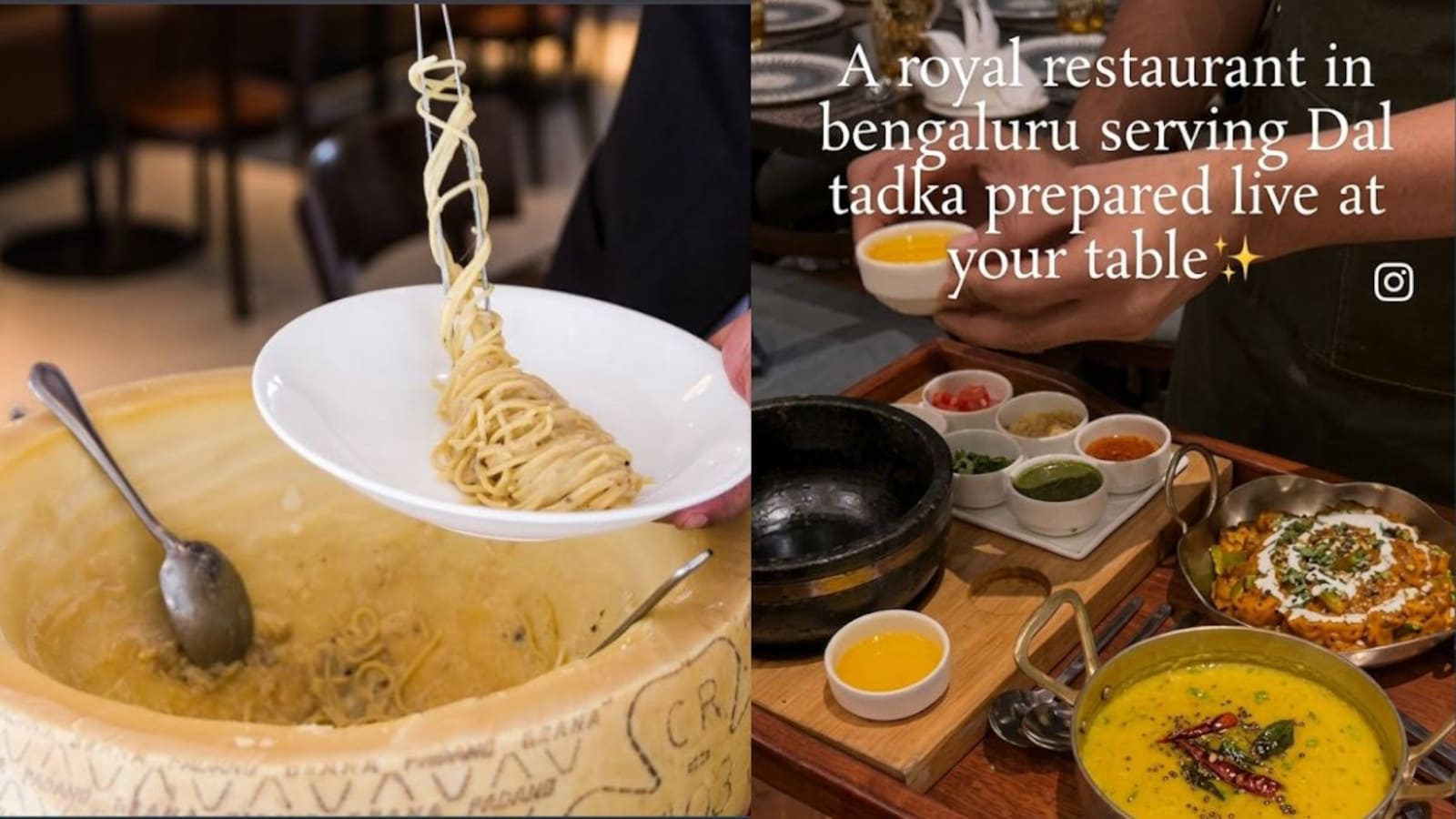
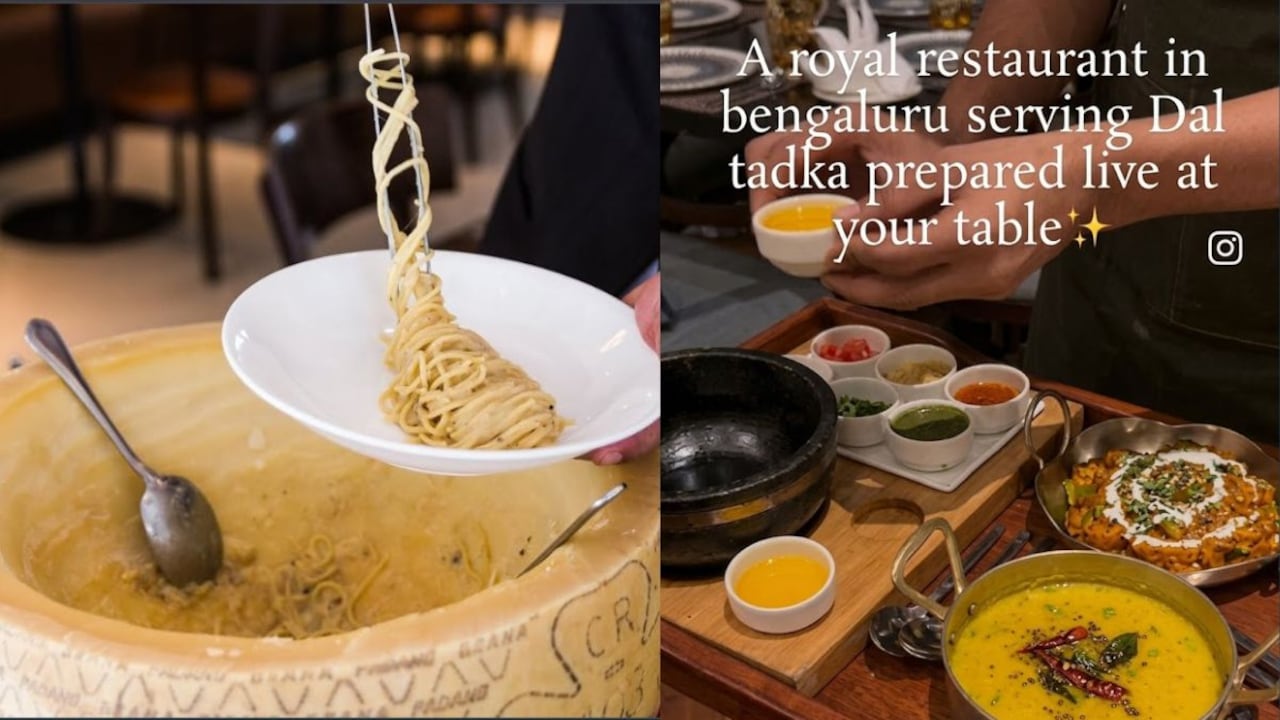
A steaming bowl of dal being finished live at the table should be a comforting sight. Instead, it has sparked a debate about whether restaurants are turning meals into performances.
“We can do all this at home too; this stuff isn’t worth watching; we don’t come to the restaurant for that,” tweeted Ritik, who identified himself as a farmer from Himachal Pradesh in his bio, reacting to a viral video of a royal restaurant serving Dal Tadka tableside.
He wasn’t alone. Another user, Nawab, weighed in too on X, “I hate table-side food spectacles, especially table-side tiramisu, which defeats the whole point of tiramisu.”
Ye sab to hum Ghar par bhi kar lete ye sab chodbhandga dekhne thodi aate hai hum restaurant me pic.twitter.com/NULG5QVcMp– Ritik (@ThenNowForeve) June 1, 2026
The comments were on a post by a “royal restaurant” showcasing the addition of tadka to dal tapped into a growing conversation about modern dining.
Are restaurants enhancing the experience, or are they putting on a show that nobody asked for?
The Age Of Food Theatre
Restaurants have always tried to impress guests. But in recent years, dining has evolved into something much bigger than simply eating a meal.
Today, a restaurant is expected to provide an experience. Diners want stories, ambience, entertainment and, perhaps most importantly, something worth posting online.
This shift has given rise to what many now call “food theatre”, dishes designed not just to be eaten, but to be watched, photographed and shared.
Think flaming desserts, smoking cocktails, giant cheese wheels, tableside carvings, edible gold leaf, dramatic reveals and desserts assembled in front of guests.
In a world driven by Instagram Reels and TikTok videos, a visually spectacular dish often travels much further than a delicious one.
And restaurants know it.
According to Chef Shivani Sharma, Chefpreneur and Founder of Gourmestan, presentation has become increasingly important because diners today are looking for memorable experiences rather than simply a meal.
“The Indian gourmet is well-travelled, culturally aware and very active on social media. They understand that a good meal is a memorable experience, backed by a strong narrative and atmosphere,” she says.
In many ways, presentation has become a marketing tool. A single viral video can attract thousands of curious customers eager to experience the spectacle for themselves.
But Presentation Isn’t Exactly New
While social media often gets blamed for modern plating trends, India’s relationship with food presentation goes back centuries.
Long before edible flowers and microgreens entered restaurant kitchens, Indian meals were being thoughtfully arranged and served with care.
From temple offerings and festive thalis to banana leaf meals in the South and elaborate royal feasts in princely courts, presentation has always reflected hospitality, abundance and cultural identity.
Chef Shivani Sharma, founder of Gourmestan, notes that Indian food presentation has evolved through various influences, including Ayurveda, royal traditions and colonial-era dining customs.
Pooja Sachdev, Co-founder and Creative Head at Gourmetly Yours, points out that traditional Indian garnishes also served a purpose.
“Long before tweezers, microgreens and edible flowers, we had simple yet meaningful garnishes, a generous sprinkling of fresh coriander, grated coconut, a drizzle of ghee, or the aroma and visual appeal of a tempering of mustard seeds and curry leaves,” she says.
In other words, food was always presented beautifully. The difference is that beauty used to support the dish rather than compete with it.
When Does Creativity Become Gimmickry?
That distinction is at the heart of the current debate.
Few people object to attractive food. After all, presentation is part of dining. The concern arises when restaurants prioritise spectacle over substance.
Many diners complain that some presentations feel designed primarily for social media rather than for the person actually eating the food.
The criticism is not limited to customers.
Chef Shivani Sharma believes there is a delicate balance between meaningful presentation and unnecessary theatrics.
“The problem arises when presentation becomes wasteful, excessive or overly ostentatious in a bid to grab attention,” she says.
Pooja Sachdev shares a similar view.
“I do feel that, at times, we’ve crossed into a space where presentation becomes the star and the food itself becomes secondary,” she says.
For chefs, the ultimate goal should be enhancing the experience, not distracting from it.
The Edible Gold Problem
If there is one symbol of excessive food presentation, it is probably edible gold.
Over the last few years, social media has been flooded with gold-covered desserts, gold-coated burgers and gold-plated cups of chai carrying eye-watering price tags.
To many chefs, such additions perfectly represent the difference between luxury and gimmickry.
Artisanal Chef, Food Stylist and Author Sheeba de Souza is not convinced by these flourishes.
“What I do think is unnecessary is the edible gold, the smoke, the gold dust, these things add nothing to the experience of eating,” she says.
Instead, she argues that simplicity often creates the strongest impact.
“The most elegant presentations I have ever seen were also the simplest.”
What Diners Really Remember
People are willing to forgive a plain-looking dish if it tastes extraordinary. They are far less forgiving of a stunning presentation that delivers little flavour.
As Sheeba de Souza puts it, “Great food deserves to look great. And a great-looking plate has to deliver on taste.”
That balance may ultimately decide which presentation trends survive and which disappear.
Because while diners enjoy a little drama now and then, most still expect the food, not the performance, to be the star of the evening.



