


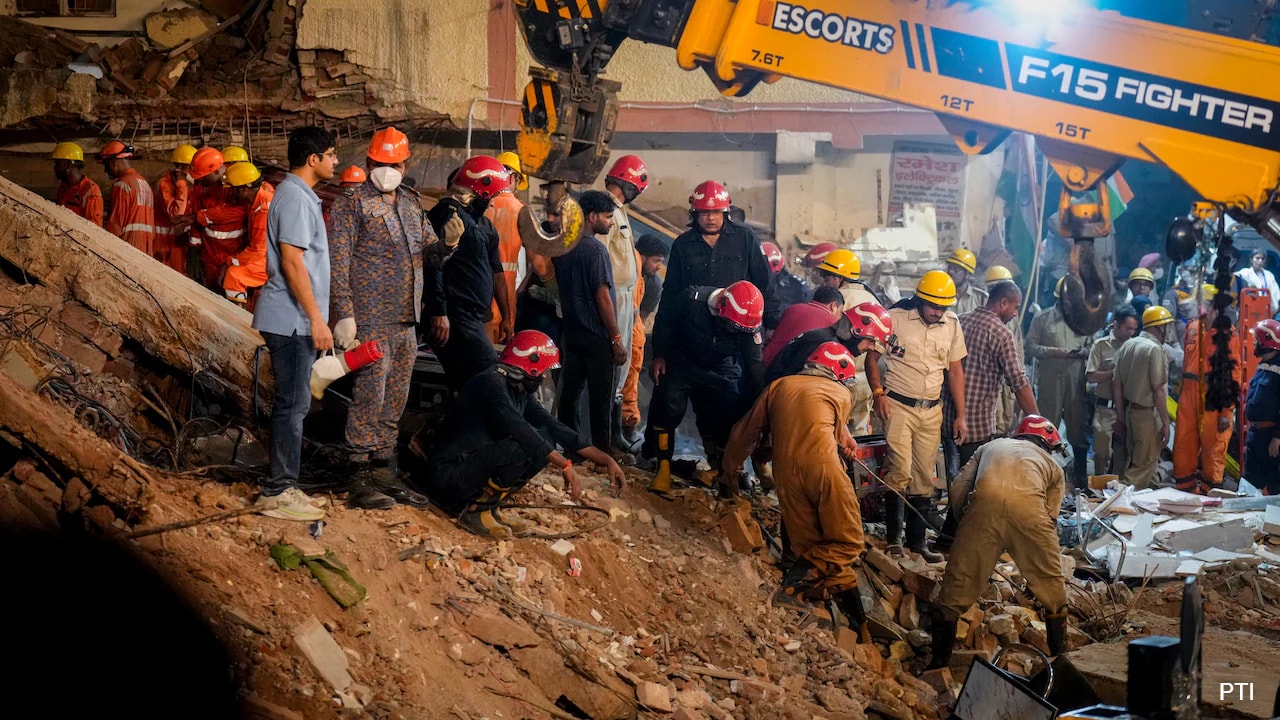
The owner of the building that collapsed, killing seven people – mostly students – has been arrested, and the Delhi government has vowed to punish the negligent civic officers. No case, however, will be registered to probe the subhuman living conditions that tenants of Satya Niketan are subjected to day after day, which reduce the area to nothing more than an urban slum designed to maximise rent yields.
Satya Niketan’s proximity to Delhi University’s South Campus makes the area a hub for hostels, attracting college students from across the country. The location advantage provides a lucrative opportunity to residents who own houses in the area. Most have seized the chance to earn a regular income by converting residential spaces into commercial hostels. Thousands of students live in these structures, in which storey is stacked upon storey to maximise profits. The civic infrastructure hasn’t caught up with the pace of development and appears to be crumbling under the weight of the influx of tenants and the greed of landlords.
Advertisement – Scroll to continue
The signs of infrastructure collapse are visible everywhere in Satya Niketan. Tangled wires hang overhead. Alleys are so narrow that two people cannot walk abreast. Buildings are so disproportionately tall that their occupants are deprived of sunlight the entire year at all times of the day. Streets are crowded and dirty. Students mill about quick-snack shops and tea joints. It is often impossible to even walk without bumping into a fellow victim of apathy.
Hostel owners cram several students into a single room. They charge handsome fees. But when it comes to providing facilities in return for the fees, all students get are narrow hallways and poorly ventilated rooms.
Advertisement – Scroll to continue
Also read: Delhi Building That Collapsed Was 50 Years Old And Dying. Greed Revived It
NDTV walked into one of these hostels. Scores of clothing items were hanging in the hallway to dry. Just a gas stove and a small cylinder adorned what the hostel owner calls a kitchen. It had no electricity supply. It was so small that not even a single person could stand comfortably and cook.
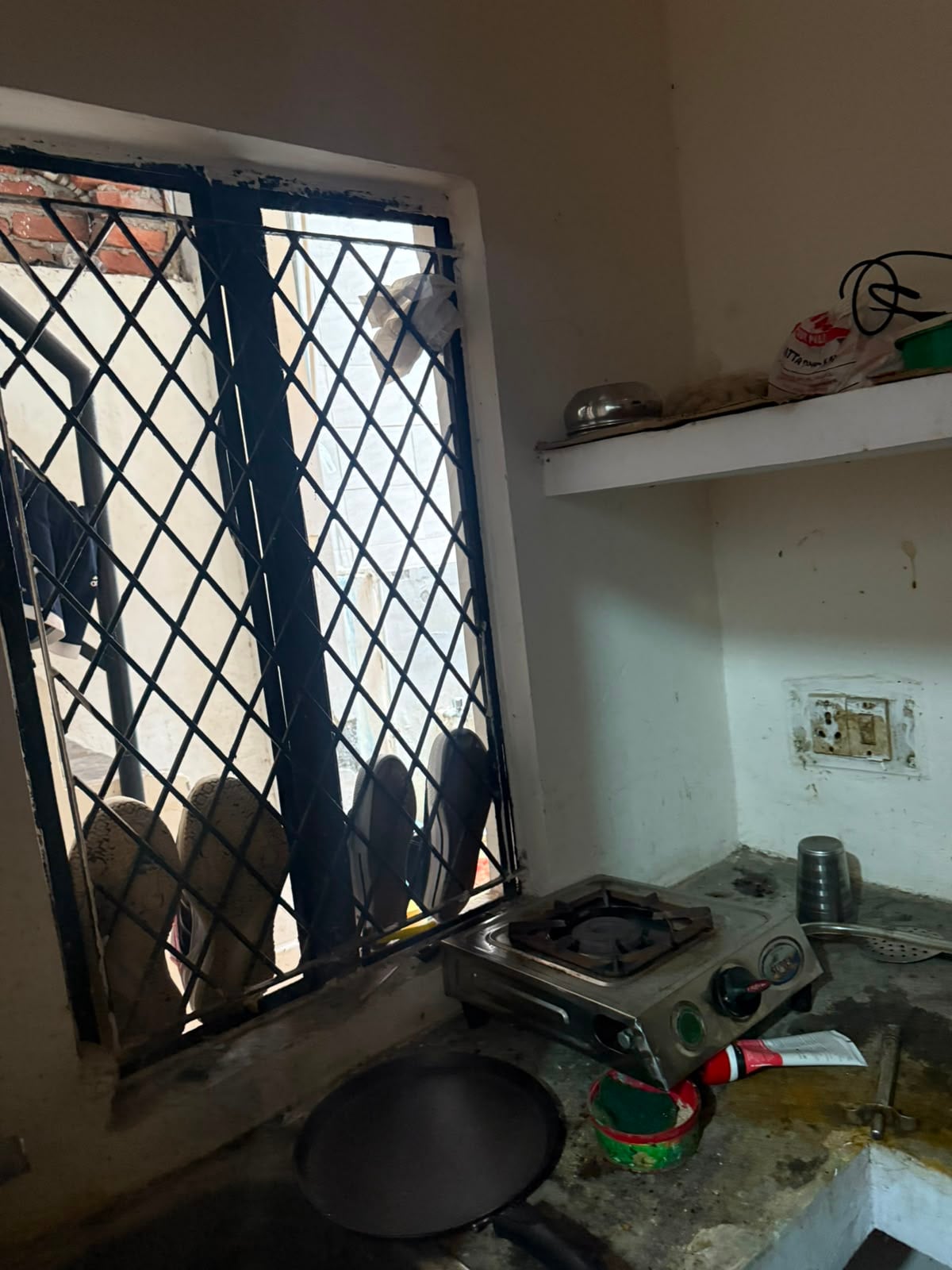
Clothes were not the only problem afflicting the narrow hallway. Passersby also had the challenge of charting their own course whenever a cooler came in their way.
The rooms of the hostel were dismal and depressing. In a room, 3 beds languished next to each other, with no space separating them. A cooler and a fan — those were all the students had for ventilation. Natural light is a luxury that one can afford only by leaving Satya Niketan entirely.
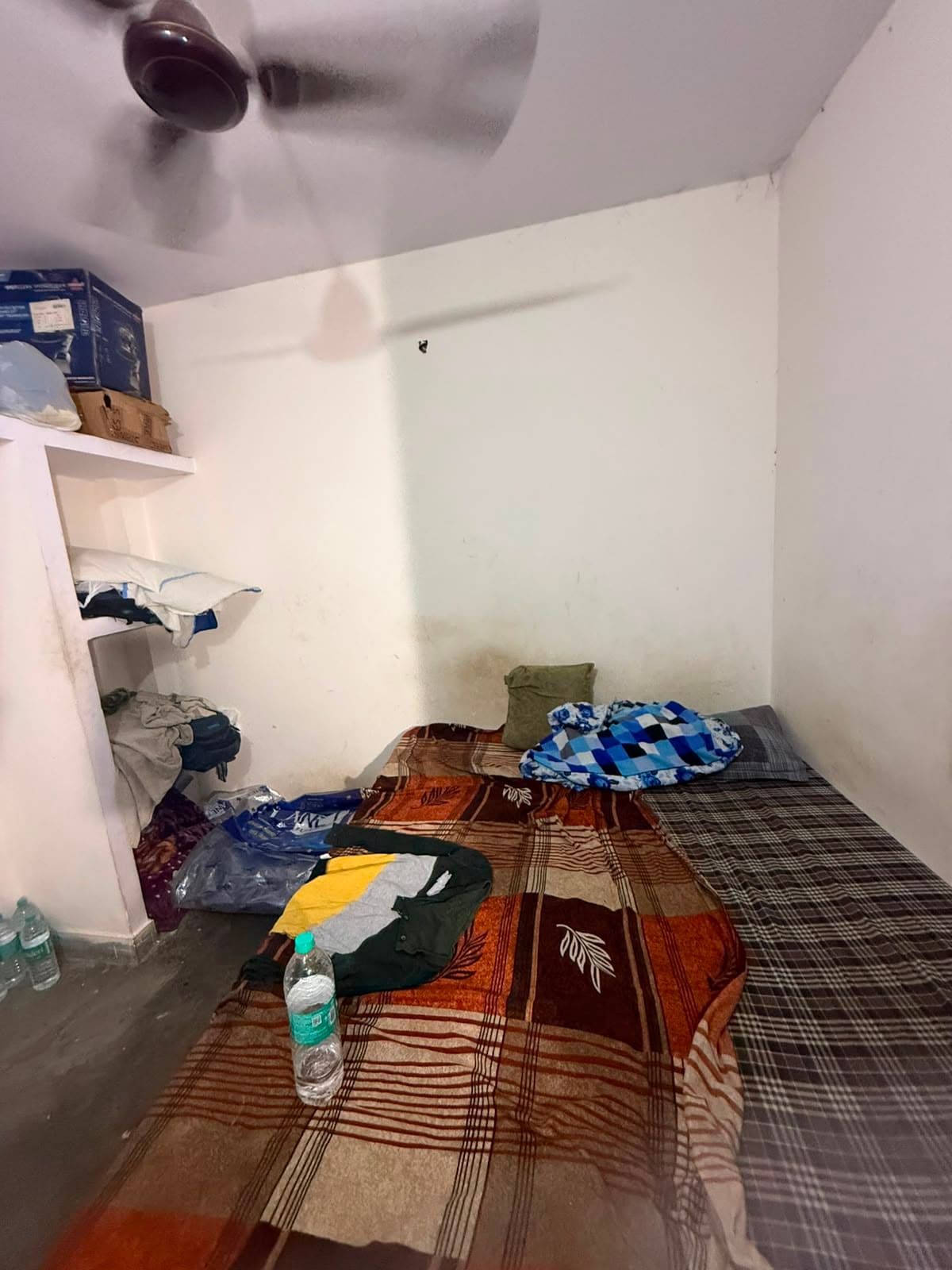
Rents are charged on the basis of beds, not rooms. Some charge Rs 6,000 per bed, and some charge more. So, it comes to Rs 18,000 for a dingy room with no ventilation.
If rent is delayed, students are often told off and stripped of their dignity.
“If the rent is delayed even by a day, the owner threatens to make us vacate the place. No one comes to check the state of the PGs (paying-guest facilities). They take security deposits, brokerage fees, and advance rents from us,” said a student, highlighting the mismatch between the fees paid and the facilities offered.
In a world that is in the throes of a new technological revolution led by artificial intelligence, students don’t even get basic mobile phone signals.
“The electricity bill is charged extra. During rains, we don’t get any network. We can barely tell what time of day it is during the day. Yesterday, electricity was disrupted, and we couldn’t charge our phones or call our parents,” said another student.
Many buildings are in a rickety condition.
Just 80 metres away from ground zero, another building appears on the verge of collapse.
Arpit Yadav, a student at Delhi University and a native of Uttar Pradesh’s Etawah, lives in one of these hostels. When he came to Delhi, his image of the national capital was entirely different from the reality.
For him, Delhi was a city of dreams. But when he reached Satya Niketan, he was forced to imperil his life.
His single bed costs his parents Rs. 8,000 per month. For the sum, he gets one fan, one LED bulb, and a small bed. Ventilation duties are handled by a tiny window. Two cement slabs serve as a wardrobe. Eight students stay on one floor and share a single washroom.
He is now scared. He said that if a fire breaks out tomorrow in the building, they have no escape route. “We’ll burn and die here. Who is there to look after us? The owner takes no responsibility,” he said.
Seeing their peers die, many of these students have had a change of heart. Those who have the means and the option to leave plan to shift somewhere else.
There are murmurs of leaving Delhi for good.
UPSC aspirant Rudra, who stays adjacent to the collapsed structure, is one of them. He said he wants to leave the national capital.
Another student said her parents wanted her to return to her hometown.
“Since yesterday, I’ve been feeling scared. It is a congested area, and I’m afraid help won’t be able to reach us in case of any emergency. My parents are asking me to come back home,” she said.
“There is no escape space. If a building collapses, we will die under the rubble. No one will be able to come to our rescue,” said another.
And they have good reasons to be afraid. Some of these students were unfortunate enough to have witnessed the collapse. They dug out their friends from under the debris.
Also read: Video: Moment Delhi Building Came Crashing Down And Turned Into Rubble
“There was this famous tea stall just below the building, and a lot of students were there. We all used to have fun there. It was around 1:10 p.m. And we had just gone to have lunch. Suddenly, there was a sound like a gas cylinder blast. It felt like a little earthquake. When we went to check, there was this huge dust cloud,” said a student who lived near the building.
“I had a friend of mine in there. We both had planned to go somewhere at 2 p.m. He had just messaged me prior to the incident. In just five minutes, the whole building collapsed. He called me from inside. I tried my best, but he hasn’t been found yet,” he added.
Why did the hostel industry in Satya Niketan become exploitative? The answer lies in a staggering demand-supply gap. There are more than 700,000 students at Delhi University. Its official hostels have around 8,000 rooms. Only 1 in 31 students gets a hostel room. The rest are forced to live in such areas.
That hostel owners realise the safety hazard these buildings pose. Hence, they include indemnity clauses in rent agreements.
“The PG authorities are not responsible for any casualties or risk to me,” said the rent agreement prepared by the owner of the building that collapsed.


