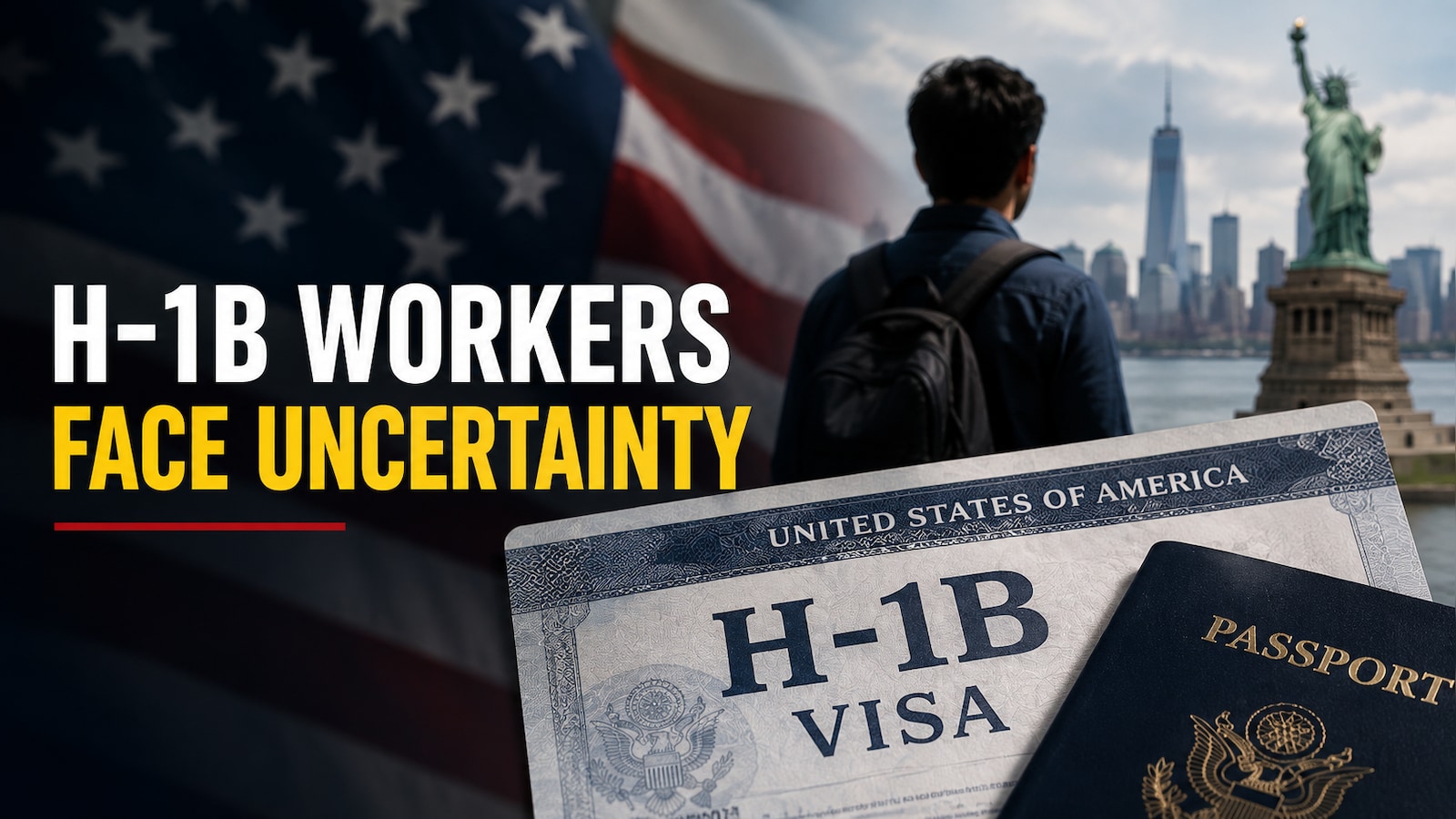
The US is considering ending the 60-day grace period that allows certain foreign workers to remain in the country after losing their jobs, this could mean have a significant impact on Indian professionals on H-1B visas. The proposal is still under review and has not yet become law.
If finalised, the change could leave affected workers with far less time to find a new employer, change their immigration status or make arrangements to leave the US.
What Is The 60-Day Grace Period?
The provision, introduced in 2017, allows certain non-immigrant workers to remain in the US for up to 60 consecutive days after their employment ends, or until the end of their authorised stay, whichever comes first.
The rule applies to several visa categories, including H-1B, L-1, O-1, E-1, E-2, E-3, H-1B1 and TN visas. Eligible dependants are covered as well.
For an H-1B worker who is laid off, the window can be crucial for finding another employer willing to sponsor them. It can also provide time to explore a change in visa status or make plans to return home.
Under the proposed change, that flexibility could largely disappear once the employment supporting the worker’s immigration status ends.
Proposal Still Under Review
The Department of Homeland Security has reportedly sent the proposal to the White House Office of Management and Budget for review. The details of the proposed regulation have not yet been made public in full.
The proposal would still have to go through the federal rule-making process before it could take effect. Once published in the Federal Register, the public would typically be given an opportunity to submit comments before the government considers finalising the rule.
For now, the existing 60-day grace period remains in place. H-1B workers who lose their jobs are therefore not required to leave the US immediately because of this proposal.
Also Read: Planning To Move To US? Stricter H-1B, Green Card Rules Kick In This August — Check Details
Why Indian Workers Could Be Hit Hard?
The move could have particular significance for Indian professionals, who make up the largest group of H-1B beneficiaries. According to US government data, Indians accounted for about 71% of approved H-1B petitions in fiscal 2024.
More than 5.2 million people of Indian origin live in the US, according to the US government estimates.
If the proposed rule is eventually implemented, workers who lose their jobs could face much greater pressure to secure another immigration pathway quickly. Families could also be affected, as dependants may have to make sudden decisions involving employment, education, housing and travel.
The proposal comes as the Trump administration pursues broader changes aimed at tightening the H-1B programme, which officials have argued has been used by companies to replace American workers.
For now, the 60-day protection continues to apply, but Indian H-1B workers and their families may need to closely track any further developments as the proposal moves through the regulatory process.
Also Read: US Mandates $20,000 Visa Bond For 50 Nations: Is India Included?
Essential Business Intelligence,
Sharp Market Insights,
Practical Personal Finance Advice, Daily Fuel, Gold and Silver Prices and Latest Stories — On NDTV Profit.