


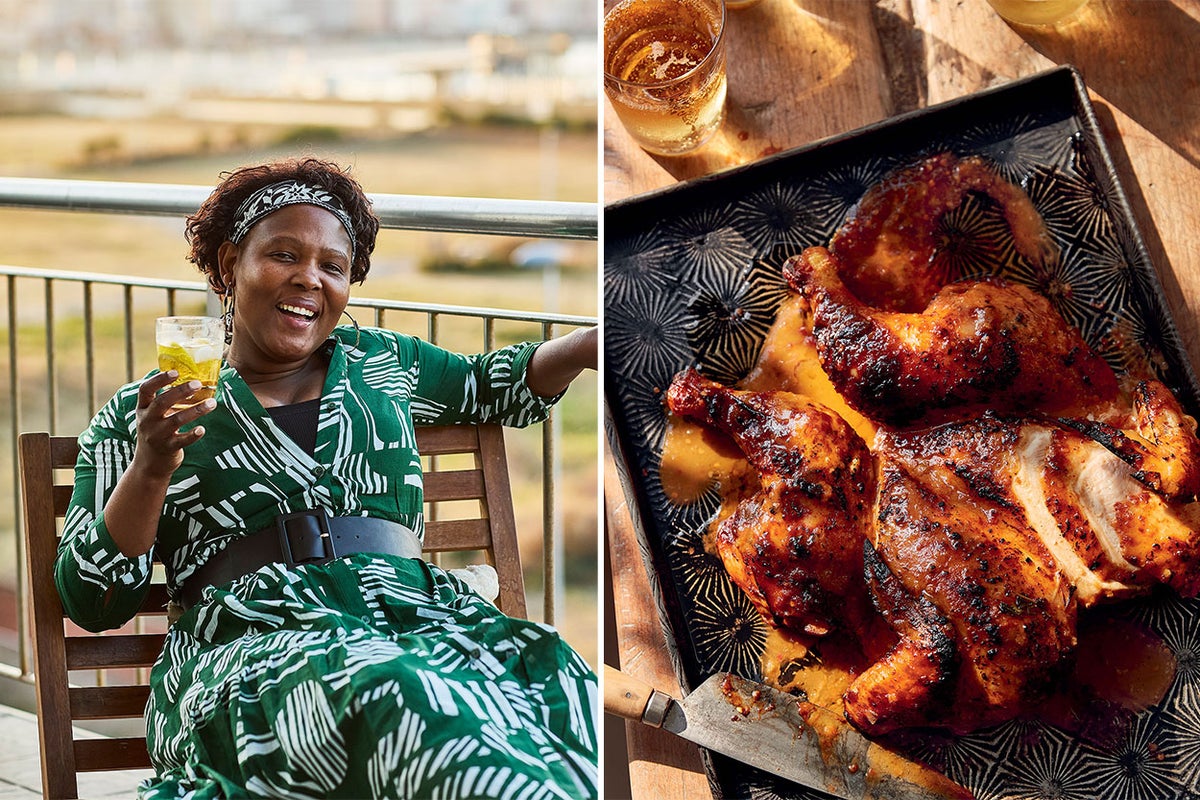
When Nokx Majozi told people in her Durban community that she wanted to spend three years at college learning how to cook, they thought the idea was ridiculous.
Her family had never encountered the idea that cooking could be studied formally. “They said, ‘No, that’s not a course’,” she says. “Even the community, it was very difficult to explain this to them. I was like a joke within the community, like, ‘You don’t know how to cook’.”
In a place where cooking was something learnt at home, needing lessons could look less like ambition than evidence that your parents had failed to teach you properly.
“It was like a failure from your parents, that they didn’t teach you how to cook,” she says.
Majozi went to college anyway.
That decision would take her from a hotel kitchen in Durban to a Disney resort in Florida, then into some of London’s best-known kitchens. Now, having once been laughed at for taking cookery seriously, she has written the book she always hoped to make.
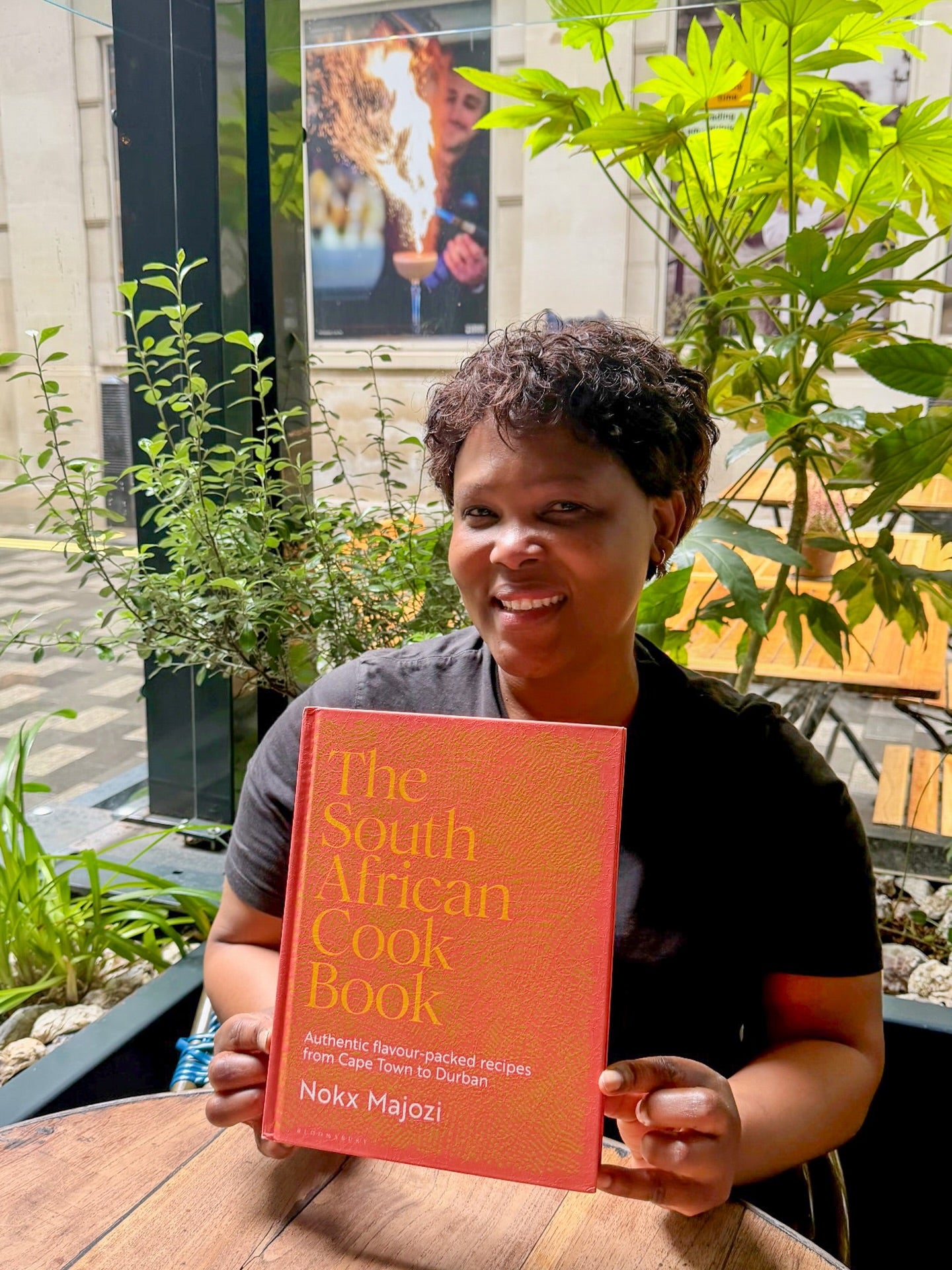
The South African Cook Book: Authentic Flavour-Packed Recipes from Cape Town to Durban is intended both as an introduction to a cuisine that remains surprisingly unfamiliar overseas and as encouragement for the young cooks following behind her.
“I always believe my story begins at home,” Majozi says. “I want to transport people to where I come from, to the beginning, and to inspire the young women or the young chefs in South Africa that, sometimes, the beginning may not be great, but look at me now.”
Home, in Majozi’s case, was Durban, on South Africa’s east coast, where she learnt by watching both of her parents cook. Her mother’s food was traditional; her father was more inclined to experiment, drawing on flavours and ideas he encountered through his work at the harbour.
She remembers her mother’s dumplings and her father’s fish curry as particular specialities, but it was the process of cooking beside him that first showed her what a chef might be able to do.
“When I was having that moment with my dad when he was cooking, I was chopping or doing something to help him, that’s when I realised you can take something so simple and elevate it,” she says. “That’s how my love of cooking started.”
The difficulty came when she tried to turn that love into a profession. Her family understood cooking as a domestic skill, not something that required qualifications, tuition fees or three years of study.
“I realised I just want to learn. I just want to go to college and learn how to cook – and that’s where the problem started,” she says.
After graduating, she found work at the Riverside, a four-star hotel in Durban. It was there that Nokuthula became known as Nokx. Then came the opportunity that changed how her ambitions were regarded at home: Disney recruited her to cook South African food at its resort in Florida.
“That’s when the community and everyone started to understand and say, ‘Wow, this can get you a job, you can go overseas’, and I was the first one in the community to do this,” she says. “It was something very rare, especially where I come from, for someone to go overseas for work.”
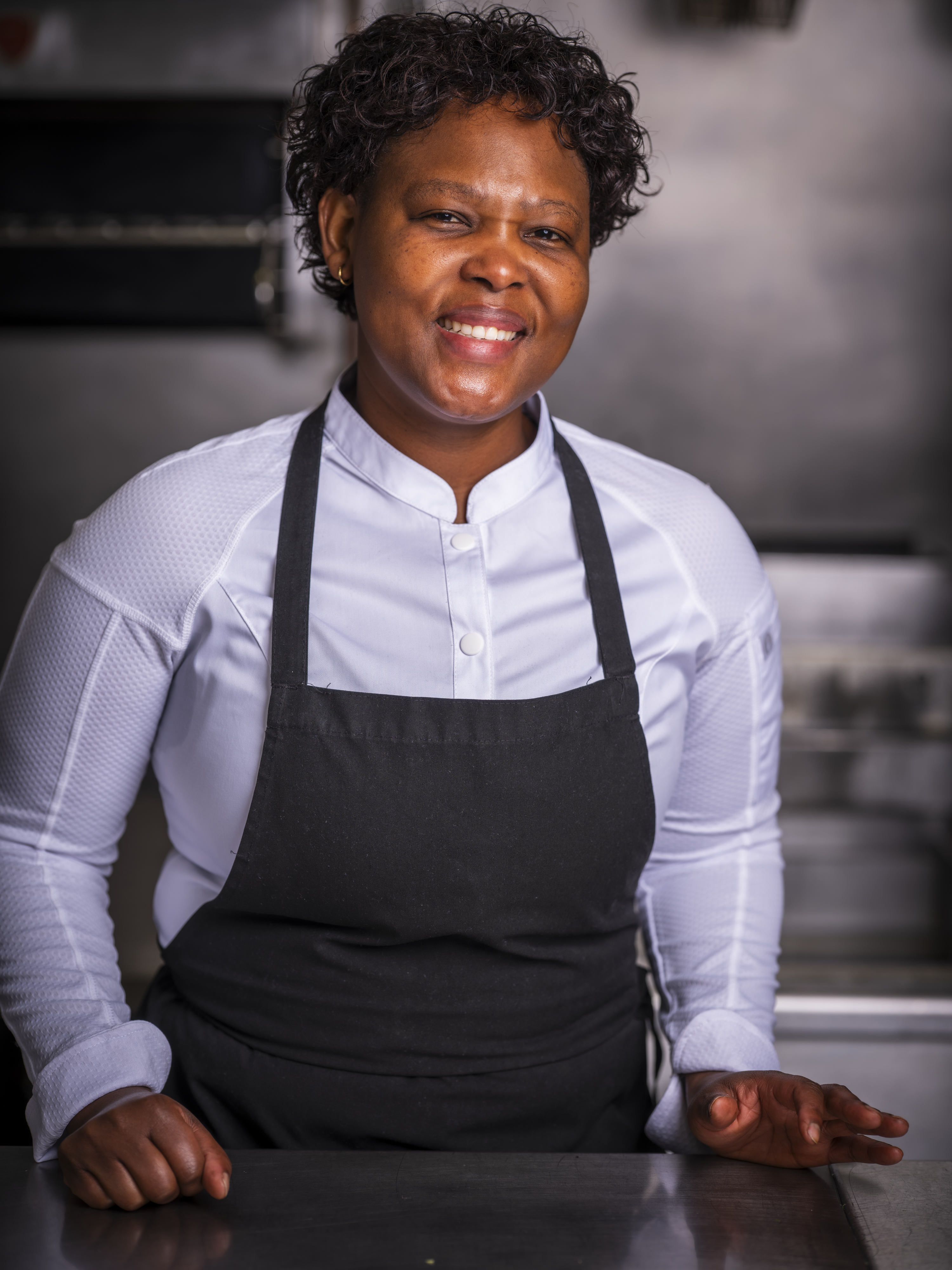
Majozi moved to the UK in the early 2000s and went on to work at the InterContinental in London and The Pie Room at Rosewood London. She has since appeared on Sunday Brunch and James Martin’s Saturday Morning, was selected as one of Jay Rayner’s Rising Stars in 2022 and recently joined Fallow as chef in residence.
The cookbook is the culmination of that journey, but it also has another job to do. South African wine may be familiar to British drinkers; South African food, Majozi believes, has not travelled nearly as successfully.
“Our food is very vibrant with colour, it’s got bold flavours – we are not scared to go for it – and it’s very diverse and inspired by different people,” she says.
It was only when she began travelling that she fully appreciated how many cultures had shaped the food she grew up eating.
“I never actually knew until I started to travel and I realised, ‘Oh, this is from Australia, this is German, this is Polish food’,” she says. “It’s multicultural, South Africa, and the food as well.”
That diversity runs through the book, which moves between provinces, traditions and the foods of different communities rather than presenting South African cooking as a single, fixed cuisine.
Among Majozi’s favourite recipes are bunny chow, one of Durban’s best-known street foods, and the seven colours meal, which she says “represents togetherness, family and a celebration of food and heritage”.
The recipes may be rooted in tradition, but she has deliberately made them possible to cook outside South Africa. Most of the ingredients can be found in supermarkets or ordered online, and she is comfortable making small adjustments where they help a dish travel.
Two of her favourite meals in the book are bunny chow, a type of street food, and the seven colours meal, which she says “represents togetherness, family and a celebration of food and heritage”.
Speaking about why she loves cooking, she explained: “It’s a joy. You can have the same ingredients, but you can do 20 or 60 things with them.
“The beautiful thing is the more you work with different people – especially in London, you have different people of different countries and culture – there’s so much you learn from them.
“We can talk about food any time, with any stranger, and when you’re cooking and people are enjoying your food, for me that is just the best thing ever. It puts a smile on my face in a different way.”
For those wanting to cook South African food at home, Majozi advises people to have maize meal (similar to polenta), tomatoes, a chutney such as Mrs HS Balls, rice and a medium curry powder.
She says the salads are a great place to start in the cookbook for beginners, along with the mango chicken wings or the Malva pudding, which is “South Africa’s answer to sticky toffee pudding”.
Sharing her main hope for her cookbook, she adds: “I just want people to be able to cook something that they’ve never tried before.
“Not a lot of people know about South African food, but with this book, it can help people try something new, understand our culture and our food, and how food varies across provinces when visiting.
“Everyone knows about wine, but we can’t forget about the food – pair the wine with some food.”
Baked butterfish with herb crumb
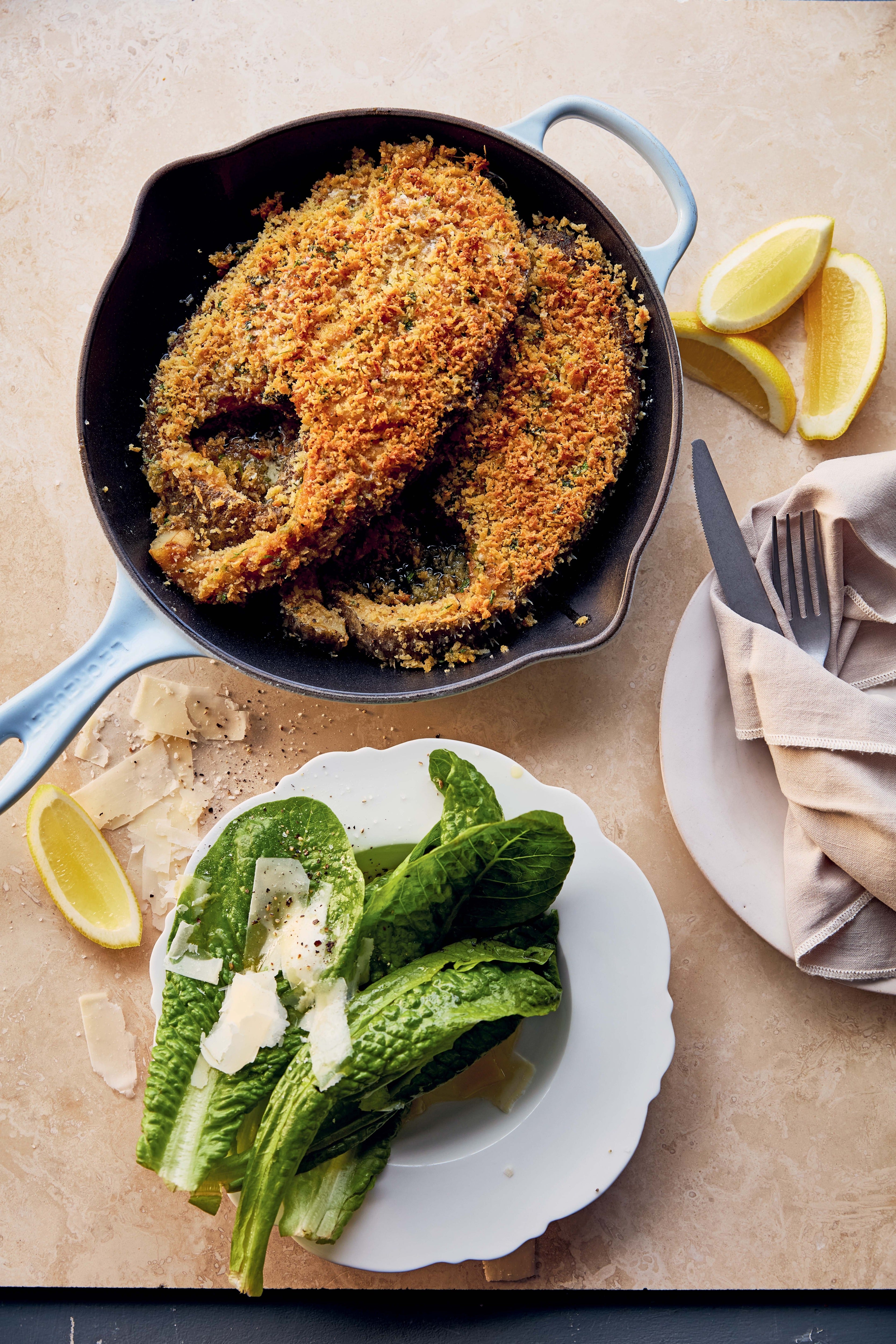
“I love preparing this recipe so much!” Majozi says. “One of my all-time favourite ways to enjoy butterfish is by baking it with a crispy herb crust. The fish is tender and flaky, and the herbs create such a beautiful, fragrant coating and a pleasant crunch.
“I love how simple yet elegant this dish is – perfect for when I want something light but flavourful. Whether it’s a weekend family meal or a quick dinner on a busy weeknight, this baked butterfish always feels like a special treat.
“I like serving it with a fresh salad or roasted vegetables for a complete, satisfying meal.”
Serves: 4
Ingredients:(Serves 4)
60g unsalted butter
60g panko breadcrumbs
Small bunch of parsley, chopped
Small bunch of lemon thyme, leaves picked
1 lemon, zest and juice
35g Parmesan, finely grated
4 butterfish steaks (or black cod fillets)
1 tbsp vegetable oil
Sea salt and black pepper
Method:
1. Preheat the oven to 200C/fan 180C.
2. In a small pan over a low heat, add 30 grams of the butter. Remove from the heat as soon as it has melted and leave to cool for a few minutes.
3. In a small bowl, mix the breadcrumbs, parsley, lemon thyme, lemon zest, Parmesan, the just-melted butter and a good pinch of pepper.
4. Season the steaks with a little salt on one side. Heat an oven-proof frying pan over a medium–high heat, add the oil and place the steaks seasoned side down into the pan. Fry for about four to six minutes until there is a good colour on the underside of the fish, then take the pan off the heat.
5. Using a spatula, carefully turn over the fish so the cooked side is facing up and divide the breadcrumb mixture between the four steaks.
6. Place the pan in the oven for five minutes until the herb crust is golden. Transfer the fish onto individual plates.
7. Add the remaining 30 grams of butter and the lemon juice to the pan and use a wooden spoon to scrape up any toasted bits of fish and herb crust. Drizzle the lemon-butter sauce over the fish to serve.
Grilled peri peri chicken
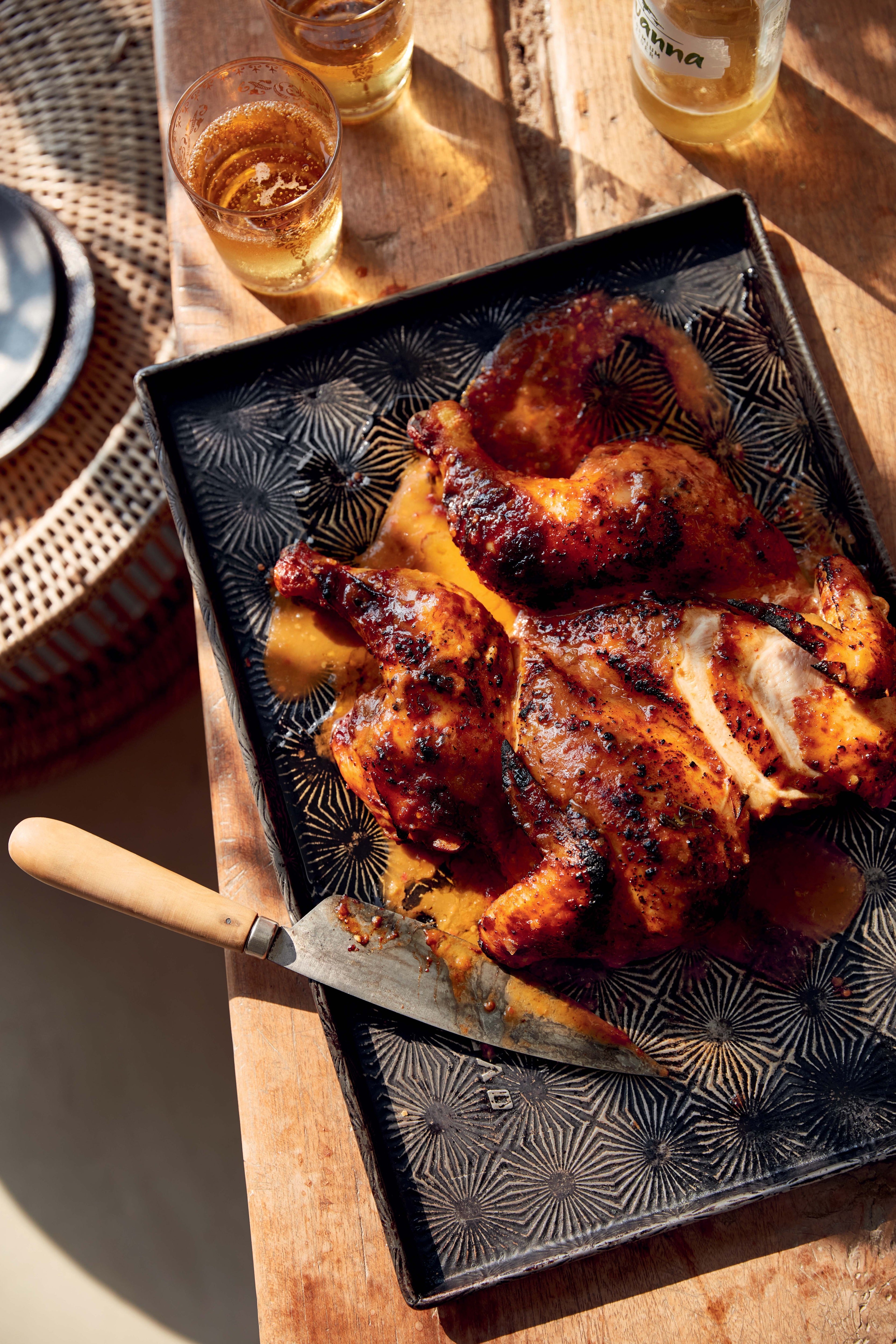
“I’m generally a huge fan of peri peri,” Majozi says. “The heat from the spices, combined with the smoky flavours from grilling, makes every bite exciting.
“If you have time, marinate the chicken for a few hours, letting it soak up all those bold flavours, then throw it on the grill for that perfect crispy skin.
“It’s spicy, it’s tangy, and it’s just full of flavour – exactly the kind of dish I crave when I’m in the mood for something with a bit of a kick.
“Whether it’s a weekend braai or a quick weeknight dinner, this chicken never fails to deliver.
“If lighting the braai is too much of an effort, it is also fabulous in the oven. Simply roast at 200°C/fan 180°C for 40–50 minutes, turning once halfway through cooking.”
Serves: 4
Ingredients:
1 free-range chicken, about 1.5kg
For the peri peri marinade:
10 bird’s eye chillies, deseeded
4 garlic cloves, peeled
2 red peppers, deseeded and roughly chopped
1 red onion, roughly chopped
Large bunch of coriander, roughly chopped
Large bunch of basil, roughly chopped
1 tbsp dried oregano
3 tbsp smoked paprika
120g olive oil
2 lemons, zest and juice
Sea salt and black pepper
Method:
1. Start by making the marinade. In a food processor, put the chillies, garlic, peppers, onion, coriander, basil, oregano and smoked paprika and blend until smooth. Stir in the oil, lemon zest and juice and salt and pepper, to taste, until combined.
2. To spatchcock the chicken, turn it breast side down on your chopping board. Using kitchen scissors, cut along both sides of the spine and discard. After removing the backbone, place the chicken breast side up. Press down firmly to flatten. Pat the chicken skin dry using a piece of kitchen paper and season with salt and pepper.
3. Put half the sauce into a dish large enough to hold the chicken. Add the chicken and coat well with the peri peri sauce, then cover and leave to marinate in the fridge for at least an hour, or ideally overnight.
4. Light the braai 30 minutes before you want to cook.
5. When you’re ready to cook and the coals are hot, lightly brush the grill with oil. If you can adjust the height of your grill, raise it to a medium height, otherwise move your coals to one side and place your chicken away from the coals so it cooks slowly.
6. Place the chicken on the grill, skin side down for 20 to 25 minutes, then turn and baste with the remaining marinade. Grill until the juices run clear, turning every 10 to 15 minutes. It should take around 50 to 60 minutes in total.
Rainbow salad
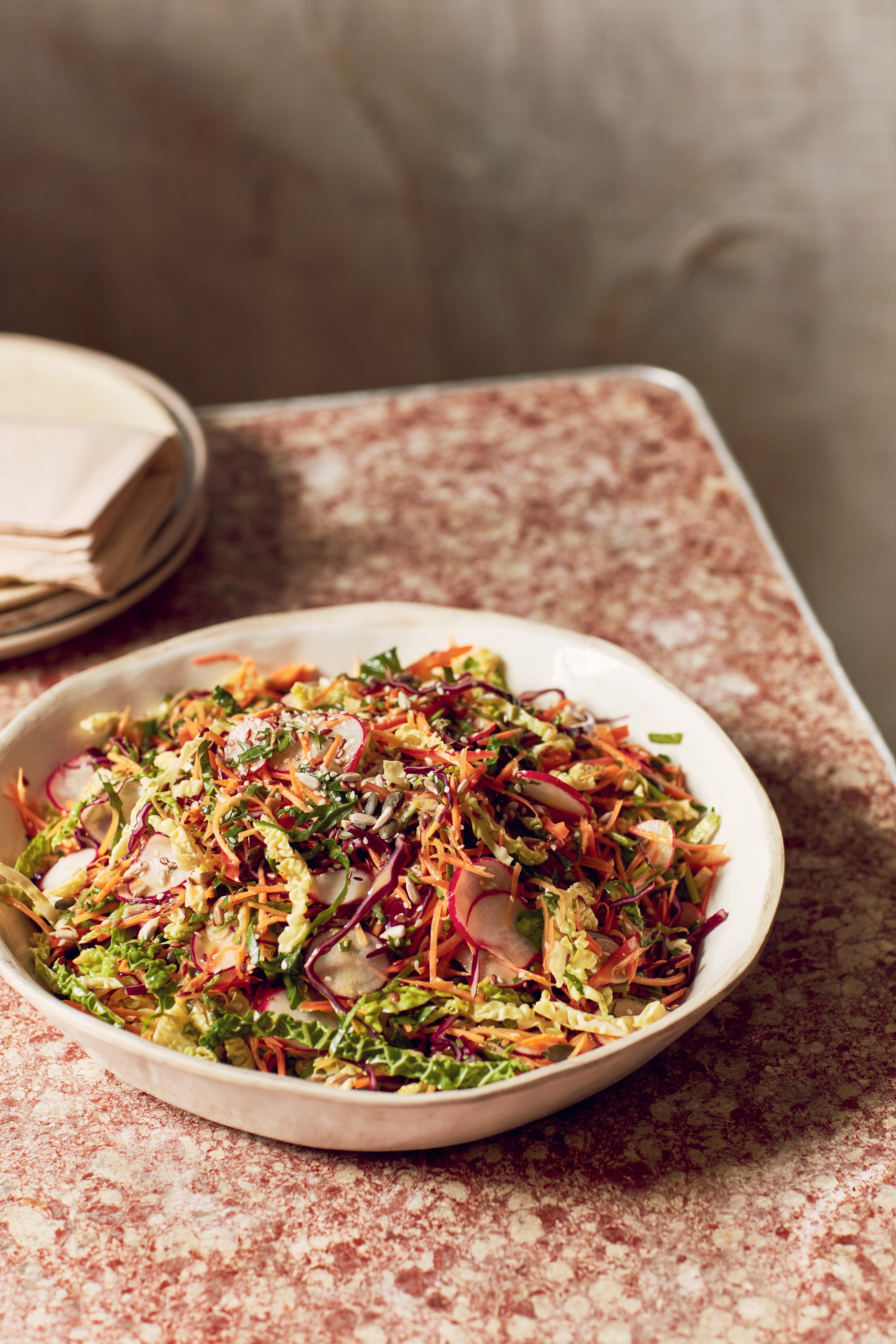
“This rainbow salad is a showstopper in every sense,” Majozi says.
“It’s packed with every colour of the vegetable spectrum, from crisp peppers and radishes to leafy greens and shredded red cabbage, as well as Hispi cabbage, also known as pointed cabbage or sweetheart cabbage, whose leaves are delicate and sweeter than regular green cabbage.
“I love how it’s not just a feast for the eyes, but for the taste buds too. Each veggie brings its own crunch, freshness and flavour, and the tangy dressing ties it all together beautifully.
“This is the salad I make when I want something vibrant, healthy and guaranteed to brighten up my day. Every bite feels like a celebration of what nature has to offer.
“Ditch the regular leafy greens and make this your new middle-of-the-table salad!”
Serves: 6-8
Ingredients:
2 carrots, grated
125g butternut squash, peeled and julienned
1 red pepper, deseeded and julienned
¼ green cabbage, such as Hispi or Savoy, thinly sliced
¼ red cabbage, thinly sliced
100g baby spinach, thinly sliced
5 radishes, thinly sliced
20g parsley, chopped
60g mixed seeds, such as sunflower, pumpkin, linseeds
For the dressing:
1½ tbsp apple cider vinegar
1 lemon, zest and juice
3 tsp runny honey
3 tsp Dijon mustard
6 tbsp olive oil
Sea salt and white pepper
Method:
1. Start by making the dressing. In a blender or bowl, add the cider vinegar, lemon zest and juice, honey and mustard. While the blender is running or you are whisking by hand, slowly add the olive oil in a thin steam until it’s all incorporated. Season to taste with salt and white pepper.
2. In a large bowl, mix all the vegetables, the chopped parsley and the seeds.
3. Drizzle over the dressing and toss to coat everything thoroughly. Serve on a large platter.
This article was edited by The Independent.
‘The South African Cook Book: Authentic flavour-packed recipes from Cape Town to Durban’ by Nokx Majozi (Bloomsbury Publishing, £26).



