


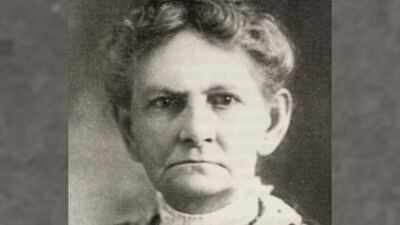
In the early 1900s, an Indiana widow spent more than two decades fighting to defend her claim to 120 acres along Lake Michigan. Drusilla Carr had lived on the land for decades before it became valuable. As the city of Gary, Indiana, grew around her, the lakeshore that had once been seen as little more than sand and swamp became increasingly sought after for parks, homes and industry.Carr was born on July 29, 1856, in Porter County, Indiana. She and her brother became orphans during the 1860s. According to National Park Service, at the age of 13, she was recorded in the 1870 census as working as a domestic servant. The census also noted that she had never been taught to read or write.In 1872, she left that household and moved to the Lake County lakeshore near the mouth of the Grand Calumet River at Miller. She worked at a fishing shack run by John and Hank Granger. “It was near to where the Gary Marquette Park is and close to the lagoon. I cooked for them,” she later recalled.The area was then very different from the developed shoreline that exists today. It consisted mainly of sand dunes, swamps, ponds and scrub trees. Mink, muskrats and skunks were common, while raccoons, wolves and foxes were also found there. Wild rice and ducks were plentiful during the season. Carr later married Robert Carr on Christmas Day in 1875, and the couple built their life around the lake.The family depended heavily on fishing and also collected what the land and shoreline provided. Carr picked cranberries and huckleberries, gathered sassafras and collected driftwood and other wood from the beach. She also remembered how the removal of moss affected the local cranberry supply, saying, “that is the reason there are no more cranberries here.”
How Drusilla claimed land
Carr later said that in March 1876, a man named Bingham came to the area after acquiring a land claim in Section 31. According to her account, he was unhappy with the property and told her that if she moved onto it, she could have it.Carr said she copied the land description from his deed because he promised to send her a new deed later. She never saw him again and eventually stopped receiving replies from him. She continued living on the property, however, and built her life there.For years, the Carr family lived in cabins near the river and later moved closer to the lakefront. They raised children, fished and collected supplies from the surrounding land. Carr remembered one particularly large fishing haul when she and others pulled in a net containing 57 large sturgeon.The abundance did not last. Lake Michigan’s native fish populations declined sharply because of overfishing. Commercial harvesting of lake sturgeon was eventually closed in 1929. The annual catch had fallen to about 2,000 pounds, compared with 3.8 million pounds in 1879.Carr also watched the landscape change as Gary developed. Around the late 1880s, the mouth of the Grand Calumet River became closed by sand. Roads were built, the Carr family moved their house and the lakeshore became more accessible.She also became acquainted with Octave Chanute, a French-American civil engineer and aviation pioneer, who used her property for early glider experiments. Townspeople reportedly called him the ‘Crazy old man of the sand dunes’, but Carr defended him.
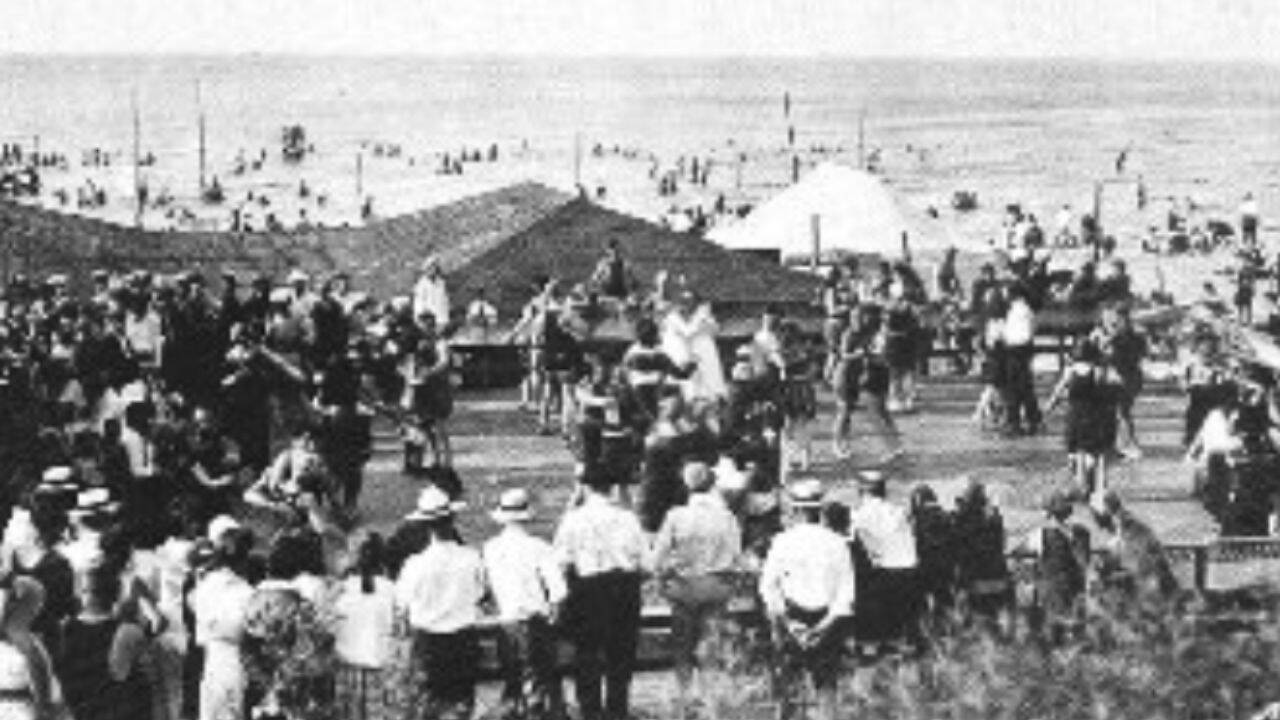
A party on Carr beach, 1917 (Spicerweb. org photo)
Legal fight begins
The situation changed significantly after Gary’s construction and expansion. By 1908, the land that had once been considered remote and difficult to use had become highly valuable. Carr was 52 and a widow when the first verified legal case against her was brought.She continued to insist that the land was hers. At the same time, Gary wanted access to the Miller lakefront for a public park. The city began legal action to acquire property, but its first attempt was stopped because Miller was still a separate town and had not yet become part of Gary.The dispute continued for years. In 1911, Carr opened a bathhouse on the beach. The area became popular with visitors, and around 3,000 people reportedly visited Carr’s Beach on one Sunday in 1914. The family also operated attractions and rented cottages.Carr’s legal victories did not end the pressure. In 1917, Indiana’s Supreme Court reversed lower court decisions that had favoured Gary’s park board. In 1919, Gary eventually acquired the Town of Miller. The city then obtained lakefront land, including property connected to the Carr family’s original tract.Carr remained determined to defend what she believed was hers. In 1920, she summed up her position in this statement, “No one ever told me I was on their property.”She was described by an attorney as “a forceful, determined woman with a lot of grit, although unschooled, knew her rights and would not be pushed around.”
Carr continued fighting into old age
Part of Carr’s land was later threatened by industrial expansion. In 1923, she made clear that she did not want the landscape around her home replaced by factories.“I hope the scenes of my youth, where I have lived so happily and brought up my children, will not be desecrated by huge industrial smoke stacks. I would rather sell to people willing to make this a beauty spot, a wonderful beach, but sell I will.”Carr also faced financial pressure during the long legal disputes. Parts of her holdings were sold to help fund the cases, while disputes over taxes and land titles continued.In 1930, she appeared in court again. A contemporary report described her as a veteran of 12 legal battles, eight of which she had won. During one hearing, when a lawyer asked whether she was too tired to continue, she replied, “Me–tired? Me? I should say not, young fellow. You go right ahead!”Carr died on September 15, 1930. At her funeral, Frederick Backemeyer described her as “a heroic little soul who stood her ground when she thought she was in the right. Strength, courage, and dignity were her clothing.”The following January, a judge ruled in favour of her estate, although Carr’s heirs were required to pay back taxes and interest to establish proper ownership.
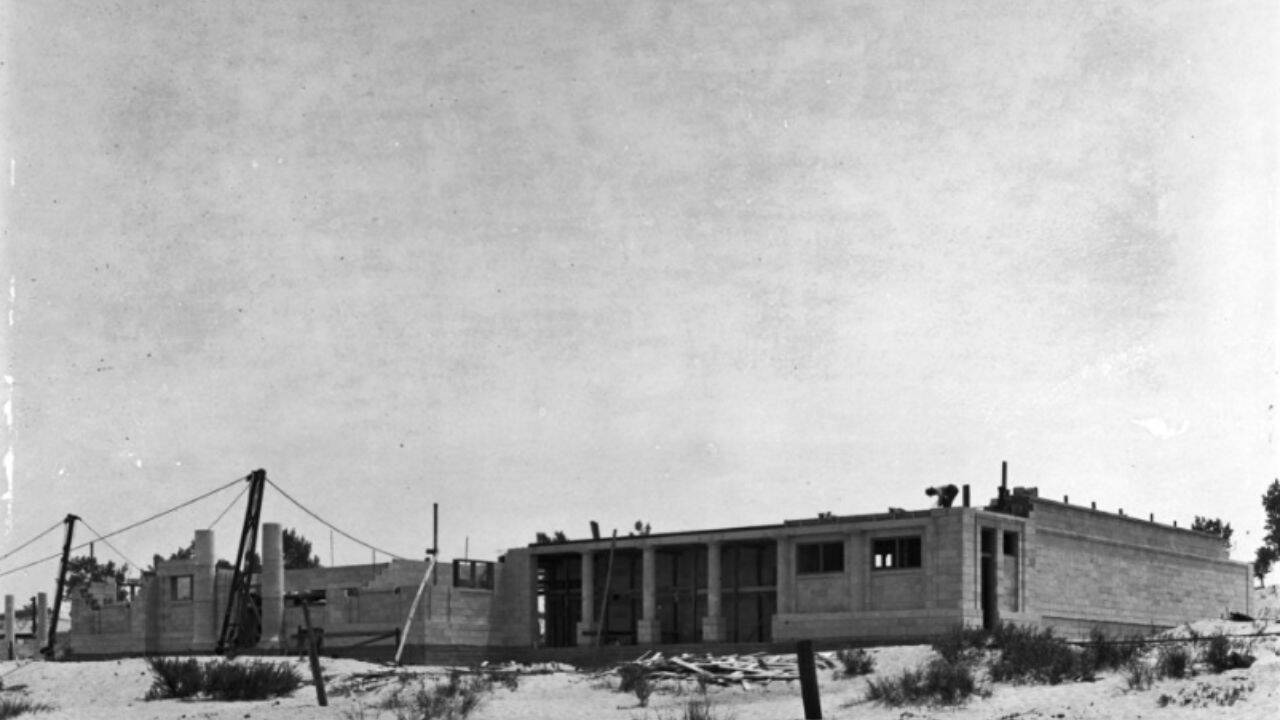
Bathhouse under construction. (Picture: Spicerweb.org)
Land becomes protected
The fight over Carr’s land continued even after her death. In 1940, an 88-acre section of the former Carr property was sold to a land company owned by US Steel at a sheriff’s sale after the estate’s debts had grown.The company later decided not to use the land for industrial expansion. The property remained largely undeveloped for years as debates continued over how the Lake Michigan shoreline should be used.Marquette Park also became a focus of civil rights protests because Black residents faced discrimination and violence when trying to use its beach and recreational facilities.At the same time, there was a major debate over whether parts of the Indiana Dunes should be protected or used for industrial development and a deep-water port.By 1976, Congress was considering an expansion of the Indiana Dunes National Lakeshore. The proposed expansion included the former Carr tract between Marquette Park and land held by US Steel. The area included beaches, lagoons, ponds and black oak-blueberry forest.In 1980, US Steel donated 212 acres to the Indiana Dunes National Lakeshore. Part of that land came from Drusilla Carr’s original claim, helping ensure that it would remain open space.Today, Marquette Park and Miller Woods are part of the landscape connected to Carr’s story. The Paul H Douglas Trail in Miller Woods passes through beach ridges and wetlands that were once threatened by development.


