


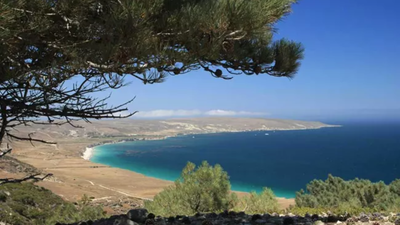
In December 1986, the United States federal government completed a deal to buy Santa Rosa Island for $29.5 million. The 53,000-acre island, located 26.5 miles off the coast of Santa Barbara, California, was bought by the National Park Service from its longtime private owners, the Vail & Vickers ranching partnership. Under the deal, the ranching family kept a 25-year reservation of use and occupancy covering a seven-acre area at Bechers Bay. This allowed cattle operations and commercial hunting to continue for a limited period while the island moved towards full public management as part of Channel Islands National Park. The deal ended decades of private farming and ranching on the second-largest island in the Channel Islands. National Park Service records show how Santa Rosa Island changed from an ancestral Native American home into a working cattle ranch and finally into a protected national sanctuary.
Centuries of land use and human history
Long before private ranchers arrived, Santa Rosa Island was home to the Chumash people, who called it Wima. Archaeological research has found evidence of people living on the island for more than 13,000 years. In 1959, archaeologist Phil Orr discovered the remains known as Arlington Springs Man. The find showed that the island was home to some of the oldest reliably dated human remains found in North America. Chumash communities built maritime trade networks and several permanent villages on the island. They relied on the area’s rich marine life until they were moved to missions on the California mainland in the early 19th century. Later, Chinese, European and American crews hunted sea otters and fished for abalone around the island. In 1838, the Mexican government granted the island to the Carrillo brothers. Santa Rosa Island later became a private agricultural property. It first supported large sheep herds before the Vail & Vickers company bought the island in 1904 and established a cattle ranch.
National park expansion and ecological recovery
Congress added Santa Rosa Island to the boundaries of the newly authorised Channel Islands National Park in March 1980. Vail & Vickers initially opposed the move, but the family eventually agreed to sell the island to the federal government. The buy-out helped ensure that the island would remain public wilderness instead of being opened to commercial real estate development. The 1986 sale was worth nearly $30 million. Under a special use permit, Vail & Vickers were allowed to continue raising cattle and running private trophy hunts for introduced non-native deer and elk. However, environmental concerns and later legal settlements led to the gradual end of ranching activities. All cattle were removed from Santa Rosa Island by 1998 to protect native plants and riparian watersheds. When the 25-year occupancy agreement expired in 2011, the non-native deer and elk were also removed. The entire 53,000-acre island then came under direct National Park Service management.
Protecting rare plants and cultural sites
Without commercial livestock grazing, Santa Rosa Island has undergone years of environmental recovery. The island is home to around 500 plant species across nine different ecosystems. Six plant species are found only on Santa Rosa Island. Among them is the Santa Rosa Island subspecies of the Torrey pine, considered one of the rarest pine species in the world. Today, about 20,000 people visit the island each year, arriving by boat ferry or small aircraft. Visitors can reach Bechers Bay to see remains of the 19th-century ranching operations, hike through native habitats and visit protected archaeological areas. National Park Service historical records also describe the island as an important cultural place for modern Chumash descendants. At the same time, it preserves an example of southern California’s natural coastal landscape before large-scale modern development.


