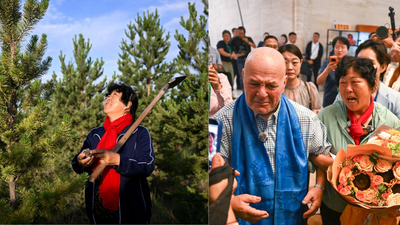
In 1999, American teacher Ronald Sakolsky was teaching English in Luoyang, China, when a television report about Yin Yuzhen, a woman battling desertification in Inner Mongolia’s Mu Us Sandy Land, moved him deeply. He decided to help and spent about two months raising $5,000 through a US-based charity to support Yin’s tree-planting work. The money helped her buy saplings as she and her family continued their efforts to hold back the desert. Over the years, the trees grew into a forest of more than 50,000 trees. Sakolsky and Yin first met in person in 2000 but eventually lost touch for more than two decades. In 2026, Yin searched for her old American friend online. Their efforts to reconnect succeeded, and on August 23, 2026, the two finally met again at an airport in Ordos, Inner Mongolia, where they embraced and cried.
How an American teacher’s $5,000 helped plant a 50,000-tree forest
Sakolsky was working as an English teacher in Luoyang under a China-US teacher exchange programme when he saw a television report about Yin’s struggle against the advancing desert sands. Yin and her husband had been planting trees in the Mu Us Sandy Land, an area where desertification had made farming and daily life extremely difficult. Moved by her determination, Sakolsky decided that he wanted to contribute to the effort. He spent around two months contacting organisations in the US before a Boston-based charity agreed to provide $5,000. The money was sent to support Yin’s afforestation work, helping her purchase saplings for planting in the sandy landscape. Sakolsky did not expect the contribution to make him famous or bring him any financial return. He simply wanted to support someone trying to restore degraded land.
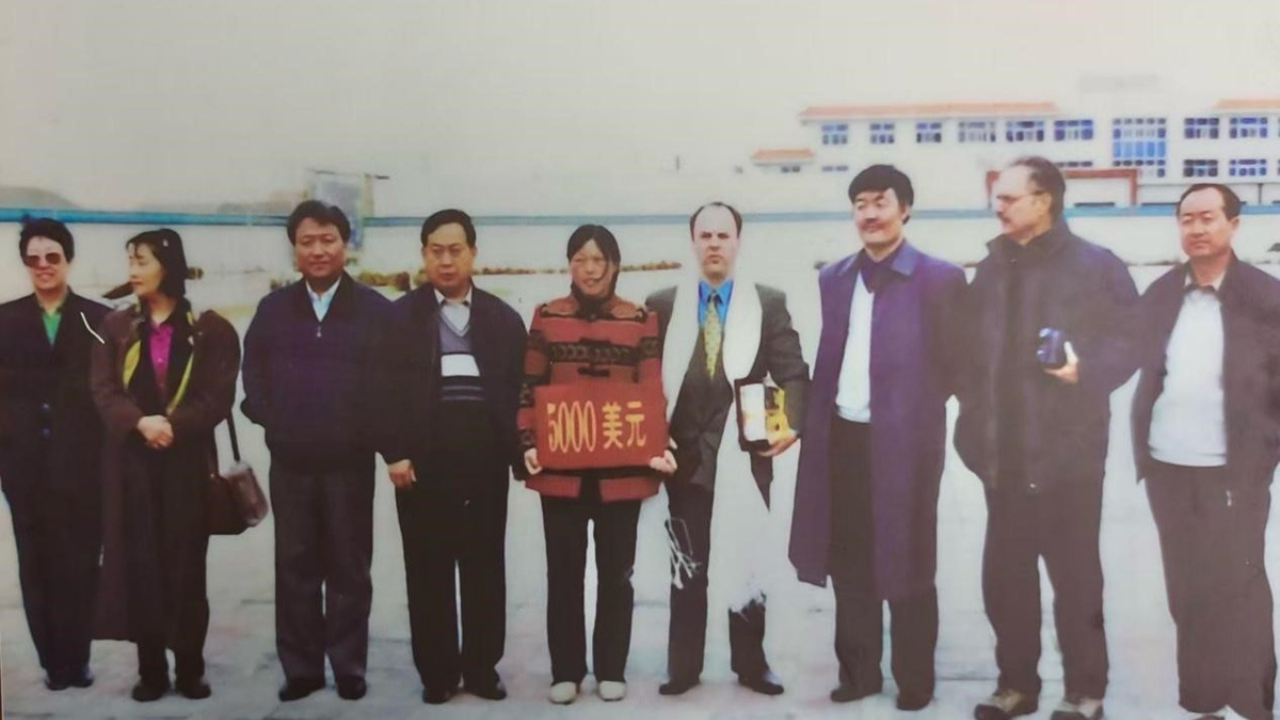
Yin turned the donation into a long-term fight against desertification
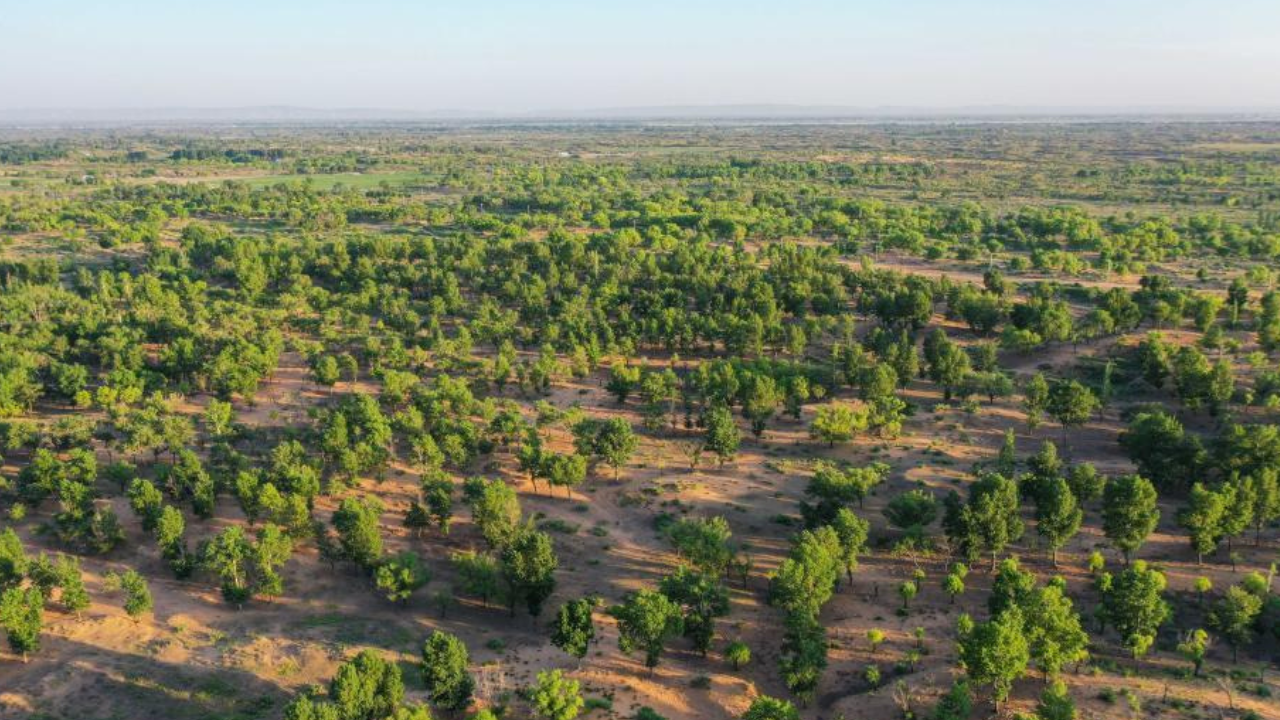
Yin used the money for tree planting and continued the work for decades. Reports say the trees associated with Sakolsky’s contribution eventually grew into a forest of more than 50,000 trees. It is important, however, to distinguish this forest from Yin’s much larger restoration effort. She had begun planting trees years before receiving Sakolsky’s support and continued planting for decades afterwards. Xinhua reports that Yin planted her first sapling in 1986 and has spent roughly four decades working to combat desertification in the region. Her broader efforts have helped green more than 70,000 mu of sandy land, equivalent to roughly 4,667 hectares.The transformation was gradual. Trees in sandy landscapes require years of planting, watering and protection before they can become established. Yin and her family continued caring for the trees long after the original donation had been spent. What began as an act of support from an American teacher therefore became part of a much longer local effort to stabilise the land and create vegetation where desert conditions had prevailed.
The American teacher and Chinese woman met in 2000
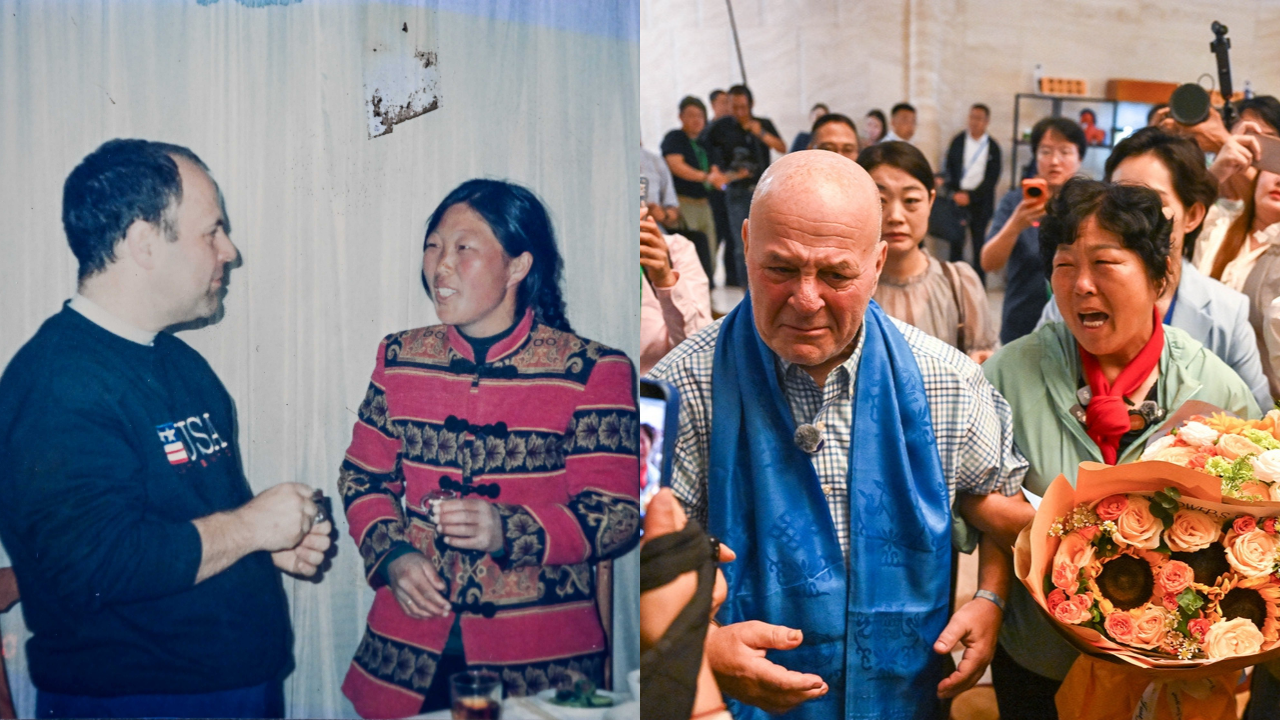
Sakolsky eventually travelled to Inner Mongolia and met Yin in person in 2000. During the visit, he saw the landscape where she was planting trees and learned more about the difficulties involved in restoring the sandy land. The meeting gave him a direct connection to the work he had supported from thousands of kilometres away. Photographs from the period later became an important part of the story when the two were reunited decades later.After their meeting, however, the two gradually lost contact. Sakolsky eventually returned to the US, while Yin remained in Inner Mongolia and continued her environmental work. More than two decades passed without the pair seeing each other. Their connection survived through memories of their first meeting and the forest that had grown from the broader tree-planting effort.
Yin searched for her old friend after more than two decades
In May 2026, Yin posted a video online looking for Sakolsky. She wanted to reconnect with the American teacher who had supported her tree-planting work and hoped he could return to China to see the forest for himself. Her appeal spread online and eventually helped locate Sakolsky. The two reconnected through a video call, giving them their first direct conversation in many years. Yin reportedly told him that she wanted him to come back and see the trees that had grown since their first meeting.The reunion also allowed Sakolsky to see how dramatically the landscape had changed. The man who had once seen Yin’s story on television could now see that the small contribution he had made had become part of a much larger environmental legacy. He subsequently travelled back to China, with Inner Mongolia among the destinations on his journey.
They reunited in tears after 27 years
On August 23, 2026, Sakolsky arrived at Ordos Ejin Horo International Airport in Inner Mongolia, where Yin and members of her family were waiting for him. When the two saw each other again, they embraced and became emotional. Reports described both of them crying during the reunion. Sakolsky, now 69, described the moment as a dream come true.The reunion came roughly 27 years after Sakolsky first became involved in Yin’s story in 1999, although their first face-to-face meeting occurred in 2000. During his visit, Sakolsky also planned to return to the area where he had first seen Yin’s tree-planting work and plant trees with her. The story that began with a $5,000 contribution had come full circle.Sakolsky provided financial support at a crucial moment, while Yin and her family spent decades planting, watering and protecting trees. The resulting forest became a lasting symbol of that connection and ultimately helped bring two people who had lost touch for decades back together.