


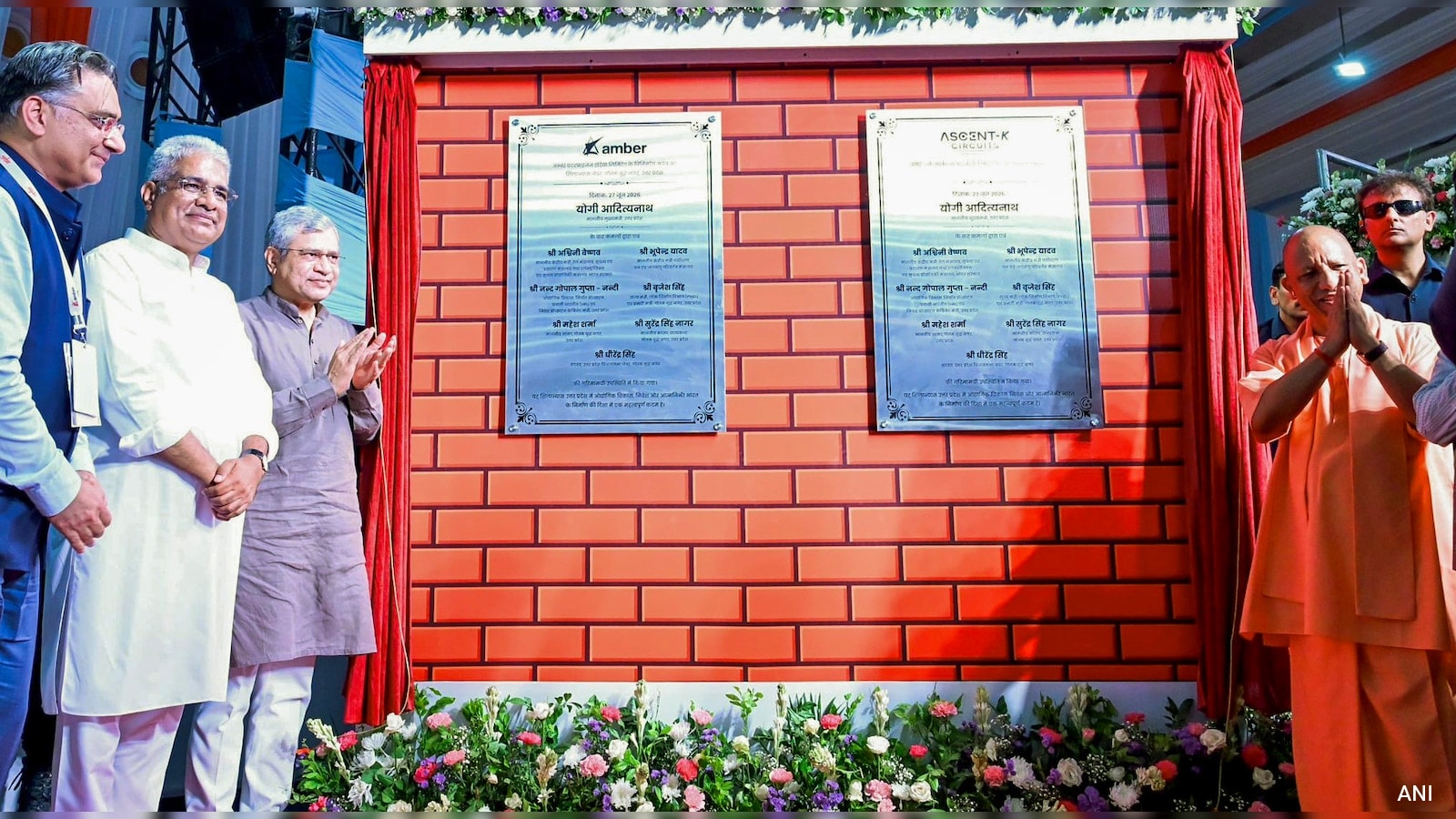
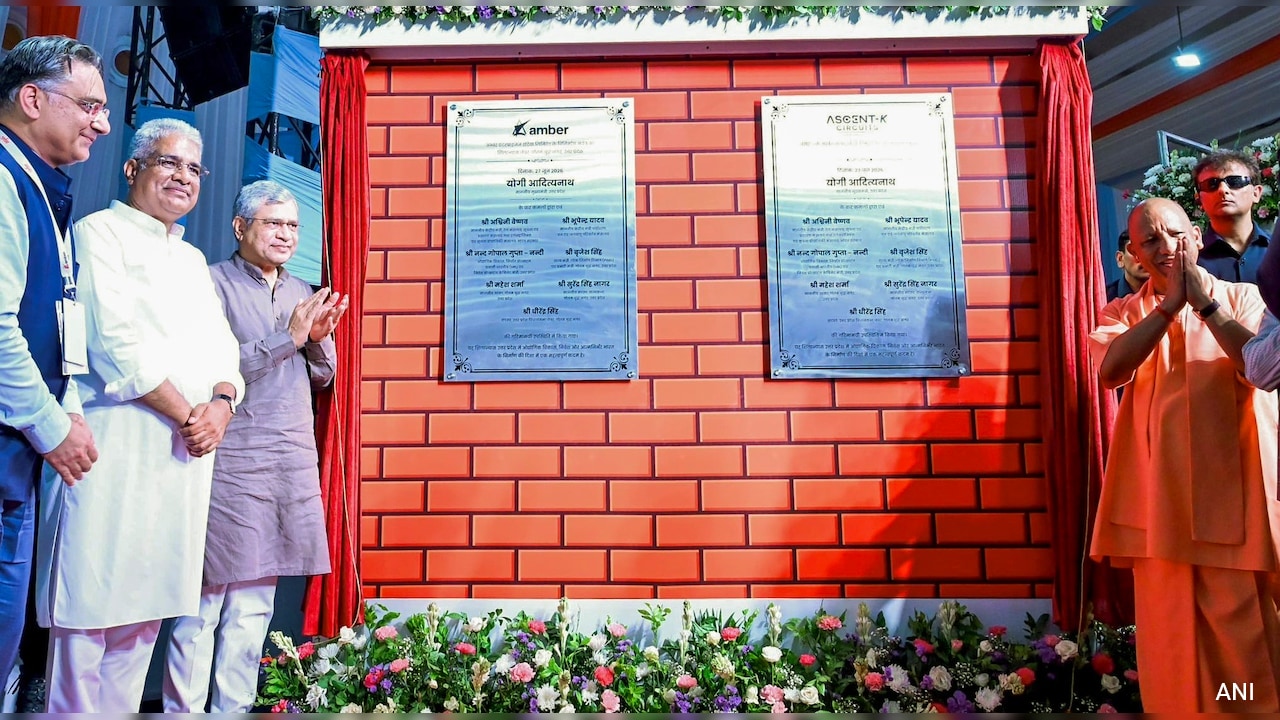
Today marks a historic milestone in India’s journey towards becoming a global electronics powerhouse. In a major boost to PM Narendra Modi’s ‘Aatmanirbhar Bharat’ vision, a significant ground-breaking ceremony was held today at Jewar, Uttar Pradesh.
UP CM Shri Yogi Adityanath and Union IT Minister Shri Ashwini Vaishnaw jointly laid the foundation stones for electronics manufacturing projects worth approximately Rs 6,750 crore at Yamuna City, Jewar.
From being a major importer, India is now positioning itself to manufacture the very ‘brain’ of electronic devices – the Printed Circuit Boards, commonly known as PCBs. This shows the government’s commitment towards establishing a complete semiconductor and electronics ecosystem from the ground up.
With investments worth thousands of crores pouring into the Yamuna City region, Jewar is set to emerge as the ‘Silicon Valley’ of North India. It will save billions in foreign exchange for the country and redefine India’s economic landscape.
At the heart of today’s event are two giants: ASCENT-K Circuit, a joint venture with Korea’s KCC, and AMBER Enterprises. ASCENT-K is investing Rs 3,250 crore to produce advanced, high-density, and multi-layer PCBs. AMBER’s Rs 3,500 crore facility will focus on critical HVAC components and PCB assemblies. Together, these plants are expected to generate employment for around 3,000 people.
“Jewar is poised to emerge as one of India’s leading hubs for electronics and semiconductor manufacturing”, said the IT Minister. He further stated: “We are moving from assembly to deep manufacturing. The advanced multi-layer PCBs being built here, some with 20 to 22 layers, are the backbone of modern technology. What we once imported, we will now ‘Make in India’ for the world”.
To understand why this matters, let’s look at the numbers. India used to import Rs 40,000 crore worth of PCBs annually. By shifting this production to Jewar and other hubs, India will drastically reduce its import dependence, directly improving our Balance of Payments (BoP). Every PCB made here is foreign exchange saved, strengthening the Rupee and bolstering our forex reserves.
The growth trajectory is staggering: India’s electronics production has surged six-times from Rs 1.9 lakh crore in 2014-15 to nearly Rs 13 lakh crore in 2025-26. During the same period, electronics exports have jumped eleven-times to Rs 13 lakh crore in 2025-26. India is already the 6th largest electronics exporter, and the government has set the target to become the 2nd largest globally.
The infrastructure in Jewar is a primary catalyst. The recently inaugurated Jewar International Airport, proximity to the Delhi-Mumbai Industrial Corridor (DMIC), and the proposed Delhi-Lucknow-Varanasi Bullet Train are making this region an irresistible destination for global investors.
Today’s ceremony in Jewar is a testament to India’s resolve to not just participate in the global tech race, but to b e amongst the frontrunners.



