


Kolkata:
In a boost to India’s defence self-reliance programme, the Indian Navy on Sunday successfully commissioned three indigenously built warships at the Garden Reach Ship Builders and Engineers facility in Kolkata. The commissioning of INS Dunagiri, INS Sandhayak and INS Agray represents another success story in the nation’s endeavour to design, develop and manufacture advanced military platforms.
At a time when the intensity of strategic competition in the Indian Ocean Region (IOR) is rising, the commissioning of the platforms not only augments the operational capabilities of the Navy but also reflects India’s advancement in achieving defence self-sufficiency.
A Landmark Day For Indigenous Shipbuilding
Unlike previous decades when India heavily relied on foreign warships, the present generation of warships and support vessels is the country’s own.
All three warships commissioned to service on Sunday have been designed by the Indian Navy’s Warship Design Bureau and manufactured at the GRSE shipyard. Per the Navy, more than 75 per cent of the equipment and systems used in these ships are indigenous.
The project reflects the fast-developing defence manufacturing ecosystem in India.
From the perspective of military planners, the indigenous design allows modification and upgradation of the systems in the future without relying on foreign suppliers.
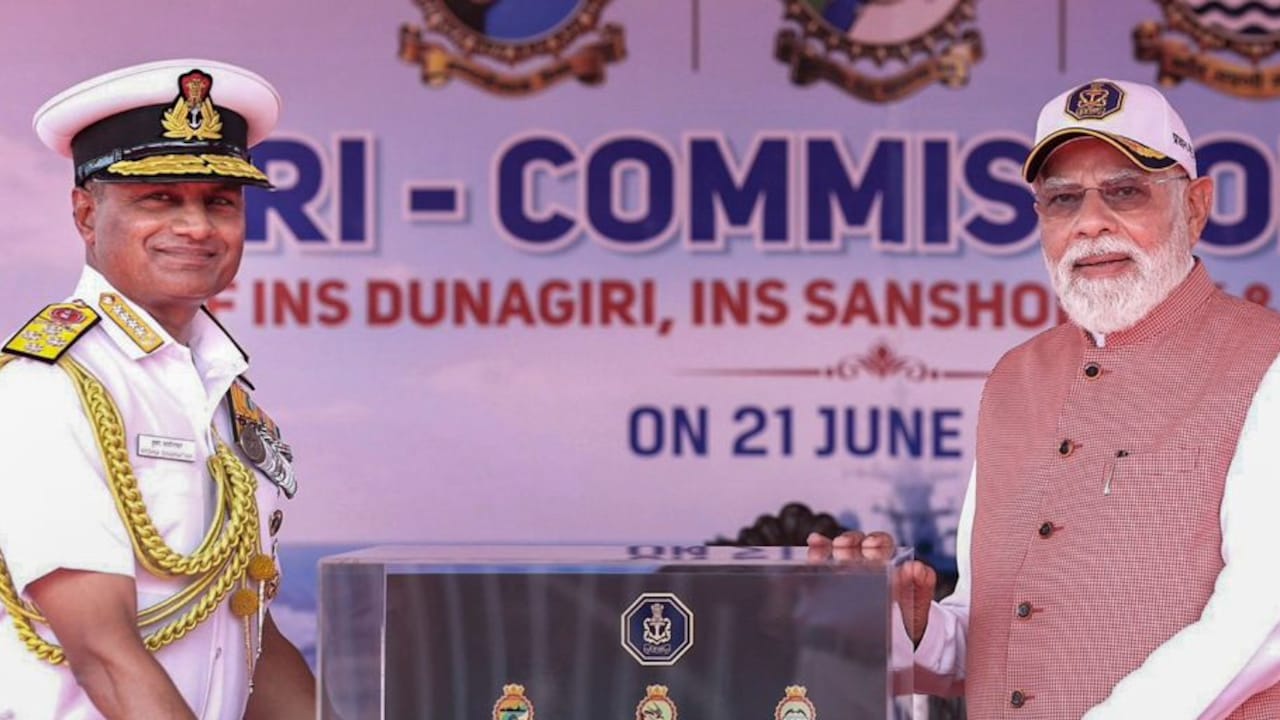
Photo Credit: PTI
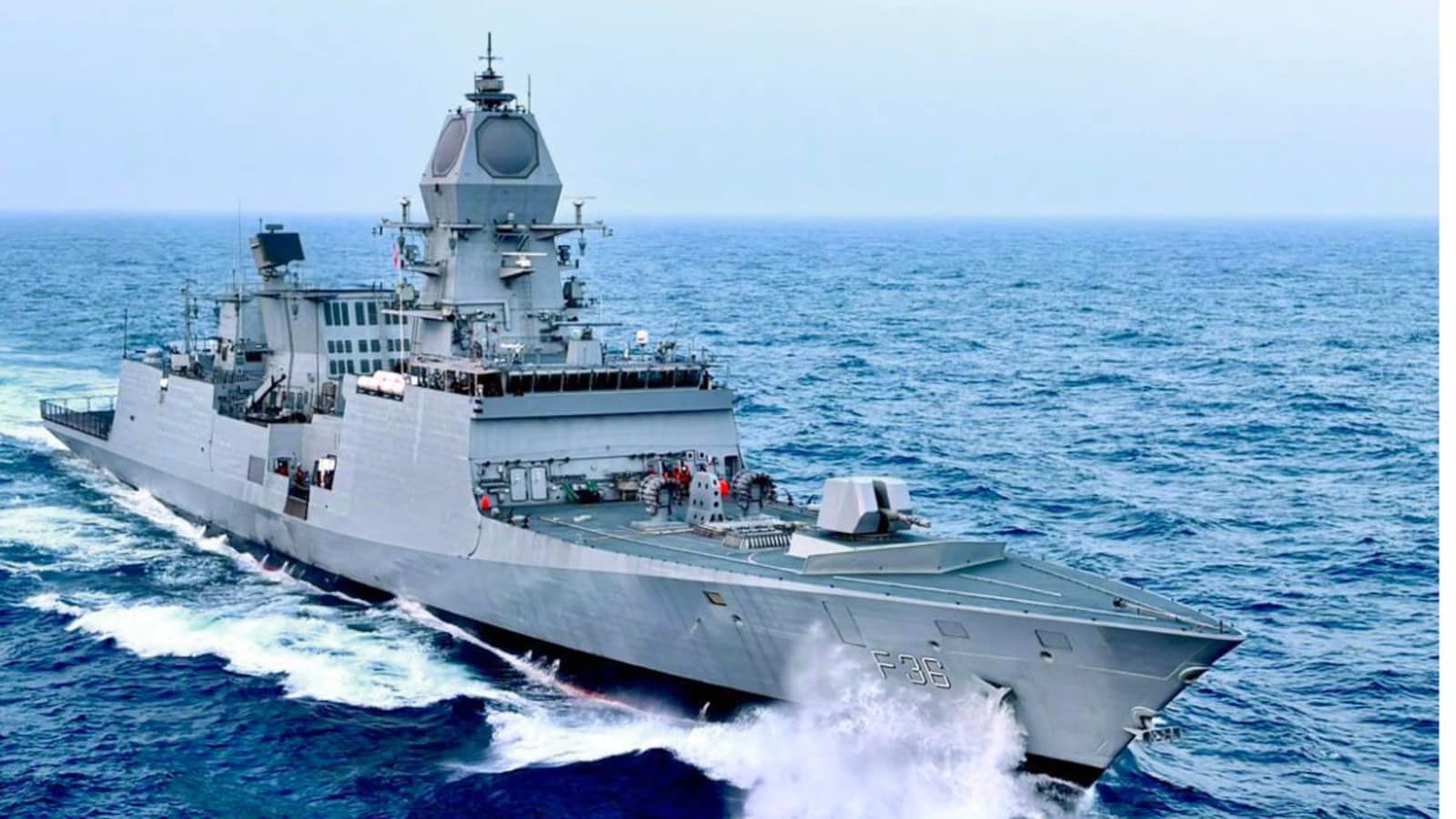
INS Dunagiri: Next Generation Stealth Frigate
Of all the three warships, INS Dunagiri represents one of the most advanced indigenous warships.
Dunagiri is a Project 17A stealth frigate and the next generation of an Indian-designed guided-missile vessel. Fitted with advanced stealth features, the warship is designed in such a way as to reduce the probability of detection by radars and improve survivability in contested environments.
The ship has been armed with a state-of-the-art combat system, advanced sensors, and a wide range of weapon systems meant for conducting multi-dimensional operations.
Some of the weapon systems mounted on the ship include the BrahMos supersonic cruise missile, which is one of the fastest cruise missiles in the world, and the medium-range surface-to-air missile system.
The commissioning of INS Dunagiri is expected to augment the capability of the Navy to operate in the Indian Ocean and beyond.
Also read: India Gets 3 New Indigenous Warships, Here’s Why They Are Special
INS Sandhayak: Mapping the Oceans
A hydrographic survey vessel is an important player in naval operations.
INS Sandhayak is the fourth ship of the Indian Navy’s Large Survey Vessel program and is designed to conduct hydrographic and oceanographic surveys.
The task of the vessel is to conduct surveys of the seabed and chart the navigational routes. It would conduct surveys not only in coastal waters but also in deep-sea environments. It even has Autonomous Underwater Vehicles and Remotely Operated Vehicles that will help conduct surveys of the underwater environment.
Apart from assisting in naval operations, the vessel is expected to assist in scientific research and civilian maritime projects as well.
INS Agray: Strengthening Anti-Submarine Warfare
The third ship commissioned on Sunday, INS Agray, is meant to counter the submarine threats in Indian waters.
INS Agray is the fourth ship of the Arnala class Anti-Submarine Warfare Shallow Water Craft program and is designed for conducting operations in coastal and shallow water environments. It would conduct operations of detecting, tracking, and neutralising the enemy submarines in India’s territorial waters.
Fitted with an advanced sonar system, anti-submarine torpedoes, and other ASW weapon systems, the vessel improves the anti-submarine capability of the Navy in coastal waters.
In view of the increasing submarine activity in the IOR, platforms like INS Agray are expected to play an important role in securing India’s maritime interests.
Contributions Made By MSMEs To the Program
Per the Navy, more than 200 MSMEs from across India have contributed to building the three ships.
This reflects the growing defence industrial ecosystem of India, where MSMEs are increasingly participating in the manufacture of specialised components, systems and technologies for major military projects.
Strengthening India’s Maritime Posture
The commissioning took place in the backdrop of India continuously augmenting its maritime capabilities amidst emerging security challenges in the IOR.
The responsibility of the Navy’s operational tasks now extends from conducting maritime surveillance and anti-piracy operations to conducting humanitarian assistance and disaster relief missions, as well as strategic deterrence.
Commissioning of Dunagiri, Sandhayak and Agray would bring along enhanced capability of conducting surface warfare, hydrographic surveys and anti-submarine warfare, respectively, enabling India to maintain a larger presence in the region.
A Visible Symbol Of Aatmanirbhar Bharat
Beyond any practical utility, the commissioning ceremony reflects India’s increasing capability to manufacture advanced military platforms domestically.
Defence modernisation was generally associated with acquisitions for many years. At present, India’s defence policy is increasingly focusing on indigenous design, manufacturing, and technological self-reliance.
The commissioning of the three naval platforms is a reflection of this trend. As these ships enter active service, they not only become a part of the Navy’s fleet but also a proof of India’s desire to become a leading military manufacturing country that designs and manufactures advanced naval platforms.



