5 min readNew DelhiJul 18, 2026 09:00 PM IST
More than two decades after Sanjay Leela Bhansali’s Devdas became one of Indian cinema’s most celebrated visual spectacles, costume designer Neeta Lulla has revealed the craftsmanship and creative vision behind Aishwarya Rai Bachchan’s iconic sarees from the film, including the unforgettable blue-and-green drapes.
Speaking about the costumes with Hauterrfly, Lulla said every detail, from the choice of fabric to the embroidery and even the petticoat, was carefully planned to complement the filmmaker’s grand cinematic vision while ensuring practicality during filming.

Aishwarya Rai’s royal blue silk saree in Devdas
Recalling Aishwarya’s royal blue saree, Lulla revealed that it was crafted using a rare spun silk fabric that is no longer available. “The fabric that I had used is something called a spun silk, which is not available now. The petticoat in this saree is also made of brocade. This is made of jamawar brocade, just in case Aishwarya is running or doing some activity and the saree goes up,” she said.
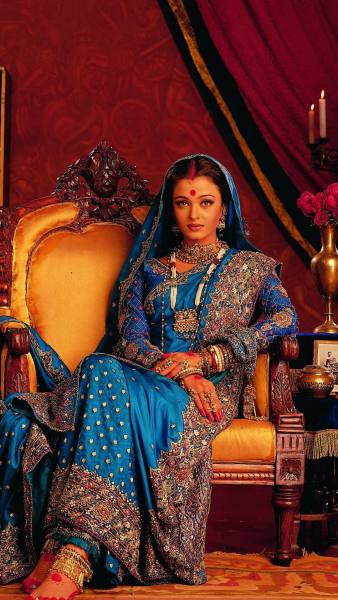 Aishwarya Rai in Devdas
The saree itself measured nearly 10 metres, but was pre-pleated to make costume changes hassle-free on set. “The saree is about 10 meters long but it is fully pre-plated, so that she could wear it within three to four seconds. The embroidery that you see is all in zardori dhakka with wool work and silk, pearls embedded which are ivory base, to create a vintage look,” Lulla explained.
She credited Bhansali’s larger-than-life storytelling for inspiring the elaborate costume design. “Thanks to Sanjay Leela Bhansali and his vision for magnanimity,” the noted designer said.
Aishwarya Rai’s green saree in Devdas inspired by Dhakai motifs
Lulla also shared details about the green saree Aishwarya wore before the iconic “Dola Re Dola” sequence. Talking about it, she revealed that the embroidery drew inspiration from traditional Dhakai motifs.
“The embroidery is the motifs of the Dhakai saree, and the blouse is a mesh which is placed on another silk fabric and the zardori was done,” she said.
Story continues below this ad
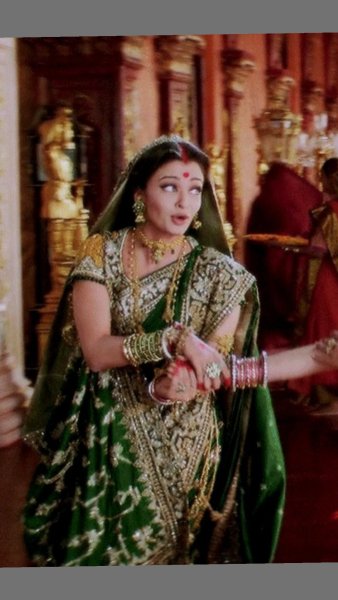 Aishwarya Rai in green saree designed by Neeta Lulla
She explained that practicality was as important as aesthetics while designing the costumes. “The thought process behind was to not waste time in draping the sarees. If you notice this blue saree was where she is sitting, the background is mosque green and it is all warm light,” Lulla added.
Describing the creative intent behind the blue drape, Lulla said it represented the dignity and strength of a married woman, embodied by Aishwarya’s character Paro, while retaining Bhansali’s trademark grandeur.
“This was something that came just before white and red, so we wanted the stiffness and the boldness of a married woman who came to a temple to confront and she was confronted by another woman and you needed the grandeur and you needed the style and the oomph of making it traditional, at the same time very larger than life,” she said.
Lulla further revealed that the research and execution behind the costumes took months. She travelled to Kolkata to study fabrics.
Story continues below this ad
“It took about six months. I went to Kolkata, and studied what kind of fabric cycles to use because for Devdas I dressed all the women. Each one had to be different. There would be sessions where Sanjay used to come to my house,” she shared.
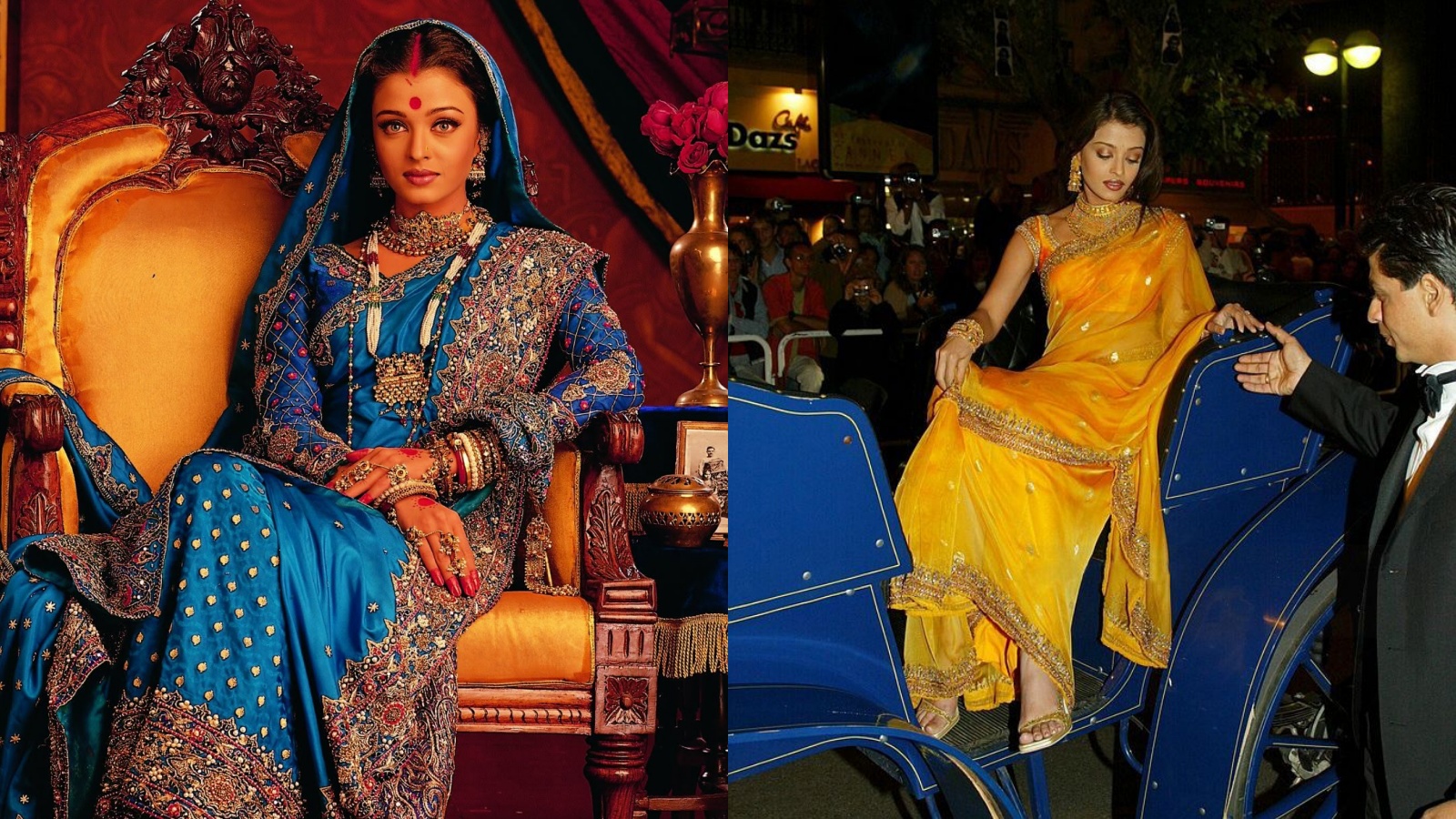
Aishwarya Rai’s yellow saree at Cannes
Lulla also reflected on another collaboration with Aishwarya that became iconic at her debut appearance at the Cannes Film Festival in 2002. The actor walked the red carpet in a striking yellow saree designed by Lulla alongside Shah Rukh Khan and Bhansali during the international premiere of Devdas.
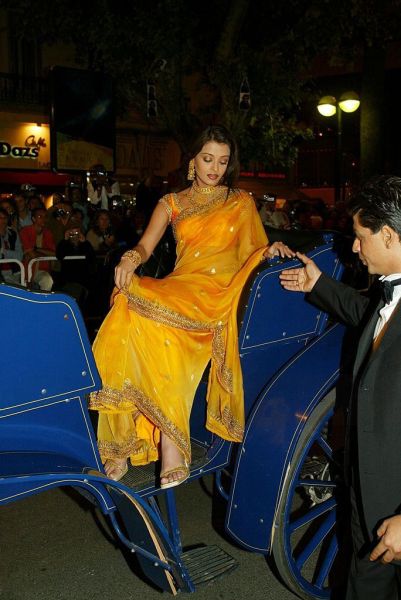 Aishwarya Rai’s Cannes debut
Describing the inspiration behind the now-iconic look, Lulla said the idea was to introduce India’s textile heritage to the global stage.
“It was about taking India to Cannes for the first time. It was about creating a saree that was iconic, bringing the essence of our embroidery heritage and using Dhakai Banarasi net to create that saree, which actually came from Devdas, creating the grand drapes that I think western media had not seen and using traditional gold jewellery rather than a lot of diamonds, very simplistic Indian and yet very magnificent,” she shared.