


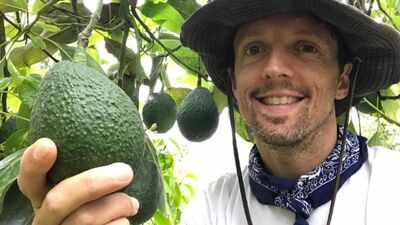
When Jason Mraz bought a San Diego-area avocado grove in 2004, he was looking for a place to slow down and reconnect with nature. Two decades later, that retreat has grown into Mraz Family Farms, a 17-acre operation cultivating organic avocados, California-grown coffee and other specialty crops. The farm’s own account traces the transformation from an old grove of avocado trees, planted in the early 1970s, to a family-run business focused on healthy soil and regenerative agriculture. Its fruit is sold seasonally, both online and through local shops, restaurants and vendors. The evolution has been gradual, shaped by pruning, replanting and experimentation. Instead of treating the land as a backdrop to his music career, Mraz and his family have made caring for it an ongoing part of their lives.
A retreat that became a farm
Mraz Family Farms describes the property as a former old-growth avocado grove, with tall trees planted in the early 1970s. When Mraz purchased the land in 2004, the farm was not yet a commercial operation. It was a place to live, spend time outdoors and care for the existing trees.The change gathered pace more than a decade later. The family farm says it began converting the property into a new operation in 2015, after deciding that the old trees needed a major reset. The work included “stumping,” a process in which trees are aggressively pruned so they can send out new growth. Some of the original trees were nearing the end of their productive life, so the family began making room for new trees and different crops.That transition required patience. Avocado trees do not deliver an instant return after planting, and the farm’s history describes agriculture as a long game. The family also began exploring coffee, herbs, flowers and bananas, with some crops taking years to become ready for harvest.
Growing more than avocados
Avocados remain central to the farm. Mraz Family Farms says it cultivates organic California avocados, including Hass and Reed varieties, alongside California-grown specialty coffee. The farm also lists passionfruit among the seasonal produce available to customers.The variety reflects a broader ambition to make the land more productive and resilient. Rather than rely on a single crop, the farm has developed a layered growing system with trees and other plants sharing the space. Its website describes the operation as a small family business growing exotic and specialty crops, supported by extended family and a farm team.The farm’s avocados have also reached local restaurant customers. In 2014, the San Diego Union-Tribune reported that Mraz’s grove supplied around 34,000 pounds of Hass avocados to Chipotle for use in restaurants near his Oceanside home. That connection brought an unusual celebrity angle to a farm story, but the fruit still travelled from trees to local kitchens as a perishable crop with a seasonal harvest.Today, the farm says it sells fruit seasonally through its website and supplies some local Oceanside grocery stores, restaurants and vendors. Availability depends on the crop and the time of year, rather than a year-round harvest.
What regenerative farming means here
Mraz Family Farms says it received USDA and California organic certification in 2017 and began practising regenerative agriculture. The farm describes regeneration as a focus on building healthy soil, which it sees as the basis for sustainable growing, clean water and restored habitat.That approach is visible in the way the farm handles plant material. When old trees are pruned or removed, some of the wood is mulched and returned to the soil as compost. The farm says it also leaves tree prunings in forested areas to break down naturally, allowing leaves and branches to return nutrients to the ground.Cover crops are another part of the system. The farm describes planting or maintaining vegetation over the soil so that plants can capture sunlight and carbon while supporting the organisms living underground. In this model, the soil is not treated as empty ground between crops. It is a living part of the farm that needs ongoing care.Regenerative farming is not a single technique or an overnight fix. The farm’s account presents it as a series of practices aimed at improving soil and making the land more productive over time. Its experiments with diverse crops, compost and ground cover are part of that longer effort.
Fruit with a local connection
The farm’s website explains that its produce is sold seasonally, with avocados available in different parts of the year depending on variety. The Hass crop typically has a long “hang time,” meaning the fruit can remain on the tree until it is ready to be picked. Mraz Family Farms says it harvests avocados when orders are placed, then ships them so they can ripen naturally.Local sales provide another route from the grove to consumers. According to the farm’s frequently asked questions, some fruit is supplied to Oceanside shops, restaurants and vendors, though the business does not operate a storefront or regularly sell at farmers’ markets. This keeps the connection to local customers while reflecting the scale of a small farm.The emphasis on seasonality is part of the farm’s identity. Customers cannot necessarily expect every crop to be available at all times, but they can follow the growing cycle as harvests arrive. Coffee, too, requires a different pace from avocados, with growing, processing and roasting adding stages before the beans are ready to drink.
The work behind the music
Mraz is best known as a singer-songwriter, but the farm has become a substantial part of his life away from the stage. The family farm describes him and his wife, Christina, as owner-operators, working with an extended family and farm team to care for the land and its crops.The transition from retreat to working farm did not happen all at once. It grew from looking after the trees already on the property, recognising that they needed renewal and deciding to make room for a wider range of crops. The result is a business that combines family life, agriculture and local food sales.Two decades after the purchase, the old avocado grove has become a 17-acre experiment in growing food while caring for the soil beneath it. Avocados remain its best-known crop, but coffee, passionfruit and other plantings point to a farm still evolving. For Mraz, the land that once offered a quiet escape has become a long-term commitment, one harvest and one season at a time.


