


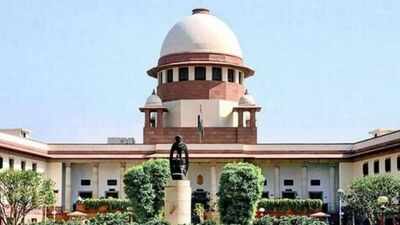
As questions are being raised against CEC Gyanesh Kumar for allegedly unilaterally taking many decisions pertaining to the SIR drive, a Supreme Court lawyer has filed a petition in court seeking his criminal prosecution, and another has approached the attorney general, seeking his permission, as required under the law, to file a contempt petition against him.The petition filed in SC said action needed to be taken against the chief election commissioner for his “unilateral, unauthorised, and illegal decisions” taken in the name of EC. It referred to Section 18 of Chief Election Commissioner and Other Election Commissioners Act, 2023, and the law laid down by a constitution bench in the TN Seshan case in 1995 to say EC’s decisions mandatorily had to be taken by the majority.EC has maintained that all the decisions regarding special intensive revision of electoral rolls were taken unanimously by Kumar and his two colleagues, election commissioners S S Sandhu and Vivek Joshi.The petition filed by advocate Shailendra Mani Tripathi, echoing claims made in a news report, sought quashing of unauthorised modifications made to Form 6 on ECINet/ERONet portals requiring ancestry/last-SIR declarations, and also sought immediate restoration of the statutory Form 6 as prescribed under Registration of Electors Rules to permit all eligible adults to register as voters on the basis of original statutory requirements.Mentioning the alleged illegal acts of CEC, the petition said, “Introducing a mandatory ancestral condition (last SIR linkage) for first-time young voters without legislative authority or amendment of Registration of Electors Rules, 1960, was explicitly branded as unauthorised and illegal by a majority of the commission.”The petition said depriving decentralised electoral registration officers of their statutory authority under sections 13B, 22 and 23 of Representation of the People Act, 1950, and centralising electoral roll management under the director general of IT in Delhi was another wrong.“Tampering with the electoral roll constitutes a cognisable offence under Section 32 of RP Act, 1950, as well as provisions of Bharatiya Nyaya Sanhita concerning falsification of records and public servants disobeying directions of law. In such a scenario, divested of any statutory or constitutional immunity, CEC remains directly accountable under the law – subject to police investigation, evidence gathering, and regular trial proceedings as an ordinary accused,” the petition said, adding CEC could not claim immunity for illegal acts.It said CEC’s act of deliberately manipulating the electoral roll bore no “reasonable nexus” or legal connection to his official duties and fell squarely outside the ambit of official immunity and constituted distinct, personal criminal liability.Another apex court advocate, Shiv Kumar Tripathi, wrote to the attorney general, bringing to his notice the “constitutional misconduct and contempt of court” by CEC and sought his approval to file a contempt case against him.“SC has repeatedly emphasised EC’s independence, impartiality and institutional integrity. CEC’s office is one of constitutional primacy, but it is not intended to function as an authority overriding the equal constitutional status of other election commissioners in collective decision-making. Any departure from this constitutional framework may undermine public confidence in free and fair election,” Tripathi said in his letter.
Share your thoughts in the comments
Be respectful · TOI community guidelines
“I therefore respectfully request your good office to examine whether the reported conduct amounts to wilful disregard of binding judicial principles or directions of the Supreme Court, thereby attracting proceedings under Contempt of Courts Act, 1971, if legally sustainable,” the letter said.


