


At the start of 2026, Formula 1 looked destined for a predictable story: a dominant Mercedes, a runaway championship and a season that risked getting decided far too early. After a frenetic last couple of races, that certainty has evaporated. Monaco and Barcelona have reshuffled the narrative, revived old contenders and exposed new vulnerabilities. Most importantly, they have given us something many feared 2026 lacked: a genuine title fight. Here are my five big takeaways from a fascinating double-header.
TAKE A BOW, SIR LEWIS
From his painfully evident struggles in the car during the ground-effect era, it was easy and often tempting to believe that the best days of Sir Lewis Hamilton were behind him, and the agony of Abu Dhabi 2021 was the last time he would come close to clinching that record-breaking eighth world title. A shocking first season at Ferrari last year gave the distinct feeling that 2026 was a make-or-break season for Hamilton. Another tepid year, and we would probably see the last of the legend in December.
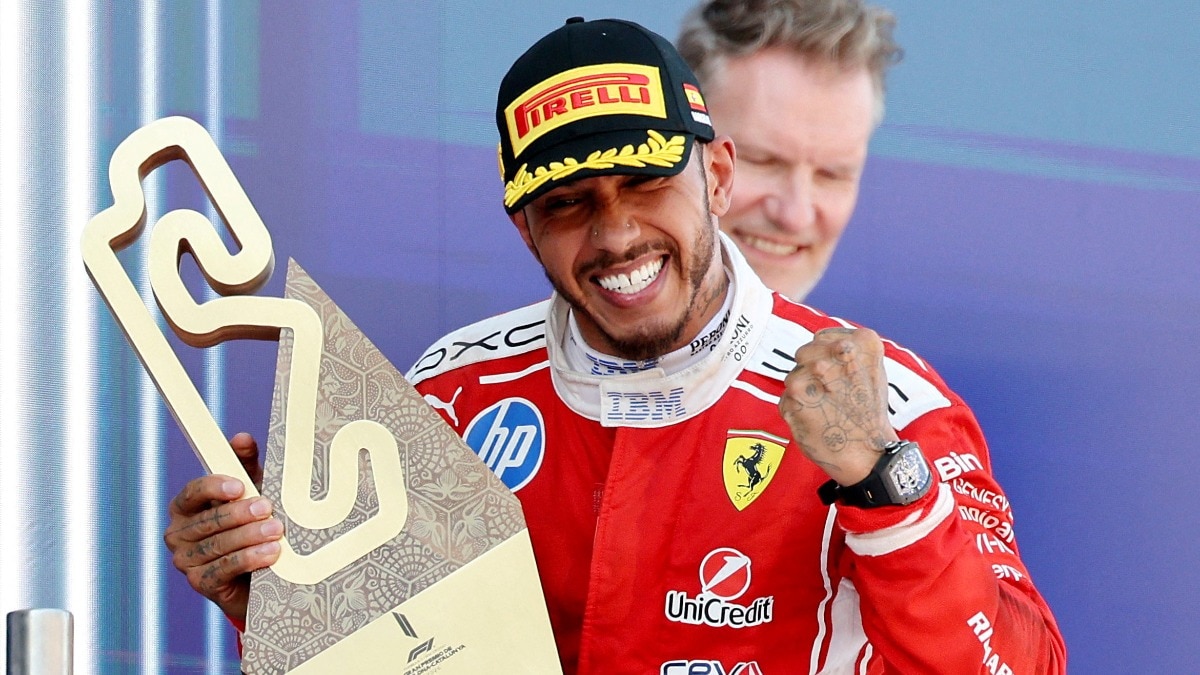
Well, among the biggest headlines from the season so far is that retirement is no longer an option for the sport’s greatest driver ever, at least statistically. The rule reset turned out to be a blessing for Hamilton, along with a car that has had his input in its development, and a support team that is aligned to his preferences. The outcome was his first-ever Ferrari podium in only the second race of the season in Shanghai, followed by back-to-back second places in Canada and Monaco, before Barcelona saw his 106th career race win, and his first in red. This sensational run of form has put him second in the championship standings, with a real shot at clinching the title.
But for now, it is incredible to step back and realise that only six drivers in the history of F1 have won a race at an age older than Hamilton, and five of them did so in the 1950s. At 41, the seven-time world champion has been outpacing his much younger rivals on track, a feat that eluded his celebrated contemporaries such as Sebastian Vettel, Fernando Alonso, Kimi Räikknen and even the great Michael Schumacher himself. Speaking of Schumacher, the German’s first win for Ferrari came in Barcelona in 1996. Thirty years later, can another scarlet win in Spain herald the onset of greatness for the most iconic driver-team pairing the sport could have imagined?
CHARLES’S TOUGHEST CHALLENGE YET?
The Ferrari garage has been a story of two extremes over the past two weekends. While Hamilton has been revelling in three consecutive podiums, including a maiden win for the team, his team-mate is mired in possibly the worst run of form in his career. Charles Leclerc went into the Monaco weekend on a high, having signed another contract extension with the team that brought him into the sport on the eve of his home Grand Prix.
Since then, Leclerc has had nothing short of a nightmare on track: a crash during qualifying in Monaco, a DNF in the main race, another crash during qualifying in Spain and another DNF in the main race. Although his race woes have been ascribed to mechanical problems, brake issues in Monaco and power steering failure in Barcelona, there is no denying the fact that Leclerc gave himself an uphill challenge on both Sundays due to his qualifying shenanigans the days prior. Analyses show that he is still the faster Ferrari driver, but while Hamilton’s consistency and measured approach have paid off handsomely so far, Leclerc’s all-or-nothing style has cost him dearly in the last two races.
The romance of Leclerc and Ferrari has always been tinged with tragic overtones: a generational talent sacrificing the best years of his career to bring back lost glory for the tifosi, only to be heartbreakingly let down by his team’s incompetence in developing the car and executing race strategies. Yet on a weekend where Hamilton romped home to victory in a newly upgraded car and backed by perfect strategy from the Ferrari pit wall, one cannot help but question whether the choke artist in the Leclerc-Ferrari dynamic is not always the team, but often the driver as well.
MAYHEM IN MERCEDES
2026’s leading constructor seems to be anything but comfortably perched at the top. For the second time in three races, one of the two Mercedes failed to make it to the finish line thanks to reliability woes. Sandwiched between the Canada and Spain breakdowns was the operational head loss in Monaco, where the pit crew forgot to serve George Russell’s five-second time penalty, leading to a stiffer drive-through penalty that cost the Brit not just a podium, but a points finish.
Barcelona was a triple whammy in several ways for Mercedes. Not only did championship leader Kimi Antonelli’s car break down just four laps from the finish line, both Silver Arrows were comfortably outpaced by Lewis Hamilton and were even out-strategised by a Ferrari team that is otherwise often wrong-footed on tactics.
What complicates matters further at Brackley is the tumultuous intra-team dynamic between its two drivers. Antonelli’s scintillating streak of five race wins has all but erased his younger-brother dynamic with Russell, whose outlook towards the year has visibly shifted from quiet confidence to vocal desperation. The fact that Russell was able to claw back into the sizeable championship lead that Antonelli held over him thanks to the Italian’s DNF in Spain will be of little comfort to him, given that the Brit was once again overtaken on track by his teenage team-mate despite having started from pole.
Mercedes can also no longer rely on the comfort of a dominant car reducing the championship to a two-horse race between its drivers. If the Ferrari resurgence under Hamilton continues, team principal Toto Wolff may soon have to take the difficult decision of prioritising one of his drivers to maximise the team’s results, and going by the form book, that is unlikely to be Russell.
BEYOND JUST SPEED
Amid all the heroics on track, it is easy to overlook that the championship is still being shaped by factors beyond outright pace. Reliability remains the most obvious variable. Lando Norris and Max Verstappen have both shown plenty of promise this season, only for mechanical gremlins from McLaren and Red Bull to repeatedly undermine their campaigns. Their P3 and P4 finishes in Barcelona were a timely reminder that both remain dangerous contenders if their teams can finally provide dependable machinery.
Development is proving equally decisive. Ferrari arrived in Spain armed with a raft of upgrades that appear to have drastically reduced, if not outright erased, Mercedes’ early advantage. As this column had predicted, the unusual gaps in this year’s calendar have given teams valuable time to improve both reliability and performance, and the pecking order ahead of Austria already looks far less secure than it did a few months ago in Australia.
Then there is the FIA. Monaco descended into farce when multiple drivers were handed pit-lane speeding penalties that were later found to have been incorrectly applied due to a calculation error. Pierre Gasly ultimately recovered his podium after Alpine’s successful appeal, as his penalty was applied after he finished the race, but others who had already served their penalties during the race had no such recourse. In what is shaping up to be an increasingly tight championship fight, Formula 1 can ill afford to have officiating errors become a deciding factor in the final outcome.
DO WE REALLY HAVE A TITLE FIGHT?
By far the most exciting takeaway is that the twists and turns of Monaco and Barcelona have presented us with a three-way fight for the championship, a far cry from the Mercedes dominance many had predicted and feared at the outset of the season. Hamilton being sandwiched between Antonelli and Russell in the points table means that we could possibly see a repeat of 2025, where the intra-team battles and fumbles of a dominant McLaren allowed Verstappen to come tantalisingly close to a fifth world title in the season finale.
Eight races ago, a Mercedes procession seemed inevitable. Today, Formula 1 finds itself with a rejuvenated Hamilton, a restless Russell and a championship picture growing more complicated by the week. Austria cannot come soon enough.
– Ends



