


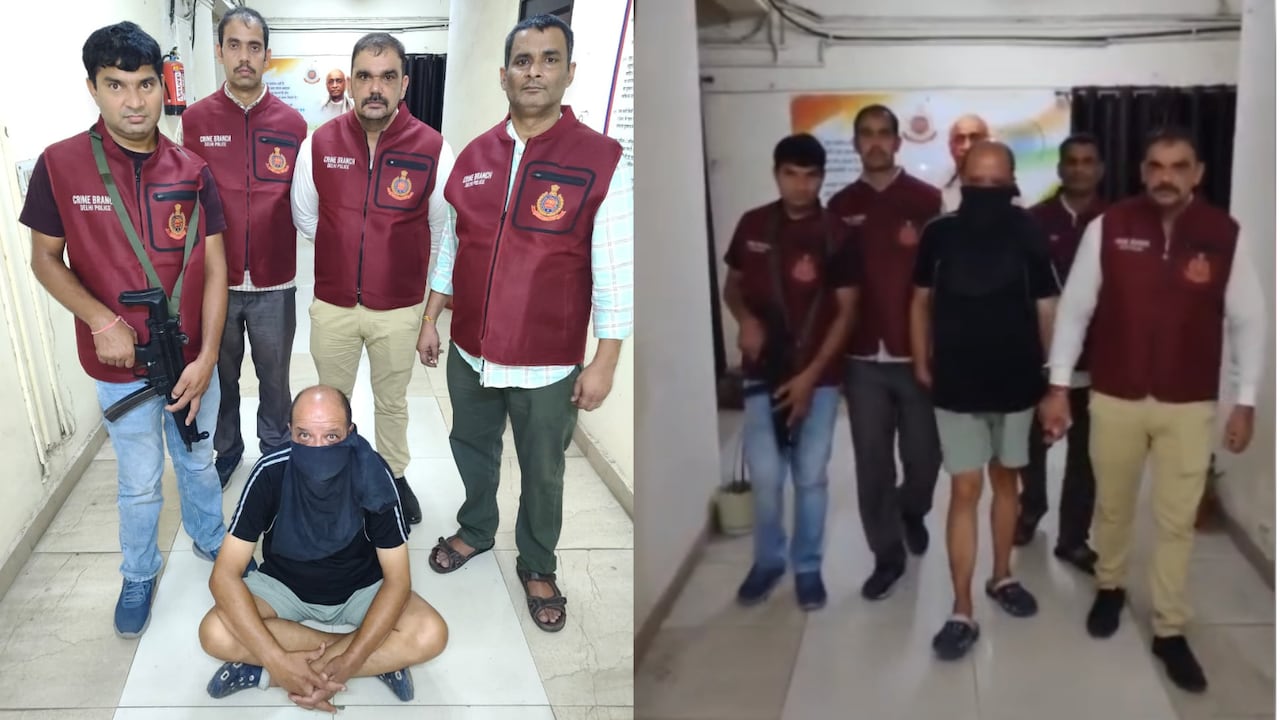
A convict who was sentenced to life imprisonment in a kidnapping case involving a ransom demand of Rs 1 crore was arrested by the Delhi Police Crime Branch after being on the run for 26 years.
The accused, identified as 57-year-old Amit Yadav, is a resident of Baghpat in Uttar Pradesh and had been living in various locations for nearly two and a half decades, frequently changing his identity and whereabouts to evade arrest.
The Kidnapping
The case dates back to 1995. Rishi Sethi, a resident of Delhi’s Patel Nagar area, was sitting in his car near the residence of the AIIMS Director on the evening of September 12, 1995. Around 7 pm, three to four men assaulted him, blindfolded him, and kidnapped him in his own car. He was then taken to an undisclosed location and held captive.
Following the kidnapping, the accused demanded a ransom of Rs 1 crore from Sethi’s family in exchange for his release. During the police investigation, a portion of the ransom money was placed in a hotel in Meerut, as instructed by the accused. The police were keeping a close watch on the entire sequence of events.
Yadav arrived at the hotel to collect the ransom money, where he was arrested. A sum of Rs 10 lakh was recovered from his possession. Interrogation of Yadav led the police to the location where Sethi was being held captive.
Sethi was found chained inside the storeroom of a house in Ghaziabad. The police rescued him safely. During the investigation, items used in the kidnapping, including a lock, key, straps, and other significant materials, were also recovered.
On August 25, 1999, a court convicted and sentenced Yadav to life imprisonment, imposing a fine of Rs 2.5 lakh. Yadav challenged this verdict in the Delhi High Court. On January 15, 2000, the Delhi High Court granted him interim bail for one month. However, Yadav did not return to jail after the bail period expired, and he failed to surrender. Later, on December 13, 2000, his appeal was dismissed, and his life sentence was upheld.
The Delhi Police later announced a reward of Rs 5,000 for his arrest and declared him a fugitive. Despite this, Yadav managed to evade the police and successfully dodged the law for nearly 26 years by using various aliases and changing his hideouts.
The Investigation
Arresting the accused in such an old case was no easy task for the Crime Branch. According to the police, no recent photograph of Yadav existed, and retrieving old mugshots from prison and police archives proved difficult. Even old documents and records related to the case were not readily available.
The Crime Branch then sought assistance from the Crime Record Office and the Fingerprint Bureau. After considerable effort, the police located the biometric and fingerprint records that had been documented when Yadav was convicted in 1999. These records helped re-establish his identity.
Once Yadav’s identity was confirmed through the old records, the police intensified their search for him.
The investigation revealed that Yadav had first vacated the rented house he was occupying in Ghaziabad. He attempted to completely sever ties with the old contacts and hideouts known to the Delhi Police. Subsequently, he sold his ancestral property in Baghpat.
According to the police, he initially fled to Rishikesh to evade arrest, frequently changing his hideouts there. He later moved to Dehradun in 2001, where he assumed a new identity and began a fresh life.
Yadav gradually established a business in Dehradun, eventually becoming a builder involved in construction work. He lived an ordinary life for years, and the police were unable to find any concrete leads regarding his whereabouts.
A police team conducted a raid in Dehradun on Thursday and arrested Yadav. Following his arrest, he was brought to Delhi and is currently lodged in Tihar Jail.


