


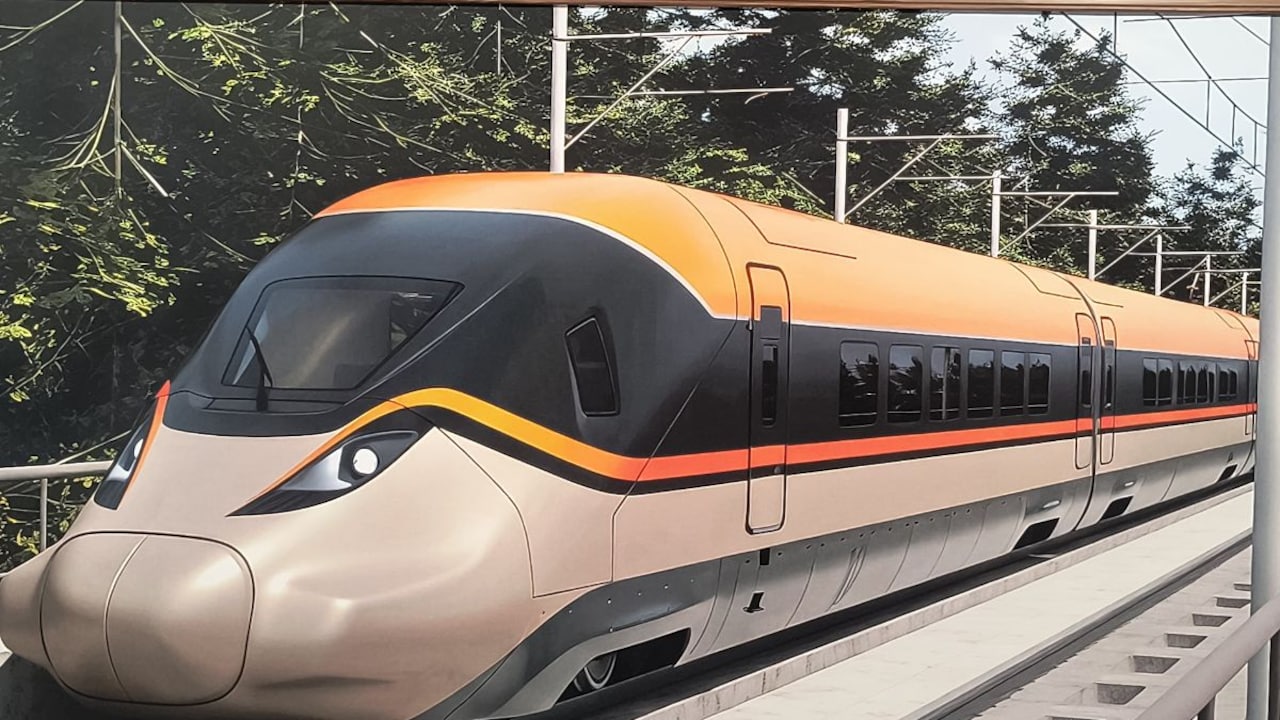
India’s much-awaited bullet train project has reached a major milestone, with trial runs expected to begin within the next year. Union Railway Minister Ashwini Vaishnaw has confirmed that the country’s first indigenous high-speed train will hit the tracks for testing in May or June 2027, bringing the ambitious project a step closer to reality.
The trials will take place on a stretch of the Mumbai-Ahmedabad corridor, where construction work is nearing completion. Once testing concludes, the service will be thrown open to commuters within two to four months.
Speaking at the “Namo for Vikasit Bharat” event in Vadodara, Vaishnaw revealed that the first body frame of the high-speed train had just been completed and sent for squeeze testing, an important step in checking the structural strength of the coaches.
He said, “By May or June next year, India’s own bullet train will be on the tracks for testing. After 2-4 months of testing, Prime Minister Narendra Modi will inaugurate the bullet train.”
The minister described the project as part of the government’s “Atmanirbhar Bharat” push and highlighted how dramatically it would cut travel time between two of Gujarat’s key cities and Mumbai.
He added, “When you travel on the bullet train from Vadodara, you will reach Mumbai in just one and a half hours.”
According to Vaishnaw, work on the Mumbai-Ahmedabad bullet train corridor is moving swiftly, with the Surat-Vapi stretch on course for completion by December this year.
He also touched upon broader changes taking place across the railway network, saying systems for operations, ticket reservations and construction norms are all being overhauled. He said, “We are improving and modernising everything, from operating systems and reservation systems to outdated construction protocols.”
The bullet train service is expected to roll out gradually across different stretches of the corridor:
- Surat-Bilimora section: The first stretch to open
- Vapi-Surat section: To open in the second phase
- Vapi-Ahmedabad section: To be commissioned in the third phase
- Ahmedabad-Thane section: To open in the fourth phase
- Ahmedabad-Mumbai: Once the Thane stretch is ready, the Mumbai leg will follow, completing the full Ahmedabad-Mumbai run
Vaishnaw pointed to several long-delayed railway projects that have been completed in recent years, including the Chenab Bridge and the line linking Mizoram to the national rail network. He said 280 railway stations have been redeveloped and 36,000 kilometres of new track laid across the country, alongside work on cargo trains fitted with Vande Bharat technology.
He noted that despite setbacks caused by the Covid-19 pandemic, the pace of railway infrastructure development has picked up in recent times. Work on the section following the corridor’s first stretch, completed in 2020, gathered momentum soon after, he said.
Vaishnaw said, “The modern form of Indian Railways that is emerging will benefit generations to come.”
Beyond the Mumbai-Ahmedabad line, the government has proposed seven additional high-speed rail corridors across the country:
- Delhi-Varanasi Bullet Train
- Varanasi-Patna-Siliguri
- Mumbai-Pune Bullet Train
- Pune-Hyderabad Corridor
- Bengaluru-Chennai Corridor
- Bengaluru-Hyderabad Corridor
- Chennai-Hyderabad Corridor


