


It is nothing short of a miracle.
For more than a week, Nepal Army personnel worked relentlessly to rescue workers trapped inside the tunnel of the Trishuli-3 ‘A’ Hydropower Project after devastating floods in the Bhote Koshi River in Rasuwa.
Nine days after the workers were trapped, just as hopes of finding survivors were beginning to fade, came the breakthrough.
Rescuers emerged from underground carrying the first survivor on their shoulders.
Sanjay Sah was the first worker to be rescued. He was taken to the Nepal Army barracks in Trishuli for medical attention. Another worker, identified as Kabir Maharjan, was subsequently rescued from the tunnel.
The two men were found about 170 metres inside the tunnel, according to reports quoting officials.
Read | 2 Rescued Alive From Hydropower Tunnel 9 Days After Nepal Floods
Sah, 30, is a mechanical foreman with the Nepal Electricity Authority (NEA), while Maharjan, 45, is a supervisor at the Trishuli-3 ‘A’ Hydropower Project.
“I am so happy. My heart is lighter,” Amir Maharjan, the brother of rescued worker Kabir Maharjan, told AFP.
Maharjan’s wife told the BBC that her husband was conscious when he was pulled out of the tunnel and was preparing to be taken to Chhauni Hospital, a military hospital in Kathmandu.
Reports said that both the survivors had injuries on hands and legs possibly because of crawling inside the tunnel.
Images from the rescue site captured a remarkable moment of hope. Nepali Army personnel could be seen emerging from the tunnel, carrying survivors covered in mud and slush –one on their shoulders and another on an orange stretcher.
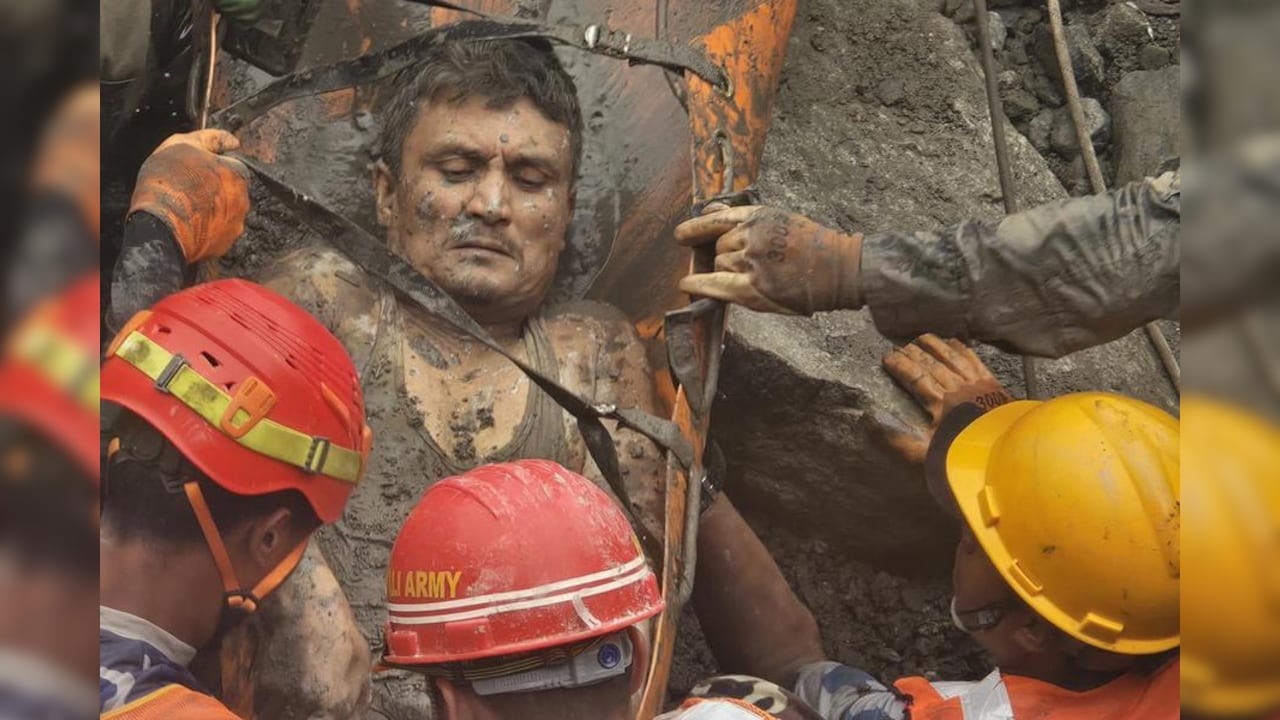
After days of uncertainty, the images offered the clearest sign yet that the rescuers had managed to reach deep inside the flooded and mud-filled tunnel-and that people trapped underground had survived.
The rescue has also renewed hopes of finding more survivors.
Read | In Nepal, Symbolic Funerals Along Trishuli And Anguish Of Families
The fact that Sah and Maharjan managed to survive for nine days inside a blocked tunnel suggests that air pockets may have helped sustain them. Rescue teams are now hoping that others could still be alive in similar pockets inside the tunnel.
The Bhote Koshi and Trishuli river valleys were devastated after a massive surge of water, debris and mud swept through the region on August 26. Several hydropower projects along the rivers were severely damaged or destroyed.
The flood was triggered by the collapse of a melting glacier on the border between Nepal and China-controlled Tibet, according to reports.
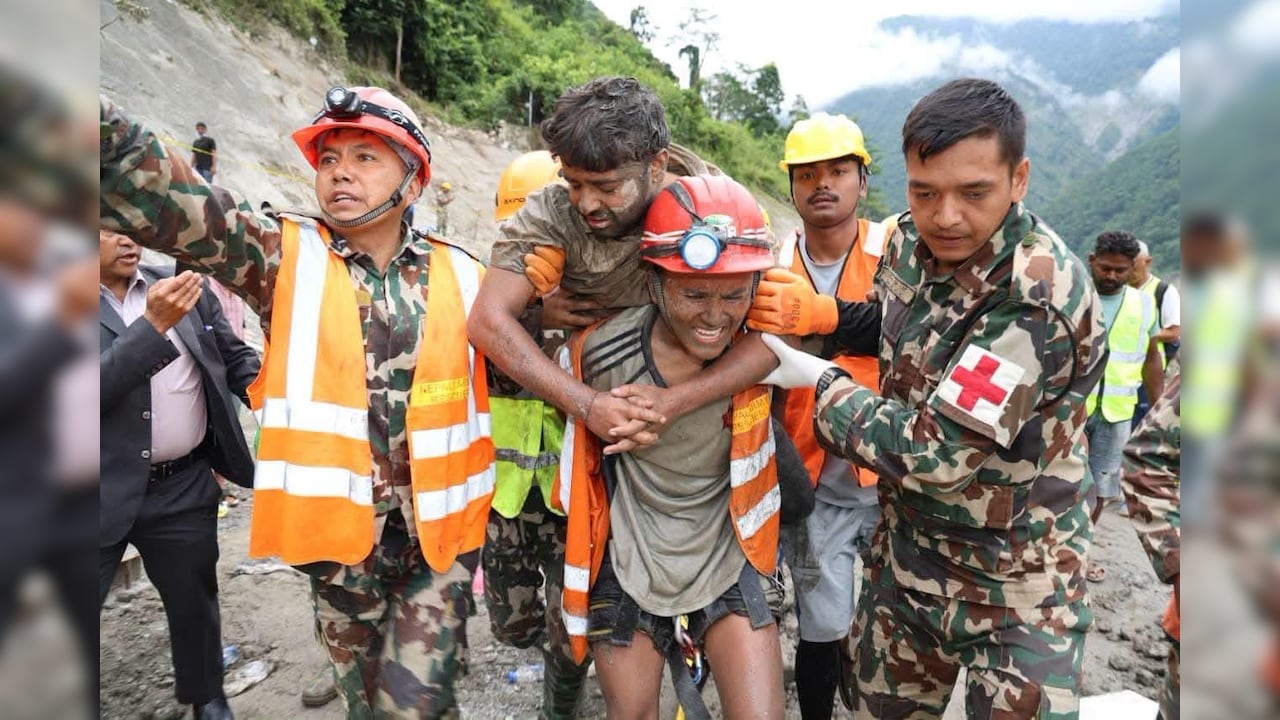
As rescue operations continue, hydropower tunnels have emerged as a major focus for search teams, with authorities believing that trapped workers may have survived because of pockets of air inside the structures.
So far, more than 270 people have been rescued.
The Nepal Army-led security command has been leading the search-and-rescue operation, using specialised equipment to reach areas buried under mud and debris.
The rescue of Sah and Maharjan came after an earlier breakthrough, when rescuers heard voices from inside the tunnel and established communication with people believed to be trapped underground.
Rastriya Swatantra Party lawmaker Ram Neupane had earlier said on social media that rescue workers had established communication with those trapped inside.
After the voices were heard, the Nepali Army and Armed Police Force intensified their efforts to reach the workers.
On the 10th day after the floods, the emergence of the first survivors has transformed a desperate rescue operation into a story of hope.


