


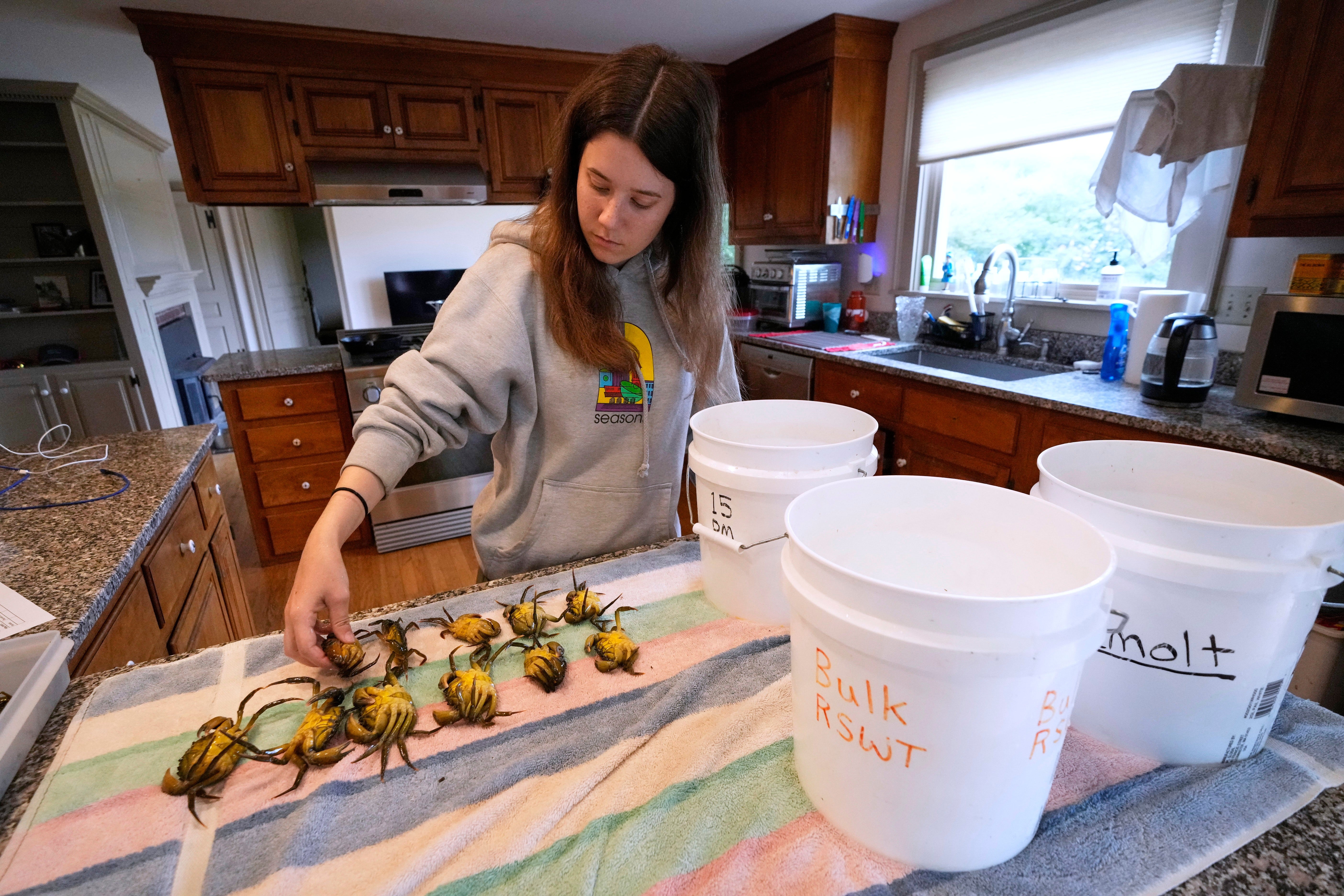
As morning fog cleared across Maine’s York River, Mike Masi and his two interns worked alongside a dock, sorting through a pile of the region’s most reviled crabs in search of a select few that might feature on a New England diner’s plate.
The goal is to identify invasive European green crabs preparing to shed their hard exteriors. In this molting phase, the crabs have a soft, pliable shell like leather, making them highly prized by chefs.
These soft-shell specimens command $3 each at market, compared to as little as 8 cents for hard-shell crabs, while their removal offers environmental relief to marine ecosystems.
“Just about everyone hates them and we’re trying to turn them into a premium seafood product,” said Masi, whose company, shell+claw, stands as the sole commercial cultivator of the species.
The 45-year-old former marine science teacher belongs to an expanding movement across New England striving to curb the crabs’ destructive footprint by creating commercial applications.
Other ventures are incorporating green crabs into pet snacks, fish sauce, and even a distilled line of green crab whiskey produced in New Hampshire.
Transported from Europe in the ballast water of vessels centuries ago, the green crab, Carcinus maenas, now numbers in the tens of millions along the East Coast.
The species regularly outcompetes native Atlantic rock crab and juvenile lobster, destroys eelgrass beds, and degrades salt marsh banks.
By feeding heavily on soft-shell clams, oysters, and mussels, the invasive crabs inflict tens of millions of dollars in losses on the regional shellfish sector annually.
Chad Coffin, a clam fisherman from Maine, linked a dramatic drop in his harvest directly to their proliferation. According to state figures, soft-shell clam landings plummeted from 7.8 million meat pounds in 1978 to 1.3 million pounds in 2025.
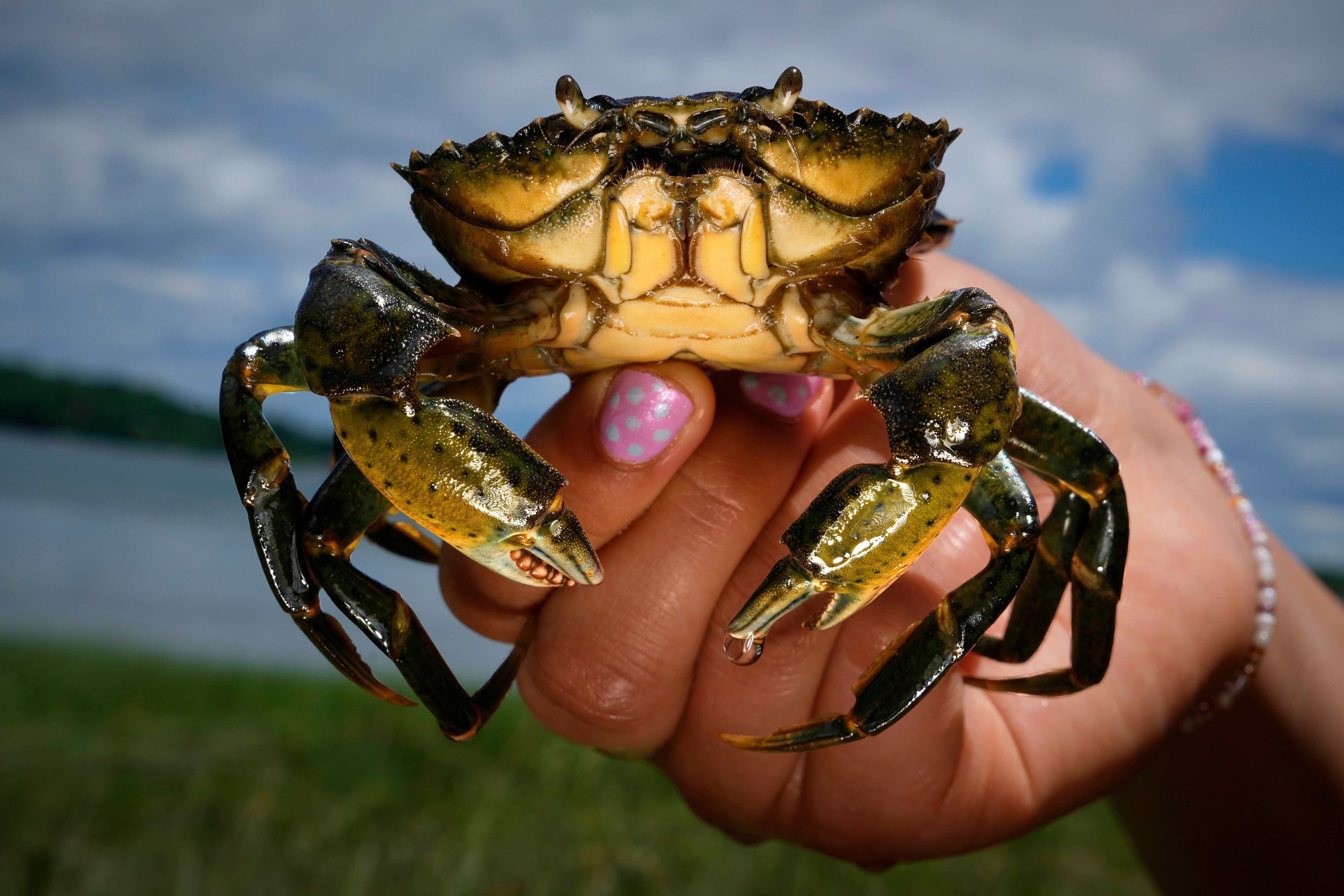
Recognized by their green or brown carapaces and five distinctive spines along each eye, green crabs have prospered in warming coastal waters driven by climate change, primarily caused by the combustion of coal, oil, and gas.
The creatures endure New England winters while thriving across varied habitats, consuming almost any food source, and reproducing rapidly; a female can release up to 185,000 eggs once or twice annually.
Such attributes have turned them into one of the planet’s most successful invasive species, spreading along the West Coast into Alaska, as well as reaching Australia, Argentina, Japan, and South Africa.
“They’re really pretty resilient little guys,” said Carolyn Tepolt, an evolutionary biologist at Woods Hole Oceanographic Institution who has researched green crabs for two decades to determine how species adapt to novel environments.
Despite a decade of grassroots efforts in the region, the push to control the invasion has barely altered crab numbers.
Although more eateries and seafood vendors are offering green crabs, few local fishermen target them, and the supply chain lacks the infrastructure required to process and ship harvests to key markets.
Data is also lacking on how many crabs the New England ecosystem could support, though experts contend the potential far exceeds current harvest levels.
Marissa McMahan, vice president of fisheries at Manomet Conservation Sciences, noted that harvesters in Washington County, Maine, near the Canadian border, report being able to catch “as many green crabs as you could ever possibly want.”
“But they can’t get them on a truck and get them to where they need to actually be, and often that’s Boston or New Bedford or New York City,” she said. “That is a huge impediment.”
State policies have seen incremental adjustments. Rhode Island established a dedicated green crab fishing license for $10, Connecticut authorized direct sales to restaurants without extra permitting, and Maine streamlined market access.
Yet, advocates cite a lack of robust state funding in New England. Massachusetts remains the sole state offering direct financial incentives, paying fishermen an extra 40 cents per pound up to $100,000 annually.
Conversely, Washington state declared an emergency in 2022 and allocated more than $38 million in state and federal funds through fiscal year 2027 to eliminate the population.
Fishermen there have removed nearly 2 million crabs this year alone, turning most into 135,000 pounds of waste processed by an organic fertilizer firm.
Native groups, including the Lummi Nation and Shoalwater Bay Indian Tribe, also harvest the crabs for compost.
“We’ve got treaty-protected fisheries at risk and critical habitats that are used by all sorts of native species, so we’re really worried that we’ll start to see those types of effects that they saw on the East Coast if we let the population get established,” said Raquel Crosier, the deputy director of the state’s Fish Program.
Meanwhile, consumer interest in New England is expanding.
The number of restaurants featuring green crab on their menus has increased tenfold since 2021. Chefs serve tempura-fried crab in sandwiches, over pasta, and infused into sauces, often highlighted during seasonal green crab weeks.
At PAGU, a Spanish Japanese tapas restaurant in Cambridge, Massachusetts, chef and owner Tracy Chang incorporates the species into a Malaysian-inspired green crab laksa broth and serves tempura soft-shell green crab inside a steamed bao.
“These crabs are way more potent in terms of flavor,” Chang said, contrasting them with king, stone, or Jonah crabs.
“Those all have just kind of like a sweet light crab flavor and this has like a really rich deep like luscious crab flavor.”
Dr. William Li, a physician and author dining at PAGU, described his first taste of the bao as a unique culinary experience.
“This is kind of like a bite-sized treat to elevate your health,” Li said. “This green crab bao was spectacular, filled with flavor, easy to eat, and very tasty.”
Back on the York River, scaling up the harvest remains a challenge. Masi’s operation relies on labor-intensive hand-sorting to spot crabs approaching their molt.
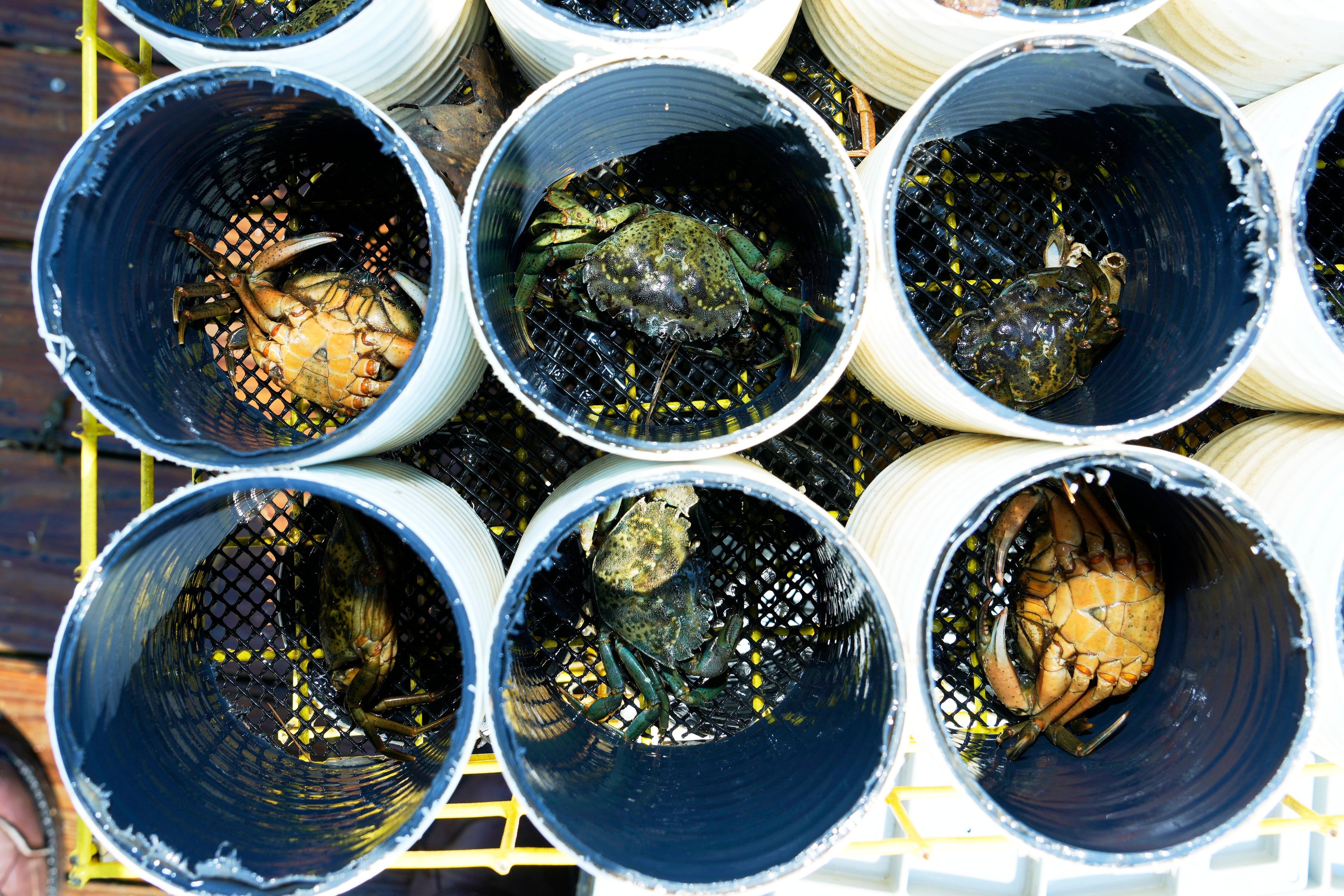
Once identified, the crabs are moved from open water into customized tubes held inside lobster crates. Though his business has expanded over five years, it remains a modest enterprise generating up to $20,000 a year.
Still, Masi envisions expanding his fleet and refining production, taking cues from Venice, Italy, where native green crabs have long been harvested for delicacies like fried moeche.
“I am cautiously optimistic about the potential for green crabs,” Masi said. “We are one breakthrough from making this a profitable business.”


