


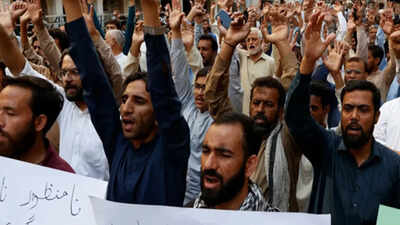
Pakistan’s government has put heavy restrictions on protestors warning them that those seeking to march towards Islamabad with the government warning that disruptions could cost the economy around $400 million a day as separate marches by Jamaat-i-Islami (JI) and Imran Khan’s Pakistan Tehreek-i-Insaf (PTI) put pressure on the capital.Pakistan’s information minister Attaullah Tarar said on Sunday that the administration, police and interior ministry were clear that groups intending to cause disruption would not be allowed to reach the capital. He cited a recent Islamabad high court ruling that bars political parties from obstructing public roads and the movement of citizens.The warning comes ahead of a PTI nationwide protest and march towards Islamabad on September 27 seeking the release of party founder Imran Khan, who is incarcerated. JI, meanwhile, has launched a protest campaign against the petroleum levy and has begun a march towards the federal capital.
Government warns of economic fallout
Pakistan’s finance minister Muhammad Aurangzeb separately warned that strikes, sit-ins, long marches and road closures could cause an estimated PKR 120 billion (over $400 million) loss to Pakistan’s economy every day.According to estimates prepared by the planning commission and finance ministry, the services sector, including financial services, communication, retail, transport, wholesale and hospitality, could account for about PKR 86 billion of the daily loss. Industry could lose PKR 25 billion and agriculture PKR 9 billion, while the government could face an additional revenue loss of around PKR 17 billion.Aurangzeb said the disruption would come at a time when businesses were already dealing with higher freight and insurance costs and supply-chain problems linked to tensions in the Middle East, including disruptions around the Strait of Hormuz and Bab al-Mandab.He also warned about the impact on IT exports. Pakistan recorded $811 million in IT exports during July and August, he said, adding that previous internet disruptions during episodes of civil disobedience had affected IT exports by as much as 80%.
Islamabad steps up security
Authorities have begun preparing for the potential marches, with hundreds of containers placed at entry points to Islamabad. Police officials have also reviewed security arrangements at major entry and exit points and other sensitive locations.The Pakistan Institute of Medical Sciences and Federal Government Polyclinic Hospital have been placed on high alert, with emergency, trauma, ICU, operating theatre, blood bank and ambulance services instructed to remain fully operational. Pims said the arrangements would remain in place until September 30.The government has also cited concerns over statements by PTI leaders about the planned march. Pakistan’s parliamentary affairs minister Tariq Fazal Chaudhry said a reported remark by a senior PTI leader about turning Islamabad into “Somnath” had raised concerns about possible violence. He said the government had a responsibility to maintain law and order in the capital.The government has said it remains in contact with JI leadership and hopes to resolve the dispute through dialogue. JI has been protesting since August 16 against the petroleum levy and says it wants the government to withdraw the levy.


