


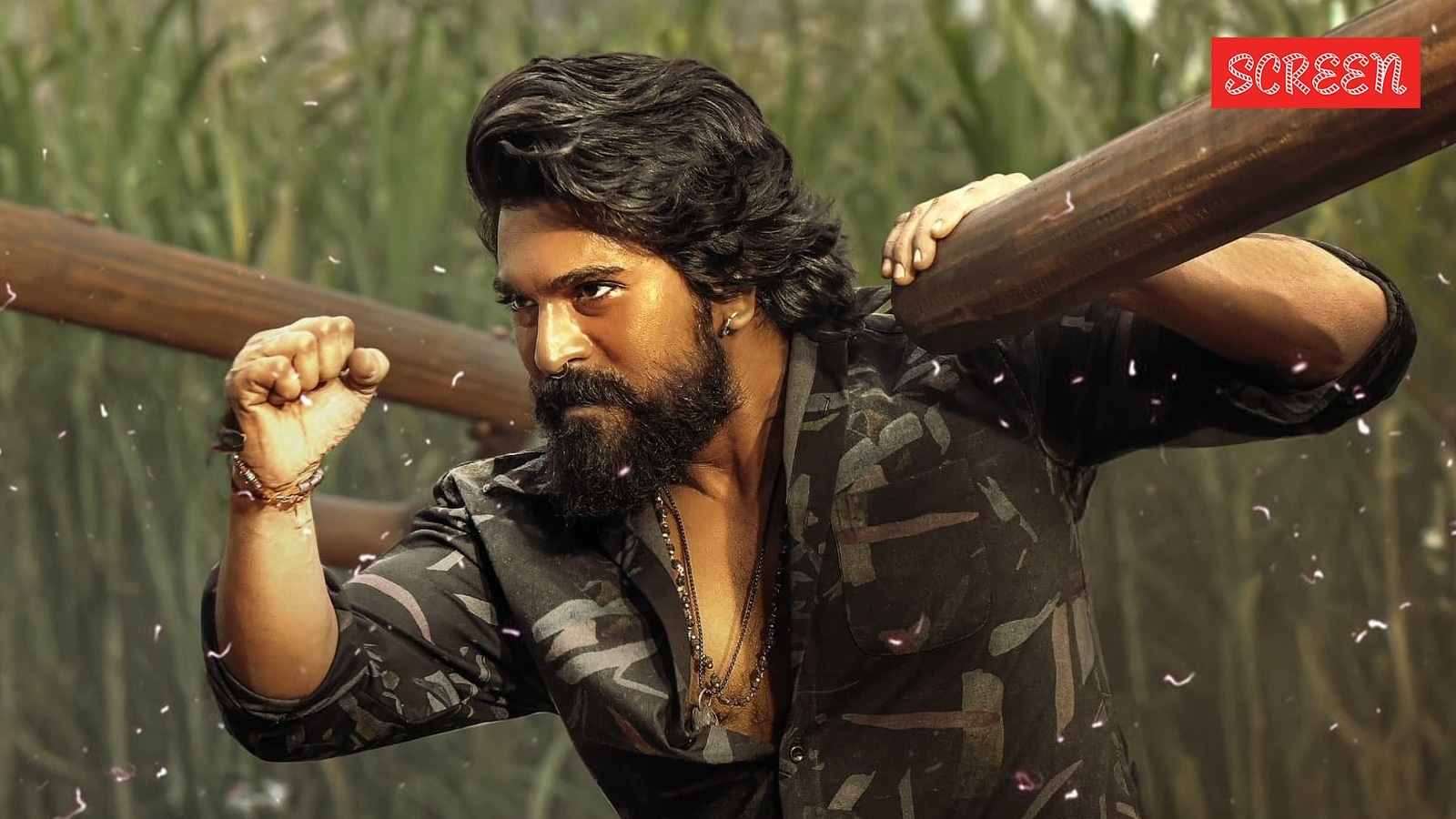
Peddi movie review and rating: After the critical and commercial success of Uppena in 2021, Buchi Babu Sana had a lot riding on his follow-up. Teaming up with Ram Charan, one of Telugu cinema’s biggest names, he has made a film with genuine ambition. The film tries to overachieve by showcasing as many sports in the stipulated time as possible, while trying to comment on identity, neglect, and what people are willing to fight for. However, the execution fails the film.
There is a real story buried inside Peddi, and it is one worth telling. By 1996, roughly 18,000 villages across India had no official name on any government record. The people who lived in these places had no voter cards, no address, no recognition from the state. They existed without existing, at least on paper. Buchi Babu Sana takes this largely forgotten fact and builds a sports drama around it, setting the film in Vizianagaram district, Andhra Pradesh.

Peddi, played by Ram Charan, grows up in one of these unnamed villages. To earn money, he hires himself out as a cricketer, playing for whichever local team offers him the most fee. The Vizianagaram and Bobbili teams regularly compete for his services, and he usually ends up with Rambujji, played by Divyendu Sharma, who consistently outbids the rival side by a single rupee. His love interest Achiamma, played by Janhvi Kapoor is the daughter of a local politician who is running for a state assembly seat.
The story is told through a framing device set in 2016. Following a poor showing at the Olympics, the Ministry of Youth Affairs and Sports launches a talent search. Sports official Paiswal, played by Boman Irani, travels to Vizianagaram, where he hears about Peddi, a jaggery worker with an extraordinary record in multiple sports. What follows is the full story of how Peddi decided to use that ability, not to escape his village, but to fight for it.
Ram Charan is the real reason to watch this film. He does not coast on star power here. He physically transformed himself to look convincing across three different sports disciplines, and his acting in the more emotional scenes carries genuine weight. There is a hospital sequence in the second half that hits harder than almost anything else in the film, and it is entirely because of what he brings to it. Among his body of work, this sits comfortably alongside Rangasthalam as one of the performances he can be most proud of.
Jagapathi Babu, as Appalasoori, the village elder who spent thirty years trying to get his settlement officially recognised, brings real dignity to the role. There is something heartbreaking about watching a man who has tried everything and come up empty, and Jagapathi Babu delivers that without going for tears directly.
Also Read: Michael Jackson The Verdict review: A reality check for fans after $850-mn biopic whitewash
Story continues below this ad
Shiva Rajkumar, playing a character called Gournaidu, makes his presence felt without overwhelming the scenes he is in. He understands his job here is to support the story rather than draw focus, and he does it well. Though he had lesser screentime, he leaves a mark on the audience.
AR Rahman’s work is arguably the film’s most consistent technical achievement. His songs are a departure from the kind of commercially safe music you expect from big-budget star vehicles. The background score does real heavy lifting in the second half, particularly from the pre-interval sequence onward, pulling several scenes toward emotional territory that the writing alone does not quite reach.
One of the movie’s biggest assests is Ratnavelu’s cinematography, which lands in excellently. He shoots the forested landscapes and the sports sequences with equal confidence, and he makes deliberate choices with colour and texture to give the film a rough, grounded look that fits the setting.
The first half is the main problem. The director spends close to an hour on standard commercial film ingredients, a stylish hero introduction, an outdated romance track, none of which feel urgent or necessary. By the time the actual conflict takes over, you are already aware that the film has spent a significant portion of its runtime on things that do not matter much to the story it is trying to tell.
Story continues below this ad
And then there is the romance between Peddi and Achiamma (Janhvi Kapoor), which is easily the messiest and most uncomfortable stretch of the film. It is among the more cringe-inducing romance tracks Telugu cinema has produced in a while. The scenes make you physically squirm, not because they are bold or provocative in any thoughtful way, but because they are awkward in construction and unconvincing in chemistry. What makes it worse is a certain rawness in how the romance is written and shot. There is an unambiguous male gaze at work, particularly in how Janhvi Kapoor is framed, and moments in the courtship that carry an edge of entitlement that the film neither examines nor challenges. This is genuinely uncomfortable to sit through, and not in a way the film intends.
Also Read: Unrivalled GOAT of comedy: Why it’s almost impossible to match Urvashi’s comic brilliance
Janhvi Kapoor’s character is poorly written and a huge miscast. She is given a few strong moments in the second half, but for much of the film her role appears designed primarily for visual appeal, and neither she nor the director is well served by that approach.
The screenplay leans on melodrama and shock-value turns in key moments, and it works only occasionally. The most emotionally charged scenes feel performative instead of organic. The writing at those points is not precise enough to earn the reaction it is going for.
Story continues below this ad
Boman Irani’s framing device, meant to hold the narrative together, is one of the weaker structural choices in the film. It does not add enough to justify how often the film returns to it.Divyendu Sharma gets a limited character in what is his Telugu debut. Given his abilities, the film could have used him far better. The editing runs to 189 minutes and could have trimmed at least twenty of them without losing anything important.
Peddi is an honest attempt at a film about something real. The story of forgotten villages, people who are invisible to the government and fighting for the most basic form of recognition, deserves exactly this kind of large-canvas treatment. Ram Charan makes sure that the film’s emotional core is never in doubt.
But Buchi Babu Sana has made a film that is probably 30 minutes too long and 20 pages too thin in its screenplay. The first half tests your patience and the second half, while genuinely moving in parts, arrives too late to undo all of that.



