


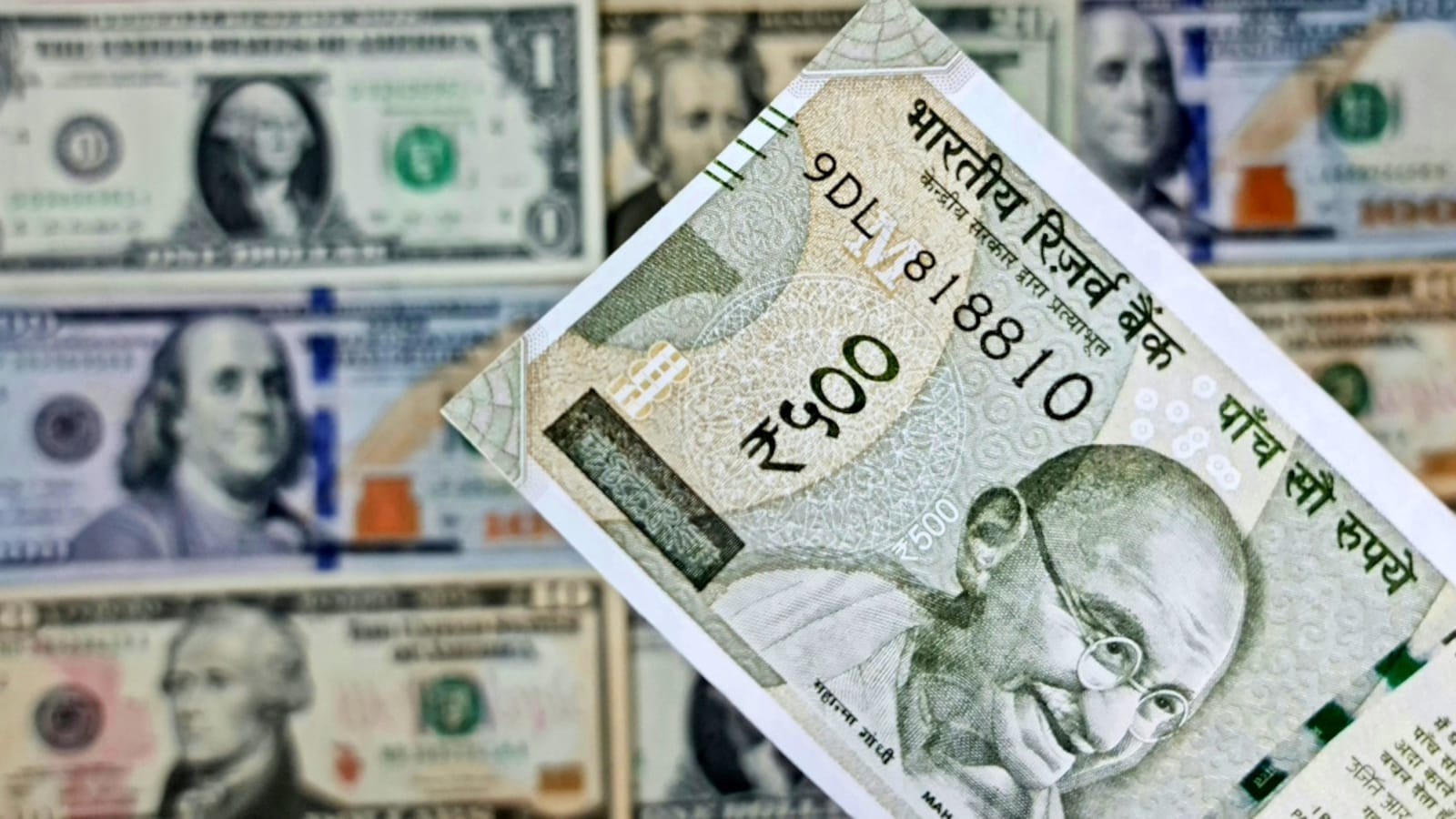
The Indian rupee may come to Russia’s rescue when it comes to Russia’s trade with Bangladesh amidst US sanctions on Russia. While nothing has been finalised, the move was proposed as the plan of making payments to Russia in the Chinese yuan has not materialised so far.
India has not commented on the issue so far.
A proposal to settle bilateral trade between Russia and Bangladesh in Indian rupees has been proposed, and this includes establishing a dedicated payment infrastructure that involves opening a branch of a Russian bank in Dhaka.
A proposal to settle bilateral trade between Russia and Bangladesh in Indian rupees has been proposed, and this includes establishing a dedicated payment infrastructure that involves opening a branch of a Russian bank in Dhaka.
Financial experts and government officials in Bangladesh will discuss the proposal that is designed to navigate hurdles in transactions caused by US sanctions on Russian banks.
The proposal is likely to be discussed at the meeting of the Bangladesh-Russia Intergovernmental Commission on Trade, Economic, Scientific and Technical Cooperation scheduled in September or October, officials in Bangladesh’s Economic Relations Division (ERD) have indicated to reporters.
Bangladesh has not been able to repay instalments due to Russia, which are part of loan repayments for the Rooppur Nuclear Power Plant project. Located on the banks of the Padma River in Rooppur in Ishwardi Upazila of Pabna District, around 160 km northwest of Dhaka, the facility has been built with two 1,200 MW VVER-1200 reactors built by Rosatom, a state-owned Russian company headquartered in Moscow.
Currently, Bangladesh is depositing loan instalments into a Sonali Bank account opened in Russia’s name as an interim arrangement for repayment. These funds have not yet been transferred to Russia, and the issue leaves repayments for the project unresolved.
The Rooppur Nuclear Power Plant is Bangladesh’s largest infrastructure initiative and is being implemented by the Bangladesh Atomic Energy Commission with technical and financial support from Russia. The plant consists of two units, each with a capacity of 1,200 megawatts, for a total generation capacity of 2,400 megawatts.
Russian Foreign Minister Sergey Lavrov has met with Khalilur Rahman, the Foreign Minister of Bangladesh earlier this month The two sides discussed issues of bilateral cooperation in multiple spheres, including the nuclear power industry, and cooperation at international platforms, including the United Nations.
This is the second high-level meeting between Russian and Bangladeshi officials in 6 weeks, with Rahman visiting Moscow last month for intensive discussions on trade and investment. Khalilur Rahman also met with Rosatom Director-General Alexey Likhachev last month to review the progress of Bangladesh-Russia nuclear energy cooperation.
In April this year, Bangladesh Prime Minister Tarique Rahman held a courtesy meeting with Alexey Likhachev, chief of Rosatom, during which they discussed Bangladesh’s energy security and progress of the Rooppur project.
However, Bangladesh has fallen back on payments because of sanctions on Russian banks. Uranium loading at the power plant began in April this year, and around 300 megawatts of electricity is expected to be supplied to the national grid on a trial basis by August this year.
Bangladesh’s exports to Russia have also fallen sharply since the Russia-Ukraine war began in 2022.
The news comes amidst US Senator Richard Blumenthal’s comments making it clear he considers India and China not as allies but as “main culprits” funding Russia’s war machine. As a group, both Democrat and Republican senators agreed to fast-track a bill proposing up to 100% sanctions on major purchasers of oil from Russia.
“I want to be blunt. India and China are the main culprits since they purchase the vast majority of Russian oil and gas. They are fuelling Putin’s war machine,” Senator Blumenthal said, criticising India as a primary buyer of Russian energy even though India has pointed out the hypocrisy of such an accusation.
In the past, India defended energy purchases from Russia, saying India’s imports are meant to ensure predictable and affordable energy costs to the Indian consumer.
“They are a necessity compelled by the global market situation. However, it is revealing that the very nations criticising India are themselves indulging in trade with Russia. Unlike our case, such trade is not even a vital national compulsion,” India had pointed out.
“Where the United States is concerned, it continues to import from Russia uranium hexafluoride for its nuclear industry, palladium for its EV industry, fertilisers, and chemicals. In this background, the targeting of India is unjustified and unreasonable. Like any major economy, India will take all necessary measures to safeguard its national interests and economic security,” the Ministry of External Affairs had said last year.
Earlier this year, a temporary US waiver allowed certain Russian crude shipments to continue. Even after that waiver expired, India indicated that its procurement strategy would remain focused on energy security, competitive pricing and availability of supplies rather than political developments.



