


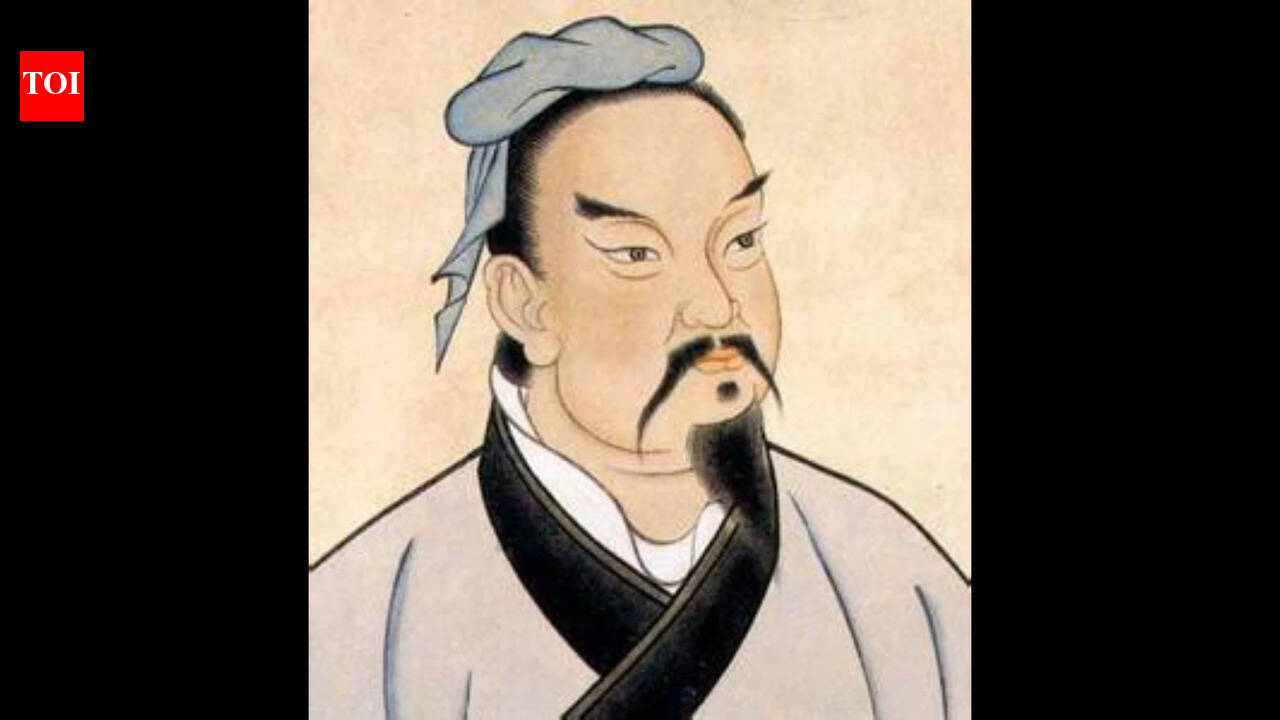
Sun Tzu was a legendary ancient Chinese military general, strategist, and philosopher credited with writing The Art of War, a 13-chapter treatise that remains one of the most influential works on strategy in history.This particular quote provides introspection that one needs before going to the battle. It also predicts the outcome of the battle if these conditions are met. “If you know the enemy and know yourself, you need not fear the result of a hundred battles. If you know yourself but not the enemy, for every victory gained you will also suffer a defeat. If you know neither the enemy nor yourself, you will succumb in every battle.“Sun Tzu served as a general and military adviser for King Helü of the state of Wu during Eastern Zhou dynasty (the Spring and Autumn period). Under his strategic leadership, Wu secured major victories against rival states like Chu.Unlike generals who relied strictly on brute force, Sun Tzu viewed war through the lens of philosophy, psychology, and geography. He advocated for efficiency, deception, and winning with minimal loss of life and resources.
You know both yourself and your enemy
The first condition is complete preparedness where you know both yourself and your enemy. This is a situation where you have a clear understanding of your own strengths, weaknesses, capabilities, and emotional limits, while simultaneously analyzing the motives, habits, tactics, and vulnerabilities of your rival.When you possess both sides of this information, outcome prediction becomes a matter of calculation rather than luck. You know where to strike, when to retreat, and how to avoid costly traps. This level of insight eliminates fear because the element of surprise is removed. In this state, a hundred battles can be fought without failure because every action is based on accurate assessment rather than guesswork.
You know yourself but not the enemy
Knowing yourself but ignoring the enemy leads to an even distribution of success and failure. You may understand your own resources, skill set, and intentions, but without understanding who or what you are up against, your strategic decisions remain reactive. You might win when your inherent strengths happen to align with the situation, but you will suffer defeat whenever the opponent exploits a weakness you failed to anticipate.This scenario describes individuals or organizations that focus purely on their internal preparation while neglecting external realities. They rely on sheer effort and good intentions, leaving half of the equation to chance.
You know nothing
This is a recipe for disaster. Knowing neither yourself nor the enemy represents complete strategic blindness. In this state, you operate without an understanding of your own capabilities or limits, and you possess no insight into the forces working against you. Every decision becomes a reckless gamble. Because actions are guided by illusion, panic, or arrogance rather than reality, defeat is the only possible outcome. Succumbing in every battle is guaranteed because you lack both the internal foundation to withstand pressure and the external awareness to dodge incoming threats.The quote is uniqely relevant because it shows the background work, the diplomacy of a battle and not only on the ground.



