


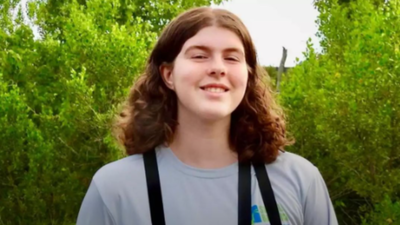
A 16-year-old student from Sarasota, Florida, Sophia Haakman began growing butterflies at just 7. Over the years, her love for nature and its beings has evolved into a serious conservation effort. Haakman sought to find out if the hundreds of hours she spent rehabilitating local ecosystems were truly beneficial to wildlife. So she created her own bird monitoring initiative and a national birding magazine is set to publish the findings.
From watching birds to studying their habitats
Haakman’s passion for conservation and nature started at a young age. She remembers raising butterflies at the age of 7 and reading a field guide that shifted her interest to birds a few years later. Noticing her affinity for nature, her parents often took her outside.Her mother, Irene, said her daughter found an attachment to Celery Fields, not just because of its diverse environment, but because there were volunteers she could learn from. As an educator, Irene said she has enjoyed watching her daughter turn that curiosity into action, building relationships throughout the local conservation community and being involved in many of the organisations she still works with today. “In the same way as everybody else who has helped her in the community, our job has been to say yes,” Irene Haakman told Suncoast Searchlight. “Sometimes it’s all you can do.”Haakman, a student at Pine View School, has gathered more than 850 volunteer hours across organisations including Sarasota Bay Watch, Sarasota Audubon Society, Suncoast Science Center/Faulhaber Fab Lab and the Florida Young Birders Club. While working with Sarasota Bay Watch, a nonprofit dedicated to preserving local ecosystems, she spent hundreds of hours helping remove invasive plants, restore native habitats and inspire other young people to connect with the environment.The teenager told Suncoast Searchlight that she feels a deep sense of attachment to Sarasota’s unique bird populations. “You can’t help but notice them,” Sophia said. “It’s like how when you get a new car, you start seeing it everywhere. Once you learn something about the environment, it’s very hard to forget when you start noticing it around.”As she grew older, Haakman looked for ways to turn her fascination with local wildlife and birds into action. She proposed measuring what happened to birds after restoration. After consulting researchers and experts, she and other volunteers began conducting monthly bird counts from kayaks. Her project found that local bird species were doing better in restored areas than in locations that had not undergone the same habitat work.Ronda Ryan, executive director of Sarasota Bay Watch, said the teenager’s work helped the organisation go beyond simply removing invasive species by providing evidence that restoration was supplying birds with resources they needed.
Research headed to a national magazine
Sophia wrote an article about her bird monitoring project and it will be featured in the fall issue of Birding, the American Birding Association’s flagship magazine focused on bird identification and conservation. For the teenager, joining Bay Watch, which typically relies on about 25 to 35 volunteers, was her first big step into community engagement upon entering high school.“Being in Sarasota Bay Watch has really allowed me to open up as a person,” she said. “I would not be where I am right now without people in the community helping me and supporting me.”Her journey has not been simple and quick. While her connection to the environment came naturally, she was a socially reserved person and began her work with local organisations as a shy, yet committed volunteer. She used to be terrified of class presentations, but last year, she spoke at a Sarasota County Commission meeting alongside Sarasota Audubon members against a proposed housing project near the Celery Fields bird sanctuary. Though the developer, D.R. Horton, is still pushing for approval, the plan has been repeatedly rejected by commissioners. “Now, I can go to the county commission and talk for two minutes,” she said. “I’m still nervous, but I can do it, and that’s a whole different story. I can speak in front of hundreds of people, and that’s something that I wasn’t able to do before.”Apart from this, at 13, she also helped create the Manasota chapter of the Florida Young Birders Club, giving young birders in Sarasota and Manatee area a place to connect without making the long trip to Tampa. “She just persisted because it wasn’t just for her to do it, but she wanted other kids to be able to do it as well,” Irene Haakman said. “She doesn’t keep it to herself; it’s like there’s this outward sharing of the things that she loves. That’s really what I’ve just been amazed at, how much of a community connector she is.”As a rising senior, Haakman is now exploring colleges. Being a dual US and Canadian citizen, she is open to institutions in either country. Wherever she lands, she said, she plans to major in environmental studies and eventually find work in biophilic design, which would allow her to help make cities more eco-friendly.


