


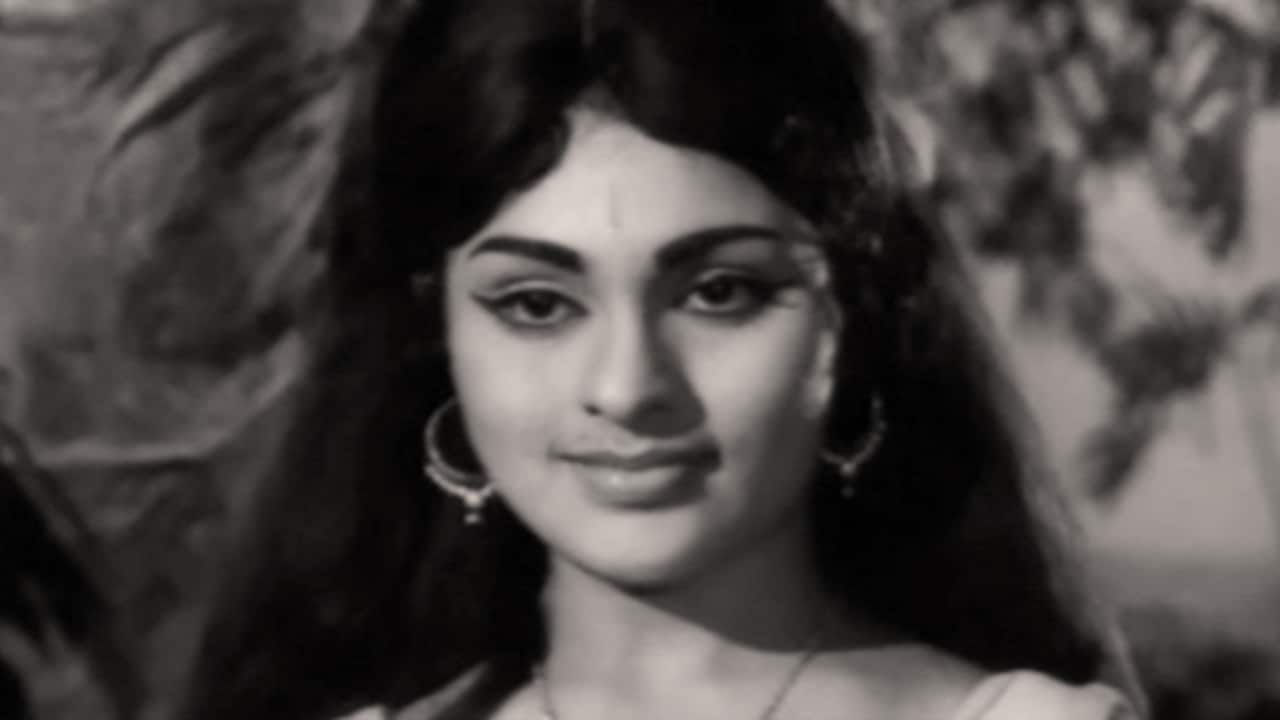
For years, actor Vijayasree was remembered as a face audiences simply could not look away from. She had entered films as a teenager (when she was just 13), became one of Malayalam cinema’s most sought-after actresses and was paired with superstar Prem Nazir in a string of successful films.
But behind the image of glamour and beauty was a young woman who, according to accounts from those who knew her career, struggled with the way the industry portrayed her.
At just 21, Vijayashree died by suicide and left behind a career that had barely begun and questions that have remained unanswered for decades.
Who Was Vijayasree?
Born on January 8, 1953, in Poojapura, Thiruvananthapuram, Vijayasree was the eldest of two siblings. Her striking beauty attracted attention from an early age and eventually took her to the world of cinema. She was only 13 when she appeared in the 1966 Tamil film Chitti, where she shared screen space with actors Gemini Ganesan and Padmini.
Although her role was small, Vijayashree made an impression. Following Chitti, she went on to appear in several Tamil, Telugu and Kannada films before making her Malayalam debut with Poojapushpam in 1969. The film was directed by Thikkurishi Sukumaran Nair and also featured Prem Nazir and Sheela.
Thikkurishi was impressed by the young actress and reportedly offered her three films at the same time. Vijayasree’s career soon gathered pace, particularly in the early 1970s. Films such as Lanka Dahanam (1971), Taxi Car (1972), Aromalunni (1972), Postman Kannanilla (1972) and Angathattu (1973) helped establish her as a major star.
Much of her popularity came from her pairing with Prem Nazir. The two appeared together in several films, and their on-screen chemistry became one of the most remembered pairings in Malayalam cinema.
According to Dainik Bhasker, a Malayalam photographer once recalled their popularity, saying, “These two were the most successful pairing in Malayalam cinema. I remember not a single film they did together flopping.”
‘The Marilyn Monroe Of Malayalam Cinema’
Vijayasree’s beauty became almost as famous as her films. She was frequently compared to Hollywood star Rita Hayworth and was eventually given another enduring title: the Marilyn Monroe of Malayalam cinema.
Filmmaker Jayaraj said, “She’s the Marilyn Monroe of Malayalam cinema. No other woman has as many fans as Vijayasree. She delivered so many hits in such a short time, a feat no other actress has achieved. No other actress has made such a rapid impact on Malayalam cinema. People flocked to theaters just to see her.”
Director Bharathan also reportedly spoke about her beauty to his associate Jayaraj, saying, ” Vijayasree is the most beautiful woman I have ever met.”
Actor Kaduvakulam Antony similarly described her as an exceptional beauty, saying, ” If Jayan was the most handsome of male actors, there hasn’t been a single actress in Malayalam cinema who can match Vijayasree’s beauty. Her beauty was a divine art.”
The ‘Sex Symbol’ Tag
But the same image that made Vijayasree a star also became a source of discomfort for her. She was increasingly associated with glamorous and bold roles and was regarded by a section of the audience as a sex symbol. According to accounts of her career, Vijayashree wanted to move away from that image and began choosing films that could showcase her differently.
She appeared in films such as Jeevikkan Marannupoya Sthree, Yuvanam and Adyathe Katha as she attempted to change the kind of roles she was known for.
A Scene She Never Wanted The World To See
It was during this period that the controversy surrounding Ponnapuram Kotta emerged.
In the 1973 film, Vijayasree appeared opposite Prem Nazir. One of the film’s sequences, featuring the song Villiyor Kavere, required her to be filmed near a waterfall while wearing a sheer white garment.
During filming, the force of the water reportedly caused the garment to slip. Vijayashree was embarrassed but continued with the scene while trying to hold the garment in place. The camera, however, continued recording.
What happened to that footage later became a deeply troubling chapter in her story. According to the accounts cited by Malayalam media and film historians, Vijayasree believed the compromising footage would not be used. She was reportedly shocked when she saw the final film and discovered that the material had been included.
The sequence became a major talking point and reportedly drew large crowds to theatres. Vijayasree is said to have objected to its inclusion and asked the filmmakers to remove it, but the scene remained in the film.
The incident was particularly difficult for the actress because she was already attempting to distance herself from the bold image that had been created around her. Her discomfort reportedly went beyond the film itself, with accounts claiming that she was distressed by the circulation and use of the footage.
There have also been claims that the cameraman involved later used the objectionable footage to allegedly blackmail her. However, the circumstances surrounding Vijayasree’s death have never been conclusively established.
Vijayashree’s Tragic Death At 21
On March 17, 1974, Vijayasree died by suicide at the age of 21. Her death came roughly a year after the release of Ponnapuram Kotta. She was still at the height of her career and had several films ahead of her.
No suicide note was reportedly found, and there was no single confirmed explanation for why she took the extreme step. While some have linked her death to the controversy surrounding the film and the alleged exploitation she faced, others have pointed to difficulties in her personal life.
Her friend and actress Srilata Namboothiri later spoke about a man Vijayasree had reportedly been close to before her death. According to Srilata, Vijayashree spent considerable time with him and had even wanted to marry him. She recalled meeting him when he visited Vijayashree during a film shoot in Madras, although she said she did not know much about him.
How Her Story Found Its Way Back To Cinema?
Her legacy also found its way into cinema years later. In 2011, Jayaraj, who had famously compared Vijayasree to Marilyn Monroe, directed Nayika. The film’s story bore similarities to Vijayasree’s life, although its climax was changed. Sharada played the lead character, while Jayaram’s character was portrayed along the lines of Prem Nazir.


