


Declaring that India’s border management system must adapt to emerging security challenges ranging from drone-based smuggling to human trafficking, Union Home Minister Amit Shah on Friday announced that the Centre is preparing to roll out Smart Border pilot projects across multiple international frontiers, including sensitive sectors guarded by the Border Security Force (BSF).
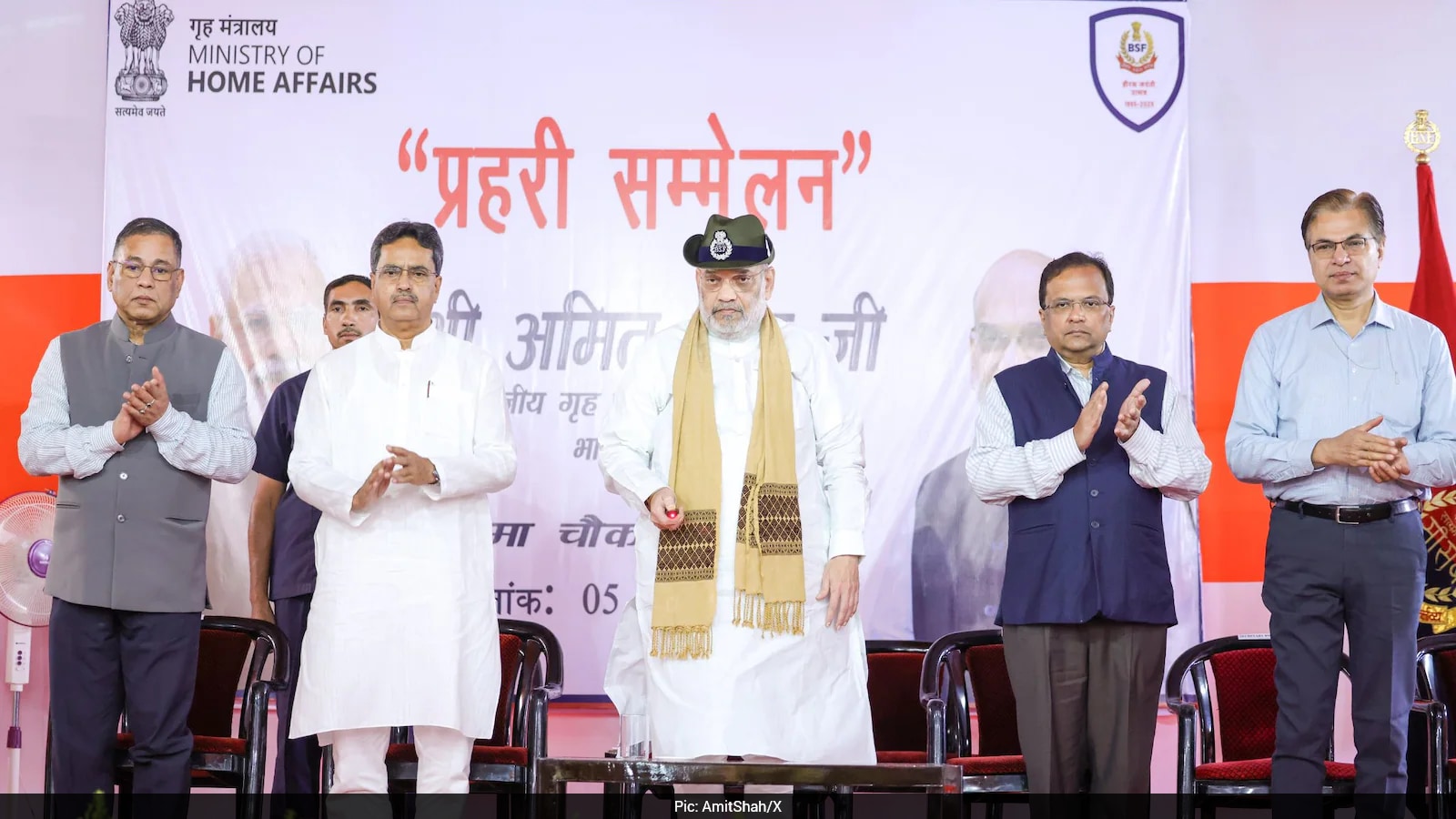
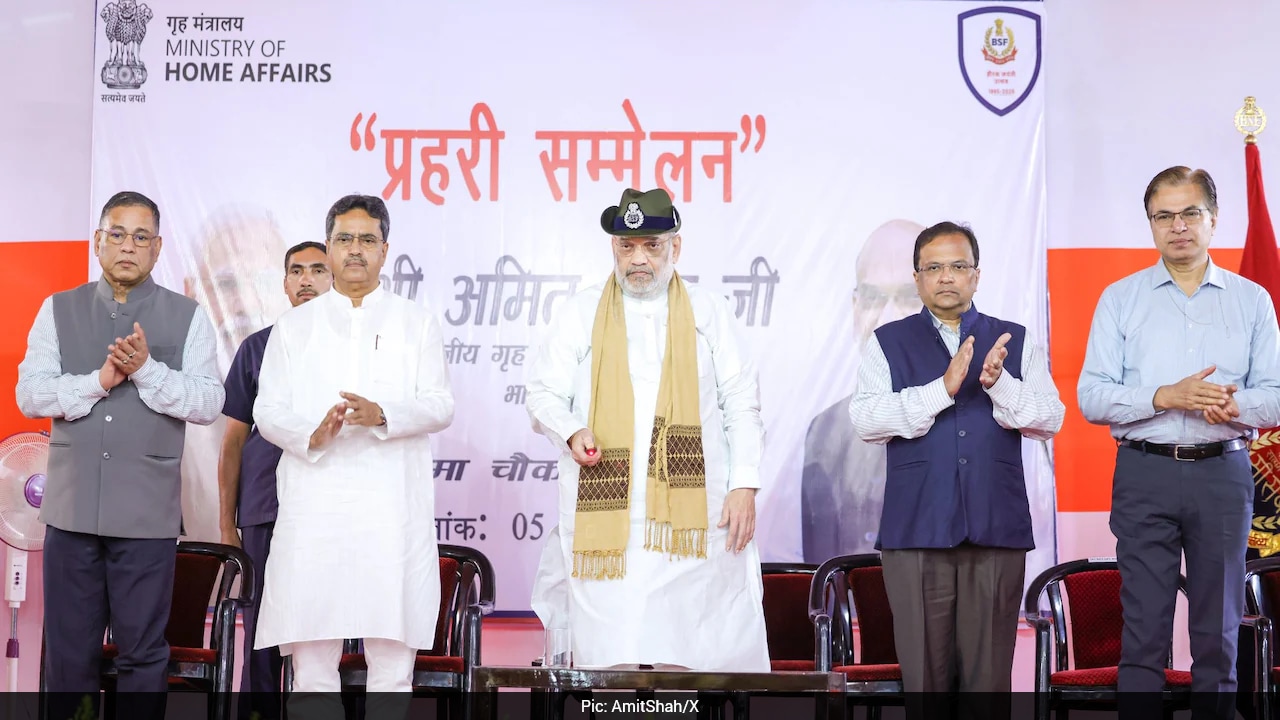
Addressing BSF personnel at the Lankamura Border Outpost in India-Bangladesh frontier near Agartala, Shah said conventional border guarding methods alone are no longer sufficient in the face of rapidly changing threats. He noted that while some border sectors face infiltration attempts, others are vulnerable to narcotics smuggling, counterfeit currency networks, arms and cattle smuggling, illegal migration and the use of drones for transporting contraband.
“Each border has distinct security concerns and requires a specialised response. Our objective is to build a technology-driven security architecture capable of detecting and preventing every form of cross-border crime,” he said.
The Home Minister revealed that the proposed Smart Border framework is in its final stages of planning and will be tested through pilot projects at several locations across the country. Lessons learned from these projects would be used to develop a comprehensive border management model for nationwide implementation.
Shah said the new approach would not be confined to security forces alone. District administrations, police authorities and local institutions in border areas would be integrated into a coordinated security mechanism.
According to him, lasting border security can only be achieved through active participation of all stakeholders living and working in frontier regions.
Referring to the strategic importance of Tripura, which shares a 856 km long international boundary with Bangladesh, Shah said safeguarding the border remains essential not only for national security but also for protecting the country’s social and economic interests.
He reiterated the government’s commitment to strengthening border infrastructure and modernising ageing fencing systems. Of the approximately 650 kilometres of fencing that has exceeded its operational lifespan, approval has already been granted for replacing 119 kilometres with upgraded structures.
The Home Minister linked border security with Prime Minister Narendra Modi’s vision of making India a developed nation by 2047, stating that economic growth and national development are impossible without a secure environment.
Preventing smuggling, curbing fake currency circulation, combating drug trafficking and stopping human trafficking would remain among the key priorities of border management agencies, he added.
The programme also featured observance of World Environment Day. Shah called for environmental protection to become a mass movement rather than a ceremonial annual event of the government, stressing that ecological responsibility must be embraced by society at large.
He said environmental degradation and climate change have emerged as global concerns and highlighted afforestation as one of the most effective tools for restoring ecological balance.
The Union Home Minister informed that personnel of various Central Armed Police Forces have planted nearly 6.4 crore saplings since 2019. This year, efforts would focus on replacing saplings that did not survive earlier plantation campaigns, while a target has been set to plant more than two crore saplings next year.
During the programme, Shah planted an agarwood sapling and virtually inaugurated accommodation facilities for BSF personnel while also laying the foundation stone for new infrastructure projects.
He praised the dedication of border guards serving in difficult terrain and harsh climatic conditions across the country, saying their sacrifices are recognised and respected by the people of India.
At the outset of his address, Shah paid tributes to the second Sarsanghchalak of the RSS, Madhav Sadashiv Golwalkar, popularly known as ‘Guruji’, on his death anniversary and recalled his contribution to cultural nationalism, national consciousness and nation-building with emphasis on service, social unity, national integrity and self-reliance.
The event was attended by Tripura Chief Minister Dr. Manik Saha alongwith several senior officials of the security forces, border guards, intelligence and border management attended the programme.
(Except for the headline, this story has not been edited by NDTV staff and is published from a syndicated feed.)



.)