


Kathmandu:
Rescue teams are rushing against time to find hundreds of people missing on the Nepal-Tibet border in flash floods that killed at least 165 and swept away entire villages. The flooding in the Bhote Koshi River, which caused destruction across three districts of Nepal, came without warning, according to eyewitnesses.
Though the exact sequence of events remains unclear, authorities said the flash flood was triggered after a glacier collapse blocked the flow of the Lhende tributary of the Bhote Koshi, causing the sudden rise of water that first hit Timure, near Nepal’s border with Tibet at Rasuwagadhi.
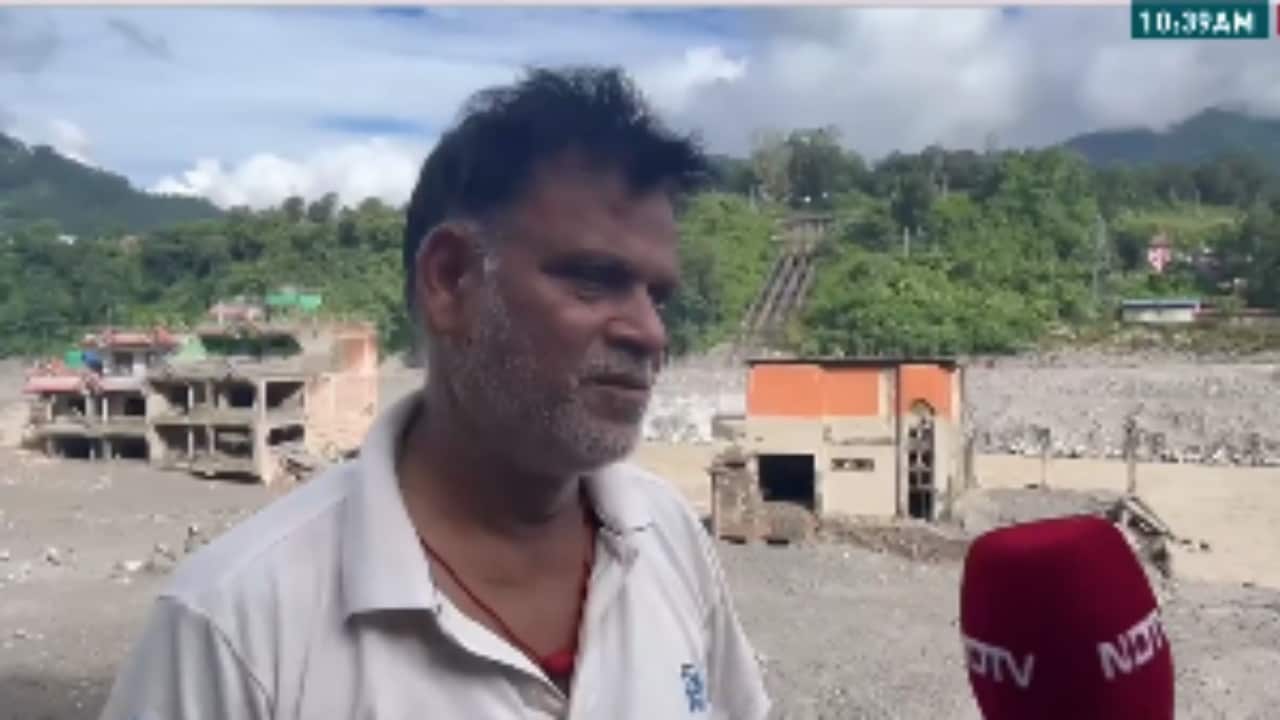
Within minutes, the flood surged downstream, sweeping much of the settlement in the Rasuwa, Nuwakot, and Dhading districts of Nepal. NDTV’s ground report from Nuwakot showed that though the floodwater has receded in most areas, it left homes, roads, bridges, and community spaces covered in several meters of silt, making search and rescue difficult.
Nepal: Nearly 160 killed, over 750 missing; rescuers search for survivors
NDTV’s @DeoSikta reports from flood-hit Nepal pic.twitter.com/yNlV7wsclc
— NDTV (@ndtv) August 27, 2026
Videos from the area showed at least one floor of the houses covered in silt. A local merchant, who had a cloth shop in Nuwakot’s Trishuli market — the biggest bazaar in the area — told NDTV that the flood came fast, without giving people much time to relocate.
“In the morning, people from administration came and told us that a dam on the Bhote Koshi River on the Tibet side has broken, sending tons of water ourway. We were asked to run towards higher terrains,” the survivor said, adding that only a few could reach in time as the flood swept away many within seconds.
He added that his 18-year-old son and wife are also missing.
Nepal Flood Fury | “Unprecedented disaster, relief operations on”: Nepal PM on flash floods
NDTV’s @DeoSikta speaks to locals from Trishuli market area#NepalFloods pic.twitter.com/mZAnE4zqhy
— NDTV (@ndtv) August 27, 2026
‘Came Without Warning’
According to eyewitnesses, the flood came without warning. There was no rainfall reported in the area that day, and people were going about their daily routines when, out of nowhere, a wall of water struck the area.
Rajendra Dhungana, chief customs officer in Rasuwa, told Kathmandu Post that he felt the ground shake and ran outside, where he saw a wall of water trailing what looked like a plume of smoke, crashing down from upstream, bearing down on the Timure bazaar.
“It was the flood, rising like a wave nearly 100 meters high and sweeping through the market. Within moments, the market was gone,” he said.
As flash floods hit Nepal killing more than 150 people, NDTV’s @DeoSikta brings you this ground report from Nuwakot showing the devastating aftermath of #NepalFloods pic.twitter.com/Xnjc0LT4Ph
— NDTV (@ndtv) August 27, 2026
As the scale of the disaster became apparent, Dhungana and dozens of others fled into the nearby forest. More than 300 vehicles and trucks waiting at the customs checkpoint were washed away. Nepal said at least 160 people have been killed in the tragedy, and 823 others are out of contact after deadly floods.
Among those missing are nearly 300 Indian nationals, mostly Mansarovar pilgrims, said Nepal’s foreign minister Shisir Khanal.
The number of people missing in Tibet’s Gyirong county has increased to 558, according to Chinese state media, putting the apparent overall number of missing at more than 1,300. It was not immediately certain whether the numbers of missing were entirely separate in both nations or they had been counted twice in both tallies.
Chinese state broadcaster CCTV said that among those missing in Tibet, 260 were foreign nationals. The deaths remained at three, it said.
World Rushes to Help
Promises of aid and assistance came in soon after reports of the scale of the disaster. The United States has pledged $500,000 in emergency assistance, and the International Federation of the Red Cross and Red Crescent Societies released $1.4 million.
“The priority now is to reach affected communities and get assistance to people who have lost their homes, suffered injuries, or have been cut off,” its Nepal head, David Fisher, said.
The European Union said it had activated its Copernicus satellite surveillance system to help recovery efforts and was ready to provide more help, while the World Health Organisation said it had dispatched emergency medical supplies.
India has also sent an initial 10 tonnes of humanitarian assistance.


