


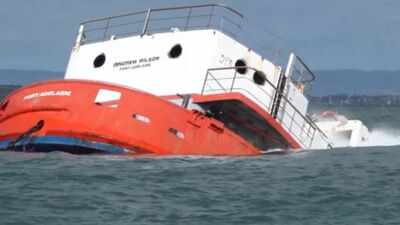
South Australia has sunk the 40-metre MV Andrew Wilson about six kilometres off the coast of Brighton, turning the retired vessel into an artificial reef. The ship now rests upright 20 metres below the surface on the sandy ocean floor.According to the govt of South Australia, the sinking is part of the $165 million response to the algal bloom that affected marine life in the area. The artificial reef is intended to support the recovery of fish and other marine life after the impact of the algal bloom.The MV Andrew Wilson made its final journey this week after travelling about 40 kilometres from Port Adelaide to Brighton. It was anchored overnight before specialist crews began the operation to sink it. Valves were opened to allow seawater into the hull, causing the vessel to gradually sink and settle on the seabed.The operation also marks the first time in more than 20 years that a vessel has been scuttled in South Australian waters. Before the wreck can be opened for recreational diving, teams will carry out a final safety inspection in the coming days.
Ship to become artificial reef
Once the site is opened, divers will be able to explore parts of the vessel, including its engine room, galley and bridge. The location was selected because it is accessible, has suitable seabed conditions and is close to boat ramps. It is also at a safe distance from major shipping channels.The wreck is expected to become another part of wider efforts to help restore marine biodiversity in the area. The state government said the project builds on other recovery work, including the construction of native oyster reefs and restoration of seagrass habitat.An artificial reef provides a structure in an area where there may otherwise be little solid habitat. The submerged ship will add a large surface under the water where marine life can establish itself. Fish and other organisms can use such structures as part of the marine environment.However, the ship could not simply be placed in the water in its original condition. Preparing the vessel for scuttling was a detailed process that began several months ago after Maritime Constructions donated it to the State Government.Specialist crews removed hazardous materials from the vessel before it was sunk. They also removed internal walls and cut strategic access holes into the hull. A deep clean was carried out in consultation with the Environment Protection Authority and an independent specialist.The government said the preparation followed strict international guidelines to prevent negative impacts on the local marine environment. This ensured the vessel was prepared specifically for its new role beneath the water.
Fishing banned around wreck
The government has also introduced a temporary fishing restriction around the new reef. Recreational and commercial fishing is banned within a 200-metre radius of the ship for 12 months.The restriction is intended to give local fish stocks time to thrive around the new artificial reef. The species mentioned by the government include snapper, flathead and King George whiting.South Australia’s Department of Primary Industries and Regions lists the MV Andrew Wilson site among areas where all fishing activity is prohibited during closure periods. Fishing closures can be permanent, seasonal or temporary, and are used to reduce fishing pressure and help replenish fish numbers.For the new reef, the 12-month closure is temporary. It creates a protected area around the wreck while the site begins to develop as part of the surrounding marine environment.The MV Andrew Wilson was built in 1962 and has a long history in South Australian waters. During its working life, the vessel carried out local dredging operations and supported earlier artificial reef installations. It also played a role in the salvage mission following the Whyalla Airlines tragedy in May 2000.


