



Domestic equities are trading lower on Monday, tracking weak global cues, and lingering geopolitical tensions. Benchmark indices stayed in negative territory in the majority of trade, with selling pressure visible across sectors.
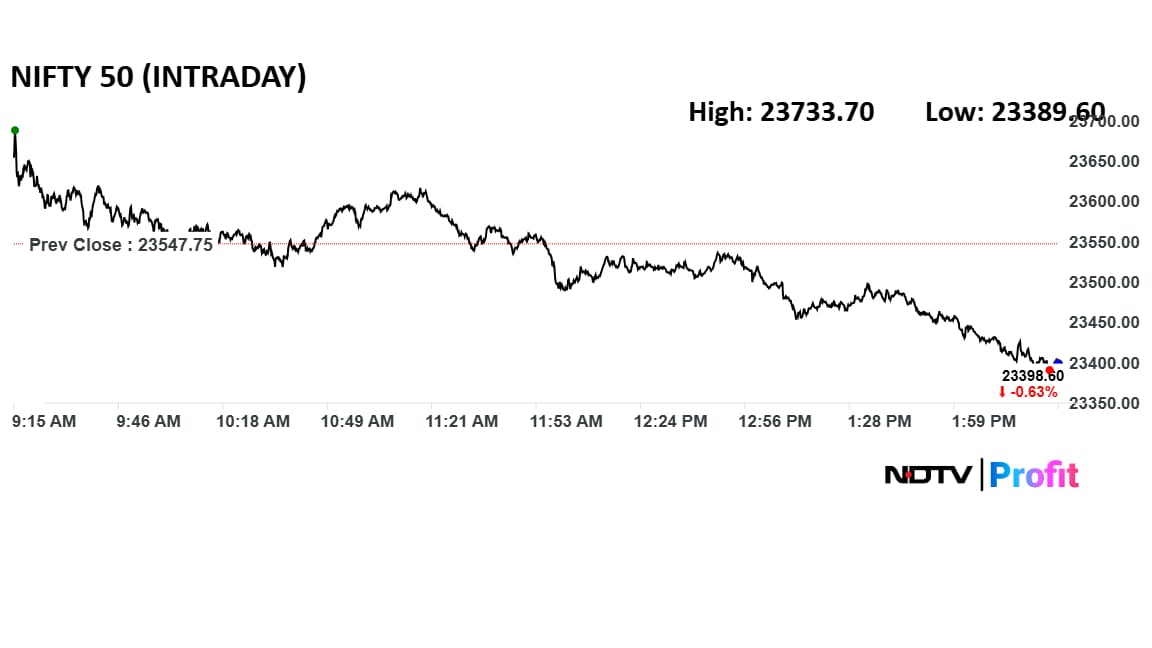
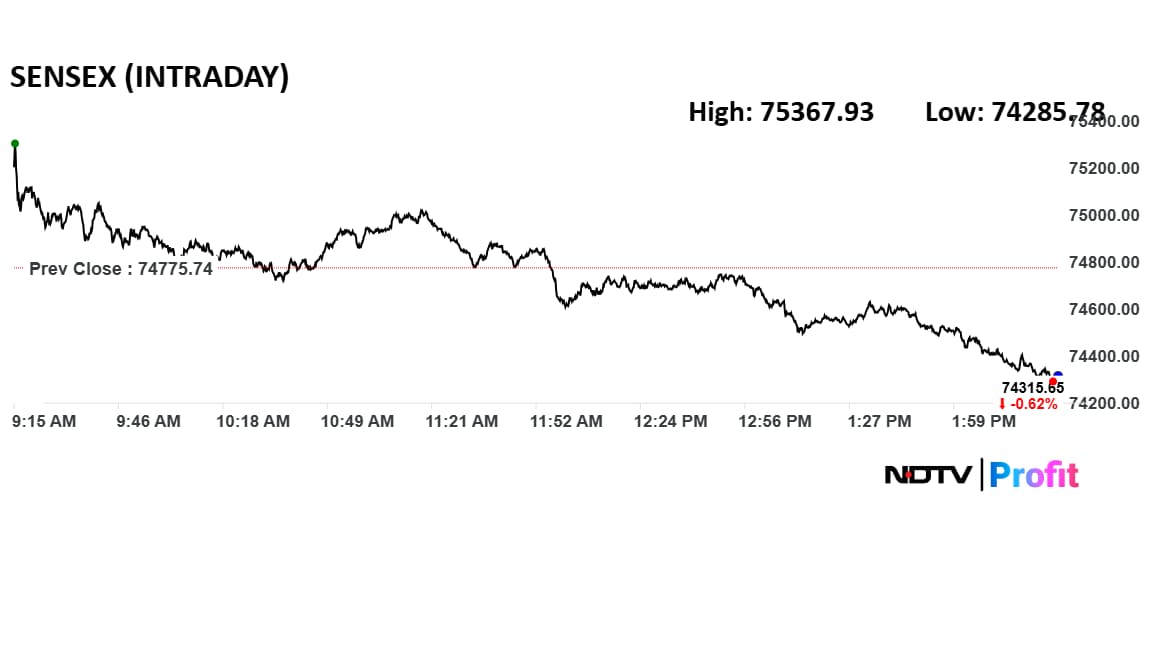
Nifty fell as much as 0.63% to 23,398, whereas Sensex fell nearly 0.62% in trade to 74,315, as of 2:30 pm.
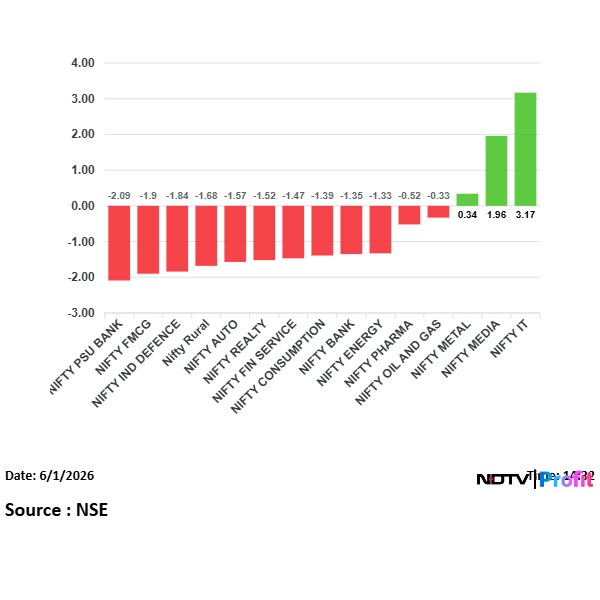
Barring IT, Media, and Metal, all sectors are trading in the red, with losses led by PSU Bank, FMCG, and Defence. Nifty IT is up by 3.35%.
The broader market is also facing pressure with the Nifty Smallcap 250 falling almost 0.72%, and the Nifty Midcap 150 dropping about 1.25%.
Here’s three reasons why markets are crashing on Monday:
US-Iran War Uncertainty
Iran’s foreign ministry said on Monday that a ceasefire in Lebanon remains a key condition for a deal with the United States. “We insist that a ceasefire in Lebanon is an essential condition for any deal aimed at ending the war,” said foreign ministry spokesman Esmail Baghaei in a weekly press briefing, as Israel expands its offensive in Lebanon.
Israeli forces are making their deepest incursion inside Lebanon since they withdrew from the country over a quarter-century ago, despite a nominal US-brokered ceasefire and the first direct Israel-Lebanon talks in decades. It’s a challenge in the emerging deal to extend the Iran war ceasefire as Tehran wants it to end fighting in Lebanon, too.
Israel says it is targeting the Iranian-backed Hezbollah militant group, which has a strong political presence in southern Lebanon and has launched thousands of missiles and drones at Israeli soldiers in southern Lebanon and at northern Israel.
The United States bombed Iranian radar and drone control sites in Iran after Tehran shot down an American MQ-1 Predator drone this weekend. Iran acknowledged launching a retaliatory strike, while Kuwait said it was intercepting incoming drone and missile fire.
Gaining Crude Prices
Oil prices rose on Monday after hitting their lowest levels in six weeks, as investors reassessed the prospects of a peace agreement between the US and Iran that could restore energy flows through the Strait of Hormuz. Brent crude climbed toward $93 a barrel after ending Friday at its weakest level since mid-April, while US benchmark West Texas Intermediate traded near $89 a barrel.
The gains came as uncertainty resurfaced around negotiations between Washington and Tehran. Both sides exchanged proposed amendments to a draft agreement over the weekend that would extend the current ceasefire and pave the way for a reopening of the Strait of Hormuz, one of the world’s most important oil transit routes. However, there was little indication that a final breakthrough was imminent.
Weak Global Cues
Asian markets ended mixed on Monday as investors tracked developments in US-Iran negotiations after Donald Trump said he was in “no hurry” to reach a deal aimed at ending the conflict.
South Korea emerged as the standout performer, with the KOSPI surging 3.68% to a record closing high of 8,788.38. In contrast, the small-cap KOSDAQ fell 2.3% to 1,050.03. Shares of Samsung Electronics rallied more than 10%, hitting an all-time high.
In Japan, the Nikkei 225 gained 0.91% to close at 66,934.33, while the broader TOPIX edged lower by 0.42% to 3,940.7. Australia’s S&P/ASX 200 ended little changed at 8,729.4.
Chinese markets were mixed, with Hong Kong’s Hang Seng Index rising 0.86% in late trade, while mainland China’s CSI 300 declined 0.98% to close at 4,844.26.
Essential Business Intelligence,
Continuous LIVE TV,
Sharp Market Insights,
Practical Personal Finance Advice and
Latest Stories — On NDTV Profit.



