


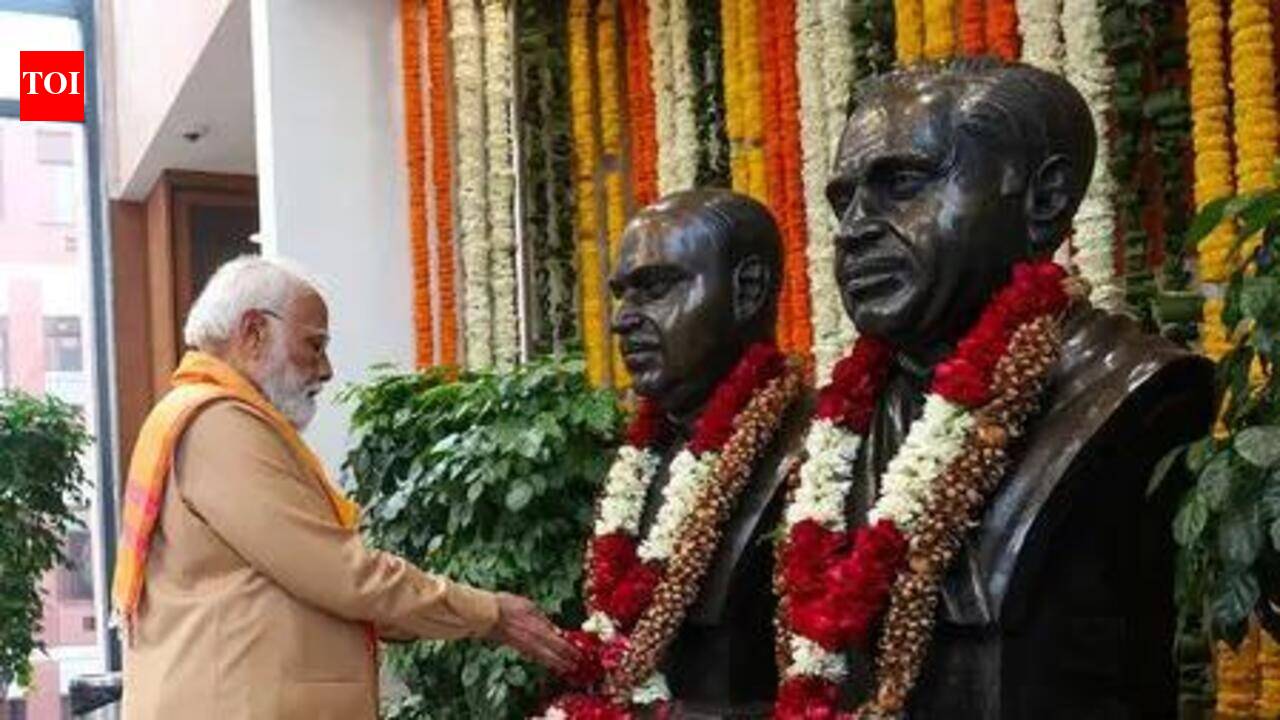
Political power is often a potent way of building legacy by highlighting elements from history that suit the narrative of those in ascendancy. For critics, the BJP, now in power both at the Centre and in the state, is using its double-engine efficacy to paint a unilateral palette over the chequered history of Bengal’s Partition and Syama Prasad Mookerjee’s legacy in Bengal politics. For supporters, it is not reinvention but restitution, the due recognition of a chapter of Indian history they believe was consciously pushed to the margins.That makes June 23 more than a remembrance day this year.Observed by the BJP as Syama Prasad Mookerjee’s “Sacrifice Day”, marking his death in detention in Jammu and Kashmir in 1953, June 23 is now part of a larger political project. Three days earlier, the government in Bengal officially marked June 20 as West Bengal Day for the first time. The decision to celebrate Mookerjee’s July 6 birth anniversary as a state holiday adds another date to the sequence. The proposed 125-foot statue in Kolkata, the planned memorial at his ancestral home in Jirat, and the renaming of Suhrawardy Avenue as Gopal Mukherjee Road are pieces of the same puzzle.The June 23 tributes by Prime Minister Narendra Modi and chief minister Suvendu Adhikari underline the deep significance Mookerjee holds within the right-of-centre ecosystem. Modi hailed him as “a distinguished patriot, scholar and statesman” who dedicated his life to India’s development. He invoked Mookerjee’s “conviction, courage in public life and commitment to national interest”, and said his sacrifice remained etched in collective memory. Adhikari called Mookerjee a “venerable nationalist leader”, founder of the Jana Sangh and a man who dedicated his life to safeguarding India’s unity and integrity. Most significantly, he described him as the “father of West Bengal”.Since 2023, the BJP at the Centre has observed June 20 as West Bengal Day. Raj Bhavan marked it too. Mamata Banerjee’s government rejected June 20 as Bengal’s foundation day and chose Poila Baisakh, the first day of the Bengali calendar, as Bangla Divas, locating Bengal’s identity in culture rather than Partition.From the BJP’s point of view, the June 20 celebration is therefore a correction of historical neglect, the day Bengali Hindus secured a state within India, a move the party believes was made possible by Mookerjee’s politics.
The backstory behind June 20
The BJP’s June 20 narrative cannot be understood without delving into the longer history of Bengal’s partitions. Bengal had already lived through one Partition in 1905, when the British divided the province, officially for administrative reasons but politically in a way that weakened Bengali nationalism. That Partition was fiercely opposed by Bengal’s nationalist intelligentsia, including Rabindranath Tagore, and was reversed in 1911. The memory of that reversal became part of Bengal’s political pride.By 1947, the political situation had changed. The 1946 elections had confirmed the Muslim League’s dominance in Bengal’s Muslim-majority politics. Huseyn Shaheed Suhrawardy became the last premier of undivided Bengal. The violence of Direct Action Day in Calcutta in August 1946, followed by Noakhali, shattered whatever remained of trust between communities.In April 1947, Suhrawardy, already branded by critics as the “Butcher of Bengal”, floated the idea of an undivided, sovereign Bengal that would join neither India nor Pakistan. Sarat Chandra Bose, Netaji Subhas Chandra Bose’s elder brother, also supported the broad idea, although Chandra Bose, Netaji’s grandnephew, argues that Sarat Bose hoped the sovereign state could later join India.For Mookerjee and the Hindu Mahasabha, this was not romantic Bengal nationalism but a trap. They believed it would leave Hindu-majority western Bengal inside a Muslim-majority state, possibly outside India, and vulnerable to Muslim League dominance. After the violence of 1946, that fear had deep resonance among many Bengali Hindus. Mookerjee’s argument was blunt. If India was to be divided, Bengal must be divided too.
What exactly happened on June 20, 1947
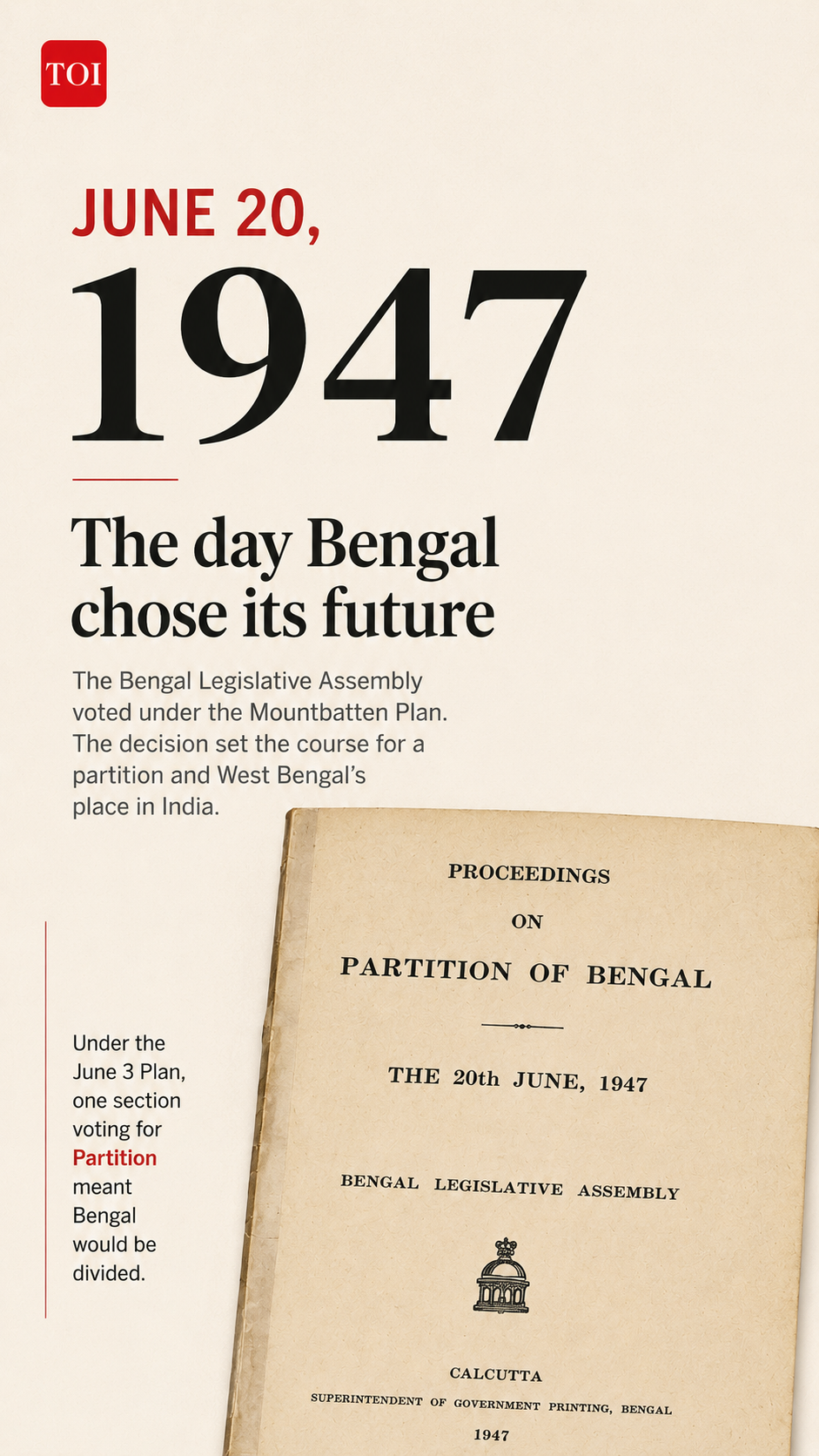
On June 20, 1947, the Bengal Legislative Assembly voted on the province’s future under the June 3 Plan, or the Mountbatten Plan. In the joint sitting, members voted 126-90 that if Bengal remained united, it should join a new and separate Constituent Assembly, effectively Pakistan’s. The sectional votes then settled the matter. The Muslim-majority section voted 106-35 against partitioning Bengal and, if Partition did take place, 107-34 for joining the new Constituent Assembly. The non-Muslim-majority section voted 58-21 for Partition and, in that event, for joining India’s Constituent Assembly.Under the June 3 Plan, if either section voted for Partition, Bengal would be divided. So June 20 became a day of finality. For the non-Muslim-majority section, it was a hard, pragmatic choice made amid the bitter realisation that a united Bengal was no longer a viable political future.
Why Modi chose Tarakeswar for the June 20 message
At Tarakeswar, Prime Minister Narendra Modi linked the past with the present and future, giving June 20 the BJP’s national narrative. He accused Congress of bowing before “conspiratorial forces” during Partition and said attempts had once been made to make the whole of Bengal part of Pakistan. He spoke of Bengal finding “new freshness”, as if the state had finally broken free from old shackles.
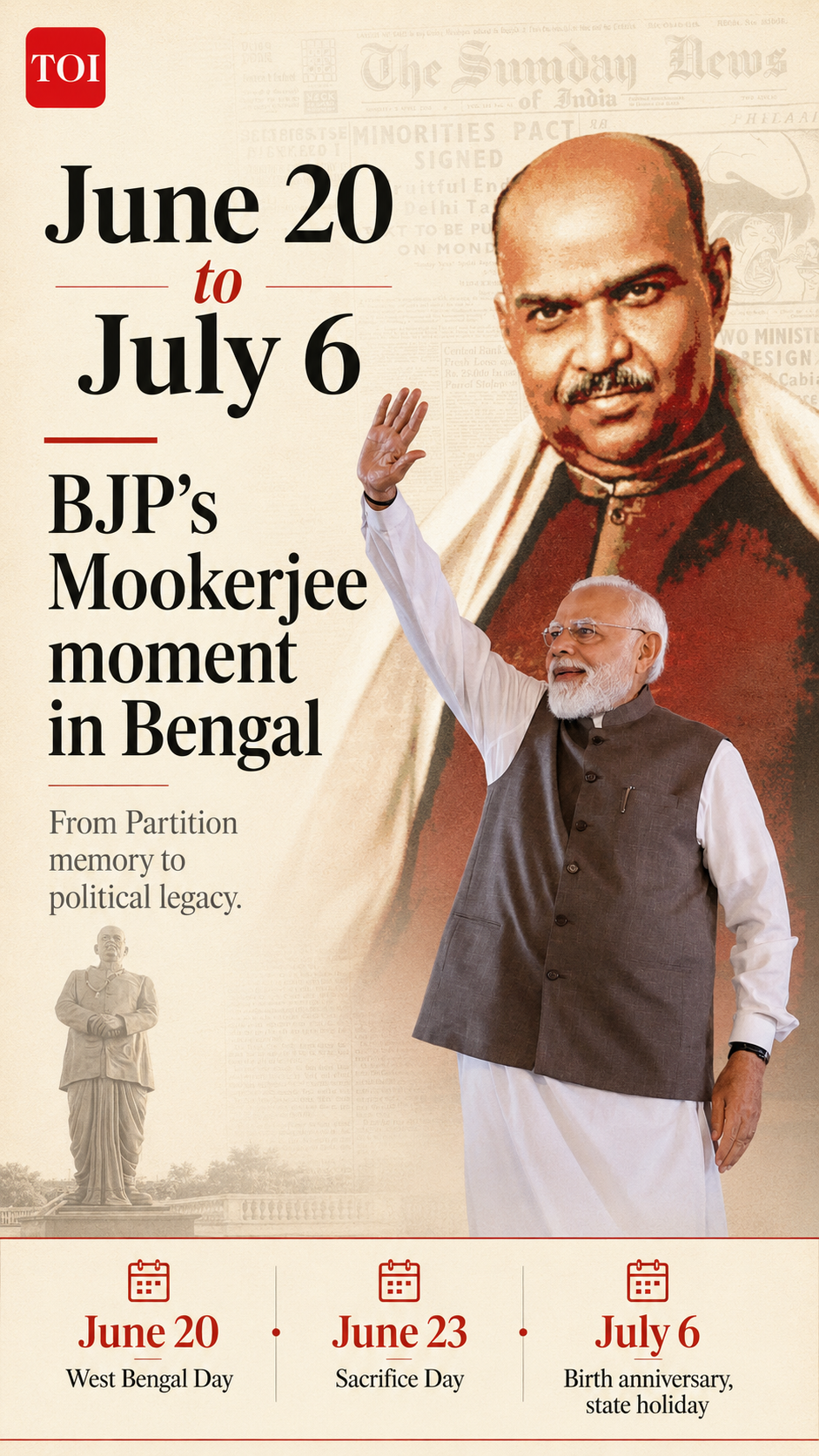
Tarakeswar was not incidental to that frame. Alongside being a popular Shaivite pilgrimage spot, it holds another memory for Hindu nationalists. In April 1947, before the Bengal Assembly vote, the Bangiya Hindu Mahasabha met near Tarakeswar under Mookerjee’s leadership. The demand for a separate West Bengal that would remain with India gathered organised shape there.At a time when Sarat Bose was still canvassing for an undivided Bengal, Mookerjee called for a clear break. The Hindu Mahasabha may not have been numerically strong in the Assembly, but Hindu nationalists argue that Mookerjee had enough political legitimacy to build consensus among Hindu lawmakers and shift the terms of debate.
Why BJP wants Syama Prasad in sharper focus
Mookerjee was not only the man BJP credits for the creation of West Bengal. He was also the founder of the Bharatiya Jana Sangh, the BJP’s ideological predecessor. After Independence, he joined Nehru’s cabinet as Industry and Supply minister, later resigned, and became one of the earliest national faces of opposition politics.Mookerjee died in 1953 while in custody in Jammu and Kashmir. He had gone there in protest against the permit system and the special constitutional arrangement then in place. The slogan associated with his politics, one country cannot have two constitutions, two heads and two flags, later became part of BJP’s long campaign against Article 370. His death in custody turned June 23 into Balidan Divas for the Sangh Parivar.Bengal’s public pantheon has long been crowded by Tagore, Vivekananda, Netaji, Nazrul, Vidyasagar and Bankim. Mookerjee was present, but rarely as the central founder of modern West Bengal. BJP is looking to change that fast.
Why the Suhrawardy road rename matters
The Suhrawardy Avenue-Gopal Mukherjee Road controversy belongs to the same ideological lens. Huseyn Shaheed Suhrawardy is linked by critics to the Great Calcutta Killings of 1946 and to the charge that his government failed to protect citizens when Calcutta burned. Gopal Chandra Mukherjee, or Gopal Patha, is remembered as the man who organised resistance and protected Hindu neighbourhoods.But here, history complicates the act. Municipal-history accounts say Suhrawardy Avenue was named after Sir Hassan Suhrawardy, the first Muslim vice-chancellor of Calcutta University, not his nephew H S Suhrawardy. That distinction matters historically. Politically, however, the Suhrawardy name now evokes painful memories. When the purpose is to send a pointed political message, fact often travels with a coat of symbolism.
Why opposition parties call it selective history
The opposition believes BJP is constructing a majoritarian narrative around a complex historical moment. It argues that BJP is not recovering history but selectively arranging it to suit its politics.The CPM’s campaign of putting people’s history in people’s court is an attempt to take the counter-story to neighbourhoods. Its argument is that June 20 cannot be separated from displacement, bloodshed and the uprooting of lakhs of people.Congress has challenged the Mookerjee-centred version too. Its argument is that BJP is shrinking a larger legislative process into a one-man story. Congress leaders say most of those who backed West Bengal’s place in India were from the party, with Mookerjee and communist members such as Jyoti Basu only part of a broader list.Chandra Bose, speaking to TOI, questioned what difference Mookerjee’s vote made to the larger equation. While expressing regret over Bengal’s Partition, he said credit or blame for it could not be given to Mookerjee alone, arguing that he was a minor player in the larger Congress-dominated ecosystem.There is also the August 14 contradiction. If Partition Horrors Remembrance Day is observed nationally as a day of trauma, opponents ask, how can June 20, part of that same Partition process, be celebrated as Bengal’s birthday?
BJP’s Bengal story now in motion
BJP’s Bengal story is built around the narrative of civilisational pride and historical erasure. It says Bengal was wounded by Partition, weakened by appeasement, robbed of nationalist memory and taught to forget its defenders. Even on syama Prasad’s death anniversary, his biographer and BJP leader Tathagata Roy doubled down on this narrative, saying the national leader had not received due recognition. According to Roy, “the previous state government didn’t know he existed and they were jealous of him”.
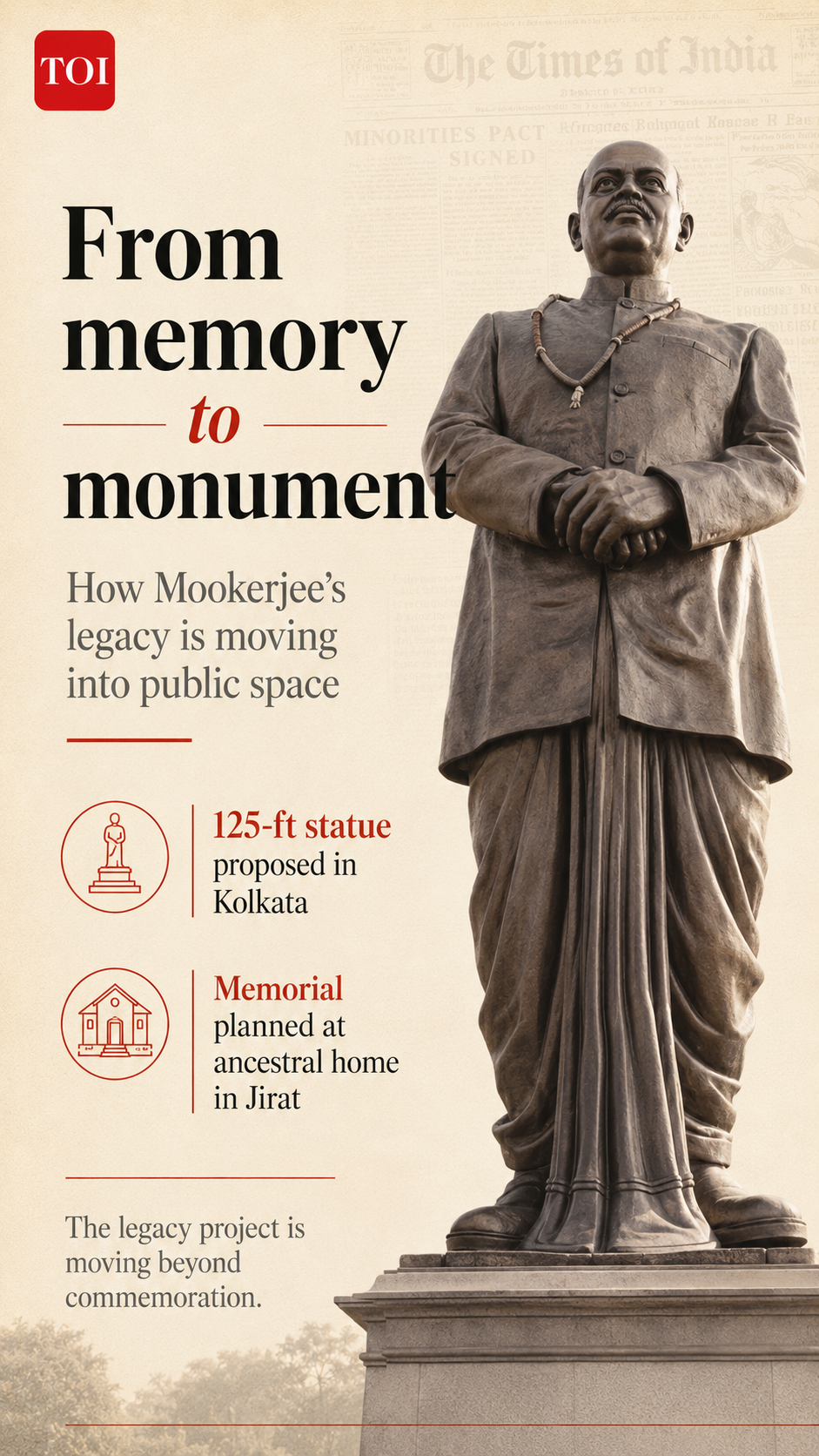
How Mookerjee’s memory is commemorated
For a party long accused by detractors of bringing an outside ideology into the state, it now has the opportunity to say that it is merely recovering Bengal’s own suppressed history. Opposition figures like Chandra Bose contest the title of “father of West Bengal”, asking how states can have their own father and what such a claim does to the idea of India. He also questions why Mookerjee did not do enough to save Hindus who were left in East Pakistan after Partition and instead concentrated on Jammu and Kashmir. Bose says ruefully that had Netaji been present in 1947, India would not have been divided.At the same time, Chandra Bose and other critics acknowledge Mookerjee’s scholarship. That makes the BJP’s next move predictable, to push the conversation into academic space. Bengal higher education minister Jagannath Chattopadhyay has said that in the “new Bengal” after BJP’s rise to power, no “uncomfortable narrative” of history would be ignored, and syama Prasad Mookerjee’s contribution, forgotten for nearly eight decades, would now be discussed. While insisting that the government would not interfere in university curricula, he added that it wanted debate on Mookerjee across the right and the left, calling such debate a sign of health in higher education.It is clear that Bengal’s past is being reorganised. And in that reorganisation, Syama Prasad Mookerjee is being moved from the margins of Bengal’s official memory to the centre of its new political story.



