


In a way, it was a tale foretold. And had been in the making for the last six months.
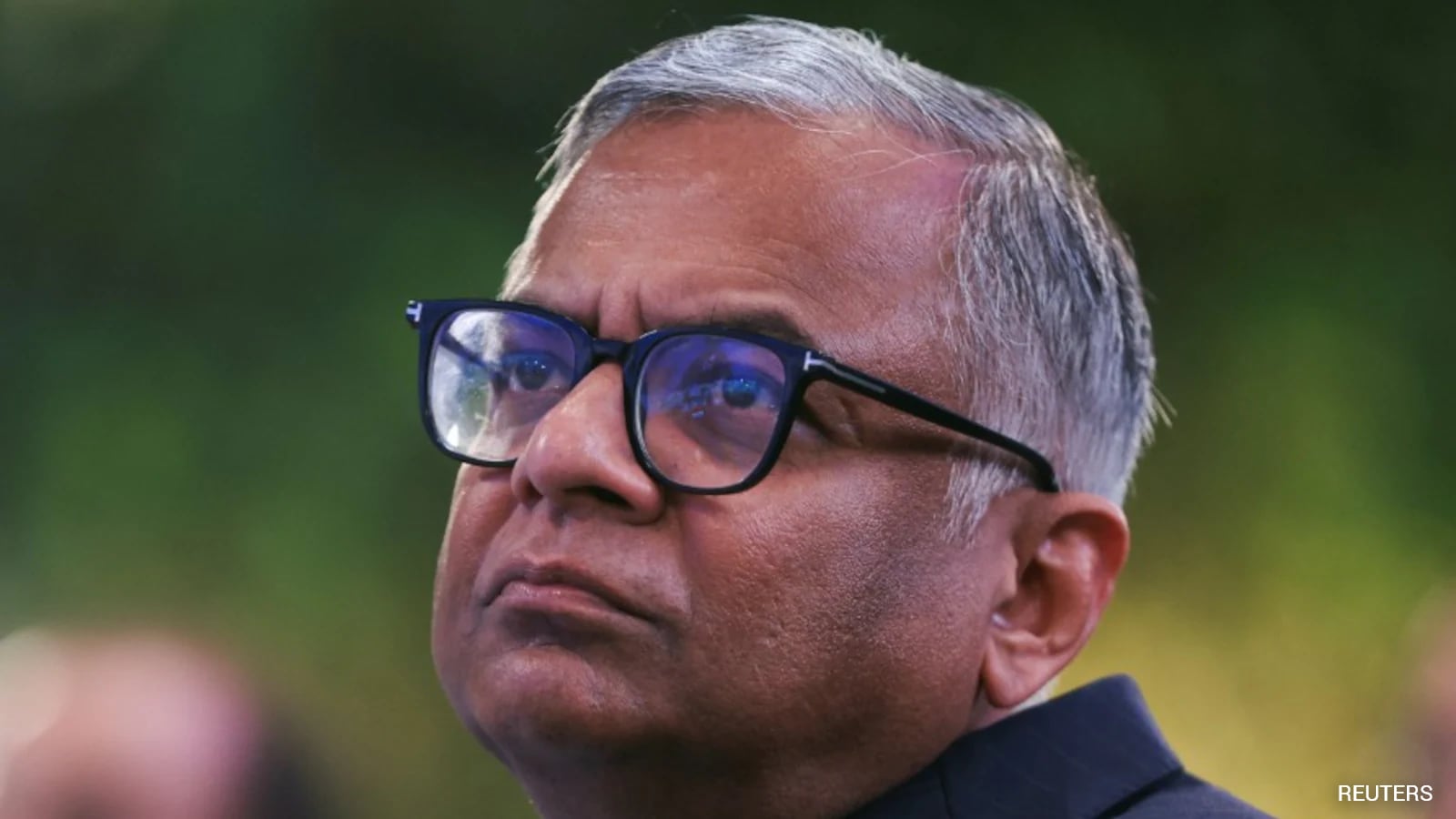
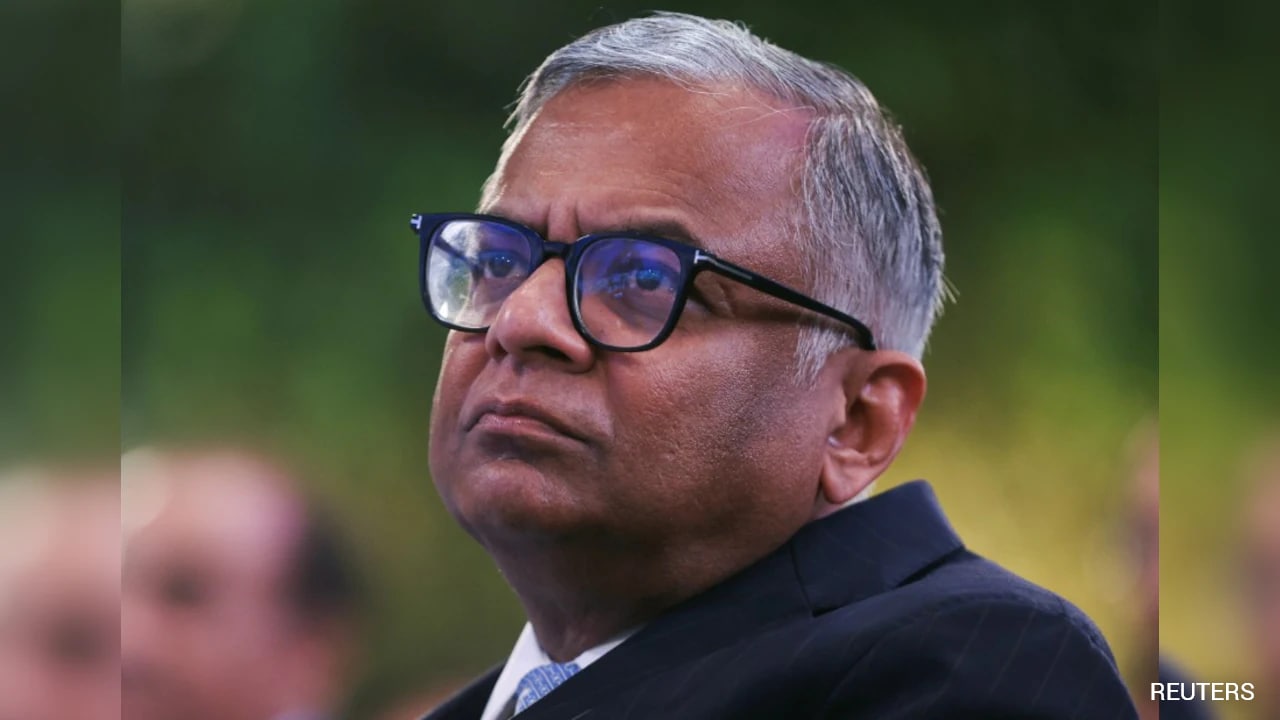
A week before a potentially contentious shareholder vote on August 18, Natarajan Chandrasekaran, who is known as Chandra, stepped down as chairman of Tata Sons on Wednesday, but said will serve out his current term.
The move comes after deliberations on Chandrasekaran’s reappointment were deferred in February following a disagreement among board members over a range of issues, including losses at some group companies.
“It has been six months since the matter of my reappointment was first discussed by the Board and no resolution has been reached till date,” the 63-year-old said in a statement.
“Under these circumstances… I have decided not to offer myself for reappointment when my term ends on Feb 20, 2027. I have asked the Board to decide on the succession soon to ensure a proper transition,” he said, adding he has completed 40 years of professional life at the Tata Group.
He said a decision on the new leadership was needed as several major projects were at critical stages.
“Clarity on leadership is important for employees, investors, partners and other stakeholders.”
Read: From Air India To AI, N Chandrasekaran’s Big Bets Define His Legacy At Tata
Chandrasekaran, a former chief executive of Tata Consulting Services (TCS), took over as chairman of Tata Sons in 2017 following a bitter boardroom battle that led to the ouster of Cyrus Mistry.
The appointment followed a 30-year career at TCS, where he rose through the ranks to become the CEO and under his leadership, TCS consolidated its position as the largest private sector employer in India and India’s most valuable company, read a note on his bio on Tata’s website.
“Mr. Chandrasekaran was the Chief Executive Officer and Managing Director of Tata Consultancy Services since 2009. A Tata lifer, he had joined the company in 1987. He was appointed as a Director on the board of Tata Sons on October 25, 2016,” the Tata group said in a statement in 2017.
Under Chandrasekaran, the Tata group expanded aggressively across technology, auto, aviation, electronics and manufacturing, while pursuing large investments in semiconductors and other strategic sectors. The group now comprises 31 companies operating across more than 100 countries, according to Tata’s website.
TCS, the group’s largest profit generator, has come under pressure from a slowdown in global technology spending. Its shares have fallen more than 20 percent in the past year as it also grapples with threats from generative AI software.
Speaking at TCS’ 31st Annual General Meeting last month, Chandrasekaran said, “I predict that over the next three years, TCS will have as many AI agents as human employees.”
TCS, Chandrasekaran noted, is already investing extensively in AI agents across internal operations, solution frameworks and external operations as part of its broader strategy to capitalise on the rapid evolution of enterprise AI.
“Far from being a mortal threat, AI is the most significant opportunity yet for enterprise IT,” he told shareholders.
Despite concerns about AI-led disruption, Chandrasekaran maintained that TCS continues to see strong business momentum. “Margins have held, revenues are up, and the deal pipeline is stronger than ever,” he said.
Tata’s ambitious effort to revive Air India following its acquisition from the government in 2022 has faced a series of operational setbacks. Tata Group has absorbed other, smaller airlines into the Air India brand, while struggling to modernise many of its operations.
In June 2025, a London-bound flight crashed shortly after take-off from Ahmedabad, killing 241 of the 242 people on board and 19 people on the ground.
Most recently, the pilot of an Air India flight from Phuket to Delhi, in which several passengers were injured after it suddenly lost altitude, failed a second dope test, sources said. The test reportedly confirmed that the pilot had smoked marijuana, which is commonly known as weed.
The Tata Group, India’s most prestigious conglomerate, faces pressure on its technology business from the global shift toward artificial intelligence and a cyberattack affecting Jaguar Land Rover.
Early Life
In a 2015 interview with NYT, Chandrasekaran said his father instilled in him very early on to know the “value of everything you get” and “be accountable”.
“My father would say that you need to know the value of everything you get – value of money, and value of time. So he made us account for things. It wasn’t that there was a right or wrong way, but he wanted us to be accountable for what we did. Over time, it became a habit. One of my key strengths is that I’m very reflective. You learn so much better by taking that time,” he told NYT.
His father’s one big goal, Chandrasekaran told NYT, was to give his six children a “very solid education”.
“My father wanted one of us to come back and work with him on the farm and eventually take over. My older brothers went on to professional jobs, and he suggested that I come back to the farm after college. I did a science degree and then went back,” he said.
After a period of five months, he started feeling miserable, he said.
He went back for a master’s degree in computers, he said, after a chat with his father.
Speaking about his early influences, he said watching his mother work from 4 in the morning till 10 in the night “kindled aspirations in all of us”.
“My mother is probably one of the hardest-working people I’ve ever met. Her routine used to start at 4 in the morning, and end at 10 in the evening. She raised us, and supported us in everything we did. That kindled aspirations in all of us,” he told NYT.
Born and raised in a small village in Southern India, he said he grew bananas, rice and sugarcane on his family farm of 15 acres.
“I had some leadership roles in school – I was leader of the class and captain of the badminton team,” he had said in the same interview.
Speaking about his leadership approach, he told NYT, “Learning cannot be achieved by mandate. It has to be achieved by culture. Another thing I say is that everyone should try to help one colleague in a way that helps them achieve a little bit more.”
Asked how he makes his hiring decisions, he told the American newspaper, “I want to know how the person articulates their strengths, weaknesses and what they’re looking for. The whole idea is to see if there’s a fit. To me, the fit will require the person to have passion first. Then I want to see if they’re a team player.”
Awards
Chandrasekaran was conferred with the Padma Bhushan, one of the highest civilian awards in India, in the field of trade and industry in 2022. The French Government conferred him with Legion d’Honneur, the highest civilian award in France for his outstanding business successes and decisive contribution to strengthening Indo-French economic ties.
Alongside his many accolades, he is also the author of Bridgital Nation, a book on harnessing technological disruptions to “bring Indians closer to their dreams”.
Chandra has been awarded several honorary doctorates by leading Universities in India and internationally, including an honorary Doctor of Letters from Macquarie University, Australia, Doctor Honoris Causa by Nyenrode University, The Netherlands, and Doctor of Letters from the Regional Engineering College, Trichy, Tamil Nadu.



, took over as chairman of Tata Sons in 2017 following a bitter boardroom battle that led to the ouster of Cyrus Mistry.)