


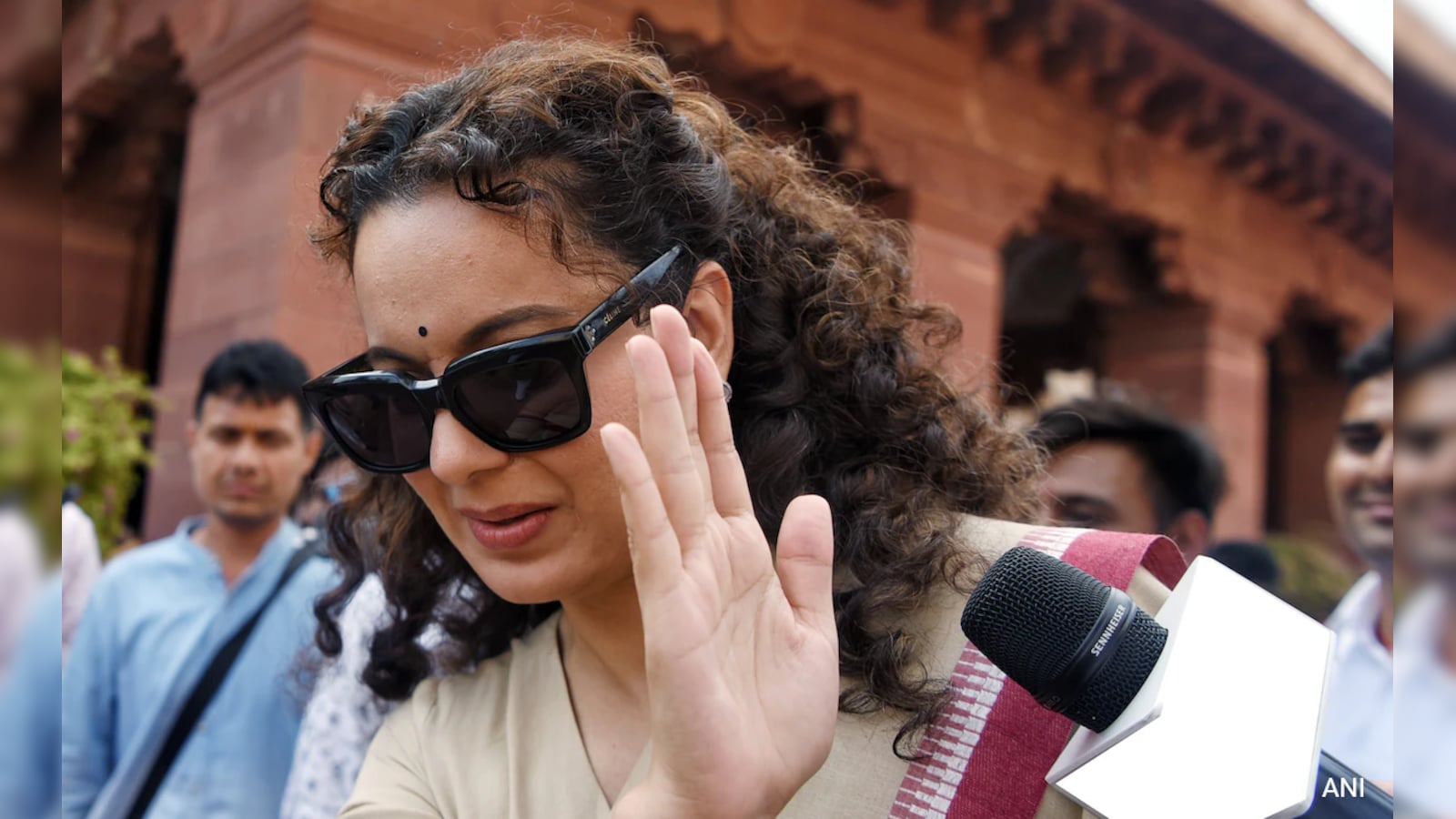
Kangana Ranaut rarely enters a controversy quietly. She arrives as though the cameras have already begun rolling, the lighting has been arranged, and the antagonist has been identified. Her latest intervention in the Cockroach Janta Party (CJP) agitation was no exception.
Last week, the actor-turned-parliamentarian described the youth protest reels as “puke-inducing”, asked who was “birthing and raising” such young people, compared their conduct to filth and garbage, and coined the expression “Generation Gutter”.
Advertisement – Scroll to continue
CJP spokesperson Saurav Das responded by questioning her seriousness as a Parliamentarian. Kangana then left the issue of examinations, police action, and youth unemployment behind and turned on Das personally. She called him “useless and unemployed”, advised him to learn a skill, and reminded him that by his age, she had already won two National Awards. Das countered with humour, saying friends had told him that he resembled a young Hrithik Roshan. A significant confrontation between the state and its young citizens was converted into a public quarrel complete with personal insults, career comparisons, and an old Bollywood jibe.
Just days later, she posted another video on X, asking why Hindu women “faced criticism” for embracing their religion, going as far as to say that “Hindu sisters” in the industry did not have an ideological stand on politics and religion. “…They are very neutral. But as they come in contact with the Islamists, their thinking becomes so defined that they become leftist,” she said.
This is classic Kangana. She does not merely comment on an argument. She annexes it.
The She-Wolf And Her Stage
Is there a method in this madness? Almost certainly.
Kangana has spent years cultivating the image of the ‘lupa’, the lone she-wolf who survives without a pack. It is an image rooted partly in truth. She came to Mumbai without a film dynasty behind her, endured early struggles, developed into an actress of formidable range, and won some of Indian cinema’s highest honours. She matured into an artiste capable of carrying a film and creating women who were vulnerable without being weak.
Her insurgent persona also answered a genuine unease within Hindi cinema. When she spoke against nepotism and the clubby nature of Bollywood, she articulated the resentment of many talented outsiders. But rebellion, once rewarded, can easily become an addiction.
The she-wolf image has served Kangana well, but it has also trapped her. A film set can revolve around one commanding performer. Politics cannot. Parliament is founded upon negotiation, numbers, restraint, alliances, and the inconvenient legitimacy of people one may dislike. Kangana is now an elected Lok Sabha member from Mandi, not simply a celebrity supporter of the BJP. She sits on Parliament’s Committee on Communications and Information Technology. Her words consequently carry institutional weight, whether her party likes them or not.
A Second, Third, Fourth Innings
While writing Neta Abhineta: Bollywood Star Power in Indian Politics, I was struck by the many motives that draw film personalities towards public life. Some possess a genuine sense of service. Some are recruited because parties value their glamour. Others enter politics when the arc lights have begun to dim, hoping that electoral power will give them the relevance, permanence, and public attention that cinema can no longer guarantee. The history of film stars in Indian politics ranges from social commitment to the quest for a second innings in fame.
Cinema offers immortality, but it is an uncertain immortality. The Friday box office is merciless. Roles diminish, younger stars arrive, and yesterday’s phenomenon becomes today’s nostalgia. Politics appears to offer something more durable: an official car, a constituency, a party platform, parliamentary privilege, and a place in the public record.
Yet, politics makes demands that stardom does not. An actor addresses an audience that has bought a ticket. A politician addresses citizens who owe her neither applause nor affection. An actor may choose their roles. An MP inherits grievances, disappointed supporters, and voters who will insist upon being heard.
Amitabh Bachchan learnt this difference early. When he entered the Lok Sabha as a Congress MP, his cinematic popularity appeared almost limitless. But during the years of the Assam student unrest, he reportedly encountered a revealing sentiment: “We like you as an actor, but not as a Congress MP.” It was a simple sentence with a profound political meaning. The public can separate the performer from the party. Bachchan eventually left politics and, years later, acknowledged that he regretted being unable to fulfil the promises he had made to his constituents.
Kangana should reflect upon that distinction.
For an actor, universal appeal may not be an absolute prerequisite, but it remains a priceless asset. Audiences need not share Amitabh Bachchan’s politics to admire him in Deewaar. They need not know Shah Rukh Khan’s voting preference to be moved by his romantic persona. The star belongs, imaginatively, to everyone.
Kangana is steadily surrendering that universality. Every sweeping denunciation eliminates another section of her possible audience. Liberals were discarded first. Then came large parts of Bollywood. Farmers became adversaries. Now it is Gen Z, including young women who might once have recognised themselves in the searching, self-making heroine of Queen.
The Politics Of Self-Sabotage
Kangana’s defenders will argue that she is merely being authentic. That is partly true. She is not a carefully sanitised celebrity reading phrases approved by public-relations executives. She takes positions, risks criticism, and refuses the cultivated vagueness through which many stars preserve their markets.
India could do with more artists who speak their minds.
But candour is not the same as contempt. Courage is not measured by the number of citizens one can insult before breakfast. Nor does political conviction require an MP to reduce an entire generation to its most offensive slogans or least attractive social-media videos.
Undoubtedly, objectionable expressions were used during the CJP agitation. Abuse directed at political leaders or their families deserves condemnation. Violence and destruction of public property cannot be defended as democratic romance. The CJP itself must answer difficult questions about organisation, accountability, and whether internet popularity can be converted into a coherent political programme. But an elected representative must distinguish between criticising misconduct and degrading a generation. Once Kangana called young protesters ugly, corrupt, useless, and “gutter”, she ceased to argue with them; she was merely performing hostility for those who already agreed with her.
The irony is that her intervention benefited the very movement she sought to dismiss. The CJP had forced a ministerial resignation. Kangana then gave it a new villain, a fresh news cycle, and an opportunity to present itself as the composed young challenger confronting an enraged establishment celebrity. Das’s flippant Hrithik Roshan reference was calculated to puncture her grandeur. By replying repeatedly, she elevated him.
Perhaps this is the importance of being Kangana. She reveals, in exaggerated form, the central weakness of celebrity politics. Stardom teaches a person to command attention. Democracy requires her to absorb disagreement. Stardom builds a persona by defeating rivals. Politics is eventually about persuading those who are not already fans.
(Rasheed Kidwai is an author, columnist and conversation curator)
Disclaimer: These are the personal opinions of the author



