


For all the time we spend thinking about food, talking about food and scrolling through food, the question that dominates most of our lives remains stubbornly mundane: what’s for dinner?
It’s the daily puzzle that underpins everything else. The meal squeezed in between work and washing up, eaten around crowded tables or in front of the television, shared with friends, partners, children or simply ourselves.
Yet despite being one of the most important rituals of everyday life, dinner is rarely afforded the same attention as restaurant openings, viral recipes or elaborate weekend cooking projects.
In But First, Dinner: Food for Our Real Lives, food writer Eleanor Steafel turns her attention to those ordinary meals and the lives built around them. Part cookbook, part memoir and part meditation on modern eating, it celebrates the dishes that reliably feed us, comfort us and bring people together.
These are recipes designed not for performance but for real life – the sort of food that earns a permanent place in your repertoire because it works.
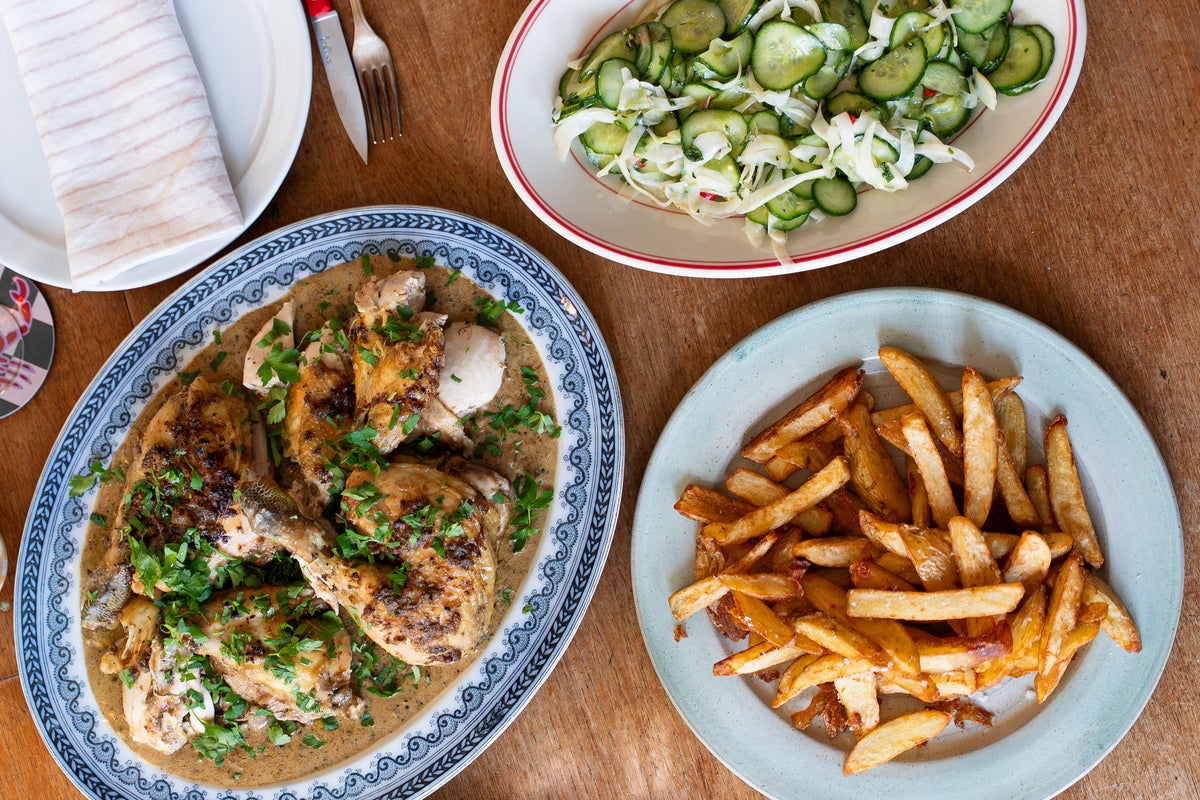
The recipes below capture that spirit perfectly. There’s a gloriously indulgent roast chicken au poivre with chips for when friends come round, a crisp fennel and cucumber salad that seems to improve almost any meal, a tray of Old Fashioneds built for sharing, and a strawberry and lime skillet cake made for long summer evenings.
Together, they offer a reminder that some of the best food isn’t reserved for special occasions at all – it’s what happens when we gather around a table on an ordinary day and decide to make dinner worth looking forward to.
Roast chicken au poivre (and chips)
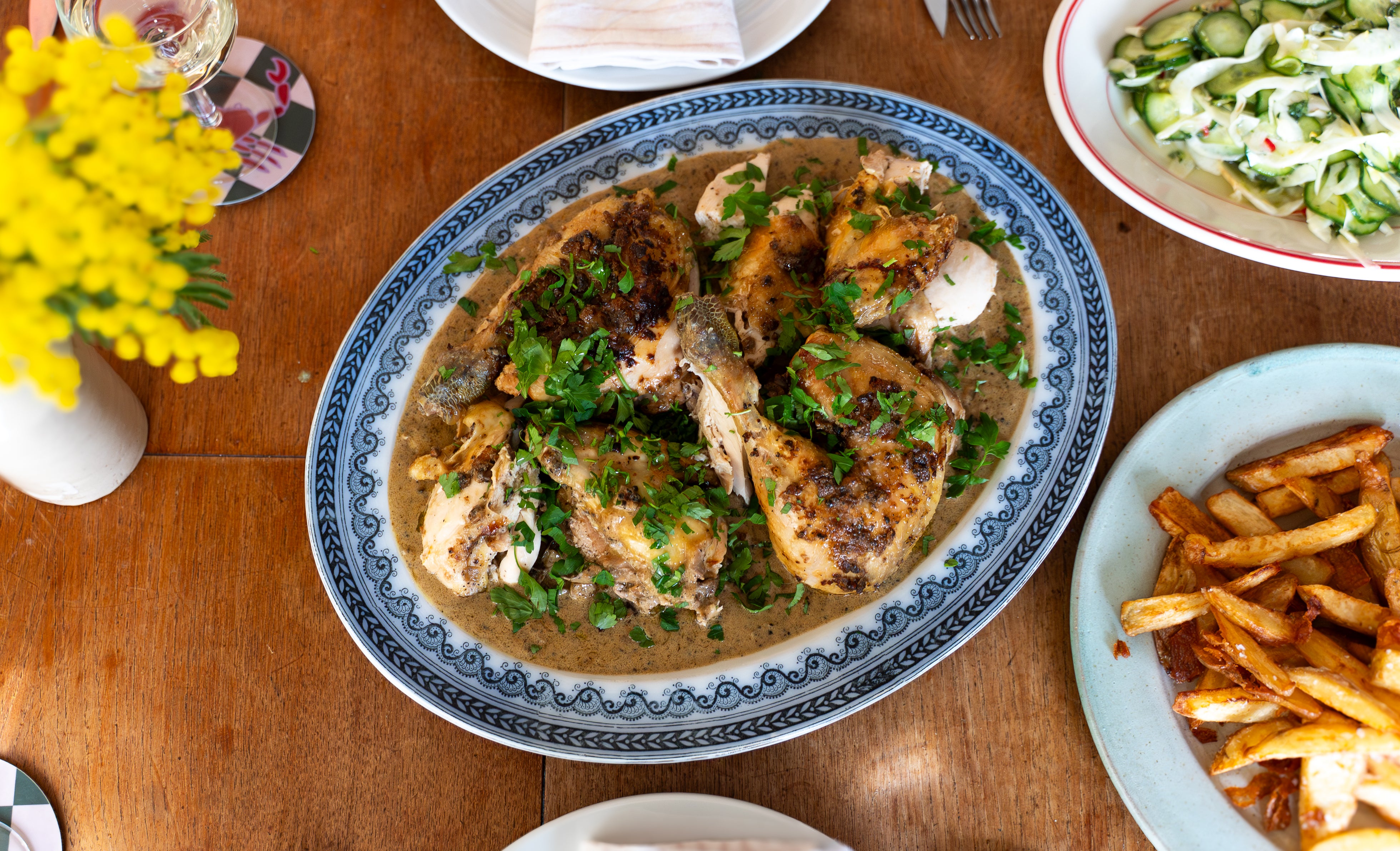
“Ideally, I would like it if more things came ‘au poivre’. I love the slight sharpness, the just-enough-but-not-too-much cream, and the way the pepper dances on your tongue but doesn’t overpower like mustard might. I love how it’ll almost stay where it is if you swipe a piece of bread through it on your plate.
“When it’s good (and actually even if it’s only OK) I could eat really quite a lot of it. The best pepper sauce I’ve ever had was at a restaurant called Paul Bert in Paris, where the aloyau de boeuf and fried potatoes are as legendary as the white bistro plates with red writing. It’s one of those meals where you eat the first couple of mouthfuls in slightly stunned silence while your brain computes just how good it is.
“I cook steak occasionally, and only when I’m really craving it and can justify forking out for it. When there are people coming for dinner, a chicken feels like the more rational choice. A spatchcocked chicken can cope with having a very luscious sauce poured all over it and still give you golden skin. In fact, a pepper sauce is actually improved by being introduced to a roasting chicken. The schmaltz and juices muddle with the sauce, turning it into something honestly a bit ridiculous. Chicken au poivre it is, then.
“You could serve this very chicly with just a simple salad and bread. Or, you could make twice-cooked chips. Just a thought. Imagine telling your friends to come round for dinner and then telling them they’re having chicken and chips and pepper sauce?”
Serves: 4
Ingredients:
For the chicken:
1 large chicken, spatchcocked
8 garlic cloves, skin on, left whole
A little olive oil
For the chips:
Plenty of vegetable or sunflower oil, for deep-frying
1.2kg potatoes (preferably Maris Pipers), skin on, cut into chips
Fine salt
For the sauce:
2 tbsp olive oil, for frying
20g butter, plus another
20g in the fridge
2 banana shallots, finely diced
2 tbsp black peppercorns
100ml white wine
300ml double cream
1 tbsp Dijon mustard
Juice of 1 lemon
2 tsp white wine vinegar
A handful of parsley, finely chopped
Method:
To make the chicken:
1. Preheat the oven to 240C/220C fan/gas 9.
2. Sit the chicken, skin-side up, in a roasting tin with the garlic. Drizzle a little olive oil over the skin and rub it into all the crevices. Sprinkle liberally with salt and a few grinds of black pepper. Put in the oven for 10 minutes, then turn the heat down to 200C/180C fan/gas 6 and roast for 25 minutes.
3. Meanwhile, make the sauce. Set a large frying pan over a low–medium heat and add a little olive oil and 20g of butter. Once the butter has melted, add the shallots and a big pinch of salt. Cook until soft (about 10 minutes).
4. Put the peppercorns in a mortar and pestle, and bash until they’re crushed but not to a powder. Turn the heat up under the shallots and pour in the wine. Let it bubble for a minute, then add the cream, peppercorns, mustard, lemon juice and vinegar. Cook, stirring, for 2 minutes, then turn off the heat.
5. Take the chicken out of the oven and pour over the warm sauce. Put back in the oven for another 30 minutes, or until the juices run clear and the skin is browned and has a peppercorn crust. Transfer the chicken to a warm plate and cover loosely with foil, letting the meat rest for 10 minutes or so while you finish the sauce.
6. For the sauce, let it settle in the tin for a minute or two, then spoon off any excess chicken fat sitting on top (you can keep it for frying your eggs tomorrow). Use the back of a wooden spoon to squeeze the garlic from their skins directly into the tin (discard the skins).
7. Set the tin over a medium heat and bring to a simmer. Scrape any gubbins from the bottom of the tin. Cook for a minute. Turn off the heat and, working fast, use your wooden spoon to beat in the 20g of fridge-cold butter. The sauce should become glossy and emulsified.
8. To serve, carve the chicken. Pour the pepper sauce onto your warmed serving dish and lay the chicken pieces on top. Sprinkle with a little finely chopped parsley and serve with the chips.
To make the chips:
9. For the chips, I’d do the first cook when the chicken goes in the oven, then do the second when the bird has about 10 minutes to go. Set a large pan on one of the back burners of your hob over a low-medium heat. Fill slightly less than halfway up with oil. Put one chip or a small piece of bread in the pan – when it’s sizzling and clearly frying, the oil is hot enough.
10. Sit a colander over a large bowl ready for the chips. Cook the chips in batches, for about 10 minutes at a time, using a slotted spoon to transfer them when cooked to the colander. Turn the heat off under the oil and leave the chips to sit and cool completely before their second cook.
11. Put the heat back on under the pan, turning it up a bit higher this time. Once the oil is hot, return the chips to the pan in batches, cooking them until they become nicely dark and golden. Transfer to the colander for a minute, then transfer to your serving bowl and toss in plenty of fine salt.
‘Goes with everything’ fennel, cucumber and chilli salad
.jpeg)
“When I’m planning a meal – a big, let’s-get-everyone-over type of meal – I race through ideas for what to cook in my mind as if I’m running through the pages of a flip book. I have a kind of mental cookbook (not a brag – an affliction) which comes online when I’m trying to decide what we should eat.
“It’s a blend of all the reliable stalwarts (Milanese and spaghetti, chilli, some sort of roast chicken with lots of sides all anchored by a theme), plus the things I always mean to go back to but don’t make often enough (homemade pizzas, paella, a whole fish), and the feasts I will prepare one day when I am a different sort of person.
“I run through the options, drawing the edges of the meal together until I have something that sounds coherent and doable but a bit special. Then I inevitably add one more dish and tip the whole thing into ‘too much to achieve when you only have an hour to prepare’ territory.
“Whatever I decide to make, this salad is one thing that almost always ends up being thrown in the mix. It is endlessly reliable. It works with anything that wants to be cut with something light and fresh, it works with both spiced and spicy things, with meat, fish and vegetables. It works in summer and winter – it’s perfect with a barbecue, but just as happy alongside something hearty, making good bedfellows with slow-roasted meat or a gratin.
“You can tweak the mint or chilli if they don’t feel like the right flavours for what you’re serving it with, although you’d be surprised how often the mellow heat from the chilli and freshness from the mint works.
“It’s reliable, too, because it’ll sit happily in the fridge, out of the fridge, wherever you have space while you make everything else. It’ll cope with being made the day before or at the last possible minute (it ideally wants to sit in the dressing for at least 30 minutes, but will still be a nice thing if you make it late). If you have a mandolin, things become even simpler – you’ll have everything sliced and ready in a couple of minutes.”
Serves: 4
Ingredients:
1 large fennel bulb
⅔ large cucumber
3 tbsp cider vinegar
Juice of 1 lemon
1 tsp runny honey
1 small red chilli, finely chopped (or you can use 3-4 dried bird’s eye chillies, finely chopped)
A small bunch of mint, leaves
picked and finely shredded
A little good olive oil
Method:
1. Use a mandolin or a big sharp knife to slice the fennel and cucumber very thinly.
2. In a large mixing bowl, put the cider vinegar, lemon juice, honey, chilli and plenty of salt and whisk to combine. Add the fennel and cucumber and toss together. Leave it to sit for at least 30 minutes, stirring occasionally.
3. When you come to serve, scatter the fennel and cucumber onto a serving plate, leaving the juices behind in the mixing bowl. Scatter the mint over everything. Mix a little good olive oil with the juices and pour that over too.
A tray of Old Fashioneds (with frozen baby onions)

“When presented with a cocktail list, I default to Martini. I’m not in it for anything super sweet. I like a drink to be short, cold, strong enough to get things going. I like a Martini dirty with olives and a little brine from the jar, or in the form of a Gibson, with cocktail onions.
“Essentially, I don’t really want my drink to be a drink, I want it to be food. Briney, oniony, pickled food. I love the trend for mini Martinis in restaurants. I mean they’re a racket, but I appreciate the way the first is a gateway for the inevitable second. It’s ever so slightly delayed gratification, which is the correct amount of delayed gratification, like having one stick of Twirl during the trailers (a Twirl and a tea is, I think, the perfect cinema snack), then having the second after your first big cry.
“The trouble with serving Martinis to a crowd rather than just for one or two is A, you need a hell of a lot of chilled booze and B, some people think Martinis are too strong (babyish). Those people need a spoonful of sugar with their medicine. And so, a tray of Old Fashioneds is the way.
“If you think an Old Fashioned really needs to have a maraschino cherry in it, you should absolutely go ahead and put a maraschino cherry in it. If you’re of the opinion that everything is better when pickled, give it a go with frozen baby onions and a small slosh of brine from the jar. That slight oniony hum makes a surprising amount of sense with the sweet bourbon.
“You can make them when people arrive, or you can premix a jug and deal with the orange peel and onions when you come to serve. They are especially good with a little bowl of sour cream and onion crisps.”
Makes: 8
Ingredients:
16 baby/cocktail onions from a jar (and 8 cocktail sticks), plus 2 tbsp brine from the cocktail onion jar
8 tsp granulated sugar
A few dashes of bitters (either Angostura, or a citrus-flavoured bitter would be nice)
480ml bourbon
Plenty of ice cubes
8 strips of orange peel
Spear the baby onions with cocktail sticks (2 per stick) and put in a bowl in the freezer for at least an hour. If you can fit them, put your glasses in the freezer too.
Method:
1. To make the drink, start by putting the sugar in a jug with the bitters, the brine and 2 tablespoons of water. Mix until the sugar has dissolved. Then top with the bourbon.
2. When you come to serve, put a couple of ice cubes in each tumbler (if you have those large cocktail ice cubes, even better). Take a strip of orange peel and run it around the rim of each glass, then put the peel in the glass.
3. Divvy the jug between each tumbler. Finish with the frozen baby onions. One stick per glass should do it, more for the filthy onion heads.
Strawberry lime skillet cake
“I think one of the nicest cakes I have ever had was a little cornmeal sponge that could fit in your hand and had been positively soaked in lime syrup. We bought them from a place called Farm to Market Bakery on the coast in Washington and ate them in the late afternoon sun on an empty beach.
“I distinctly remember licking my lips, and the salt from the swim I’d just had making the tangy syrup taste even better somehow. We washed them down with salty grapefruit sodas – unnecessary and perfect.
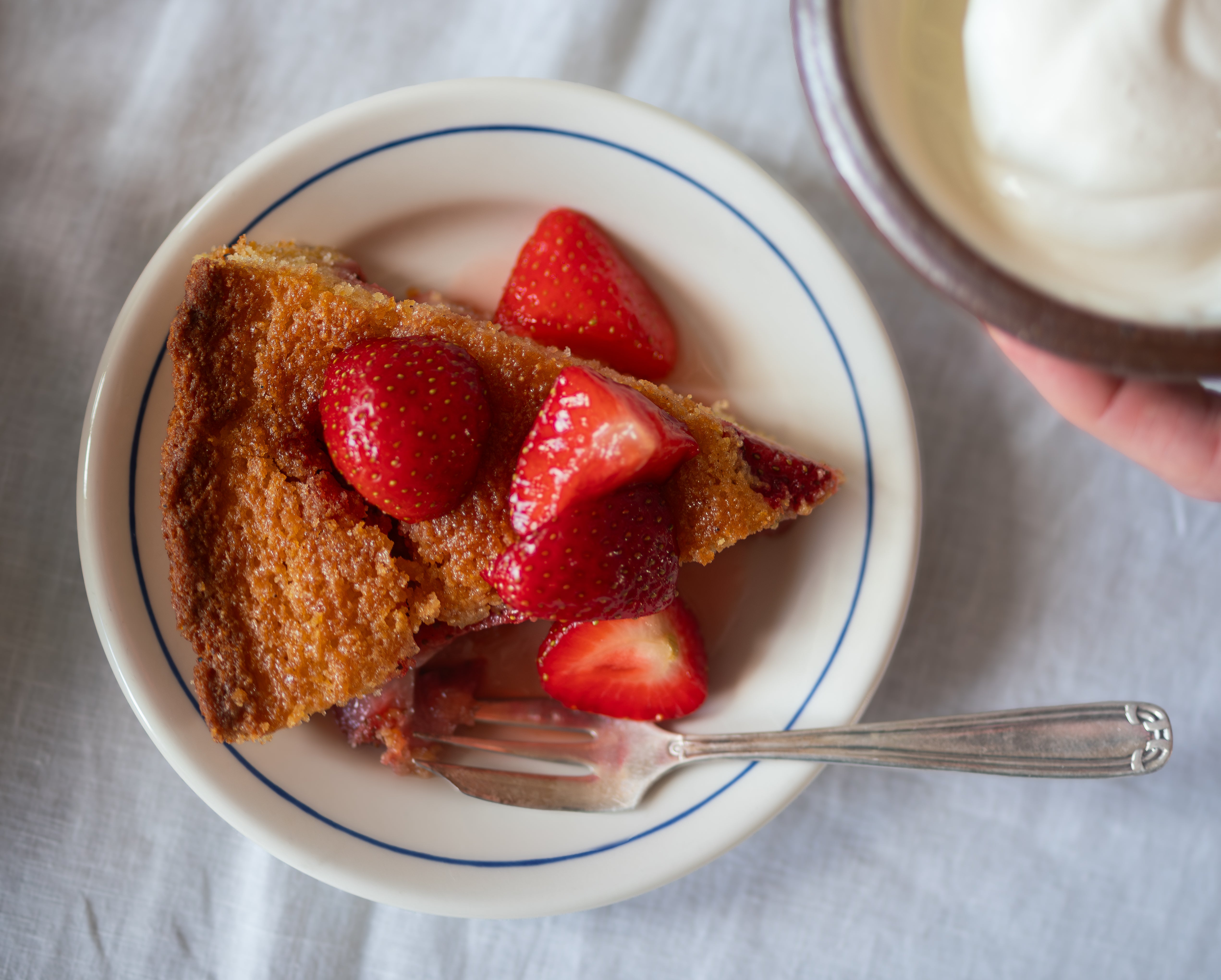
“This cake – a tender, forgiving, summer-loving sort of a thing – has polenta in the batter and is soaked in lime syrup, but has the added bonus of strawberries, which sink into the sponge and bring all their jammy sweetness with them. It couldn’t be easier, particularly if you make it in a cast-iron pan, as I do, which means you don’t even need to bother lining it.
“All you really have to do is remember to get the butter out to soften. After that it’s a bit of whisking, into the pan, and it’ll sort itself out with minimal fuss. Even so, it feels special. A proper treat of a pudding to put smiles on faces, to share with thick cream or crème fraîche and to send people home with a slice for tomorrow.”
Serves: 8
Ingredients:
For the cake:
200g unsalted butter, softened
200g caster sugar
3 large eggs, beaten
Zest of 3 limes
125g self-raising flour
75g quick-cook polenta
A big pinch of salt
Roughly 450g strawberries
For the syrup:
Juice of 3 limes (or about 125ml)
80g granulated sugar
To serve:
Crème fraîche, thick cream, or whipped cream with a little natural yogurt folded through it
Method:
1. Preheat the oven to 180C/160C fan/gas 4. Take an ovenproof pan (I use an iron skillet that is 25cm diameter and 5cm deep, but you could use a cake tin of a similar size). Grease it liberally with butter.
2. Put the butter and caster sugar in the bowl of a stand mixer, or in a big mixing bowl if beating with an electric whisk. Beat until pale and fluffy.
3. Add the eggs bit by bit, beating well between each addition. When fully incorporated, add the lime zest and beat well too. Add the flour, polenta and salt and fold in using a big metal spoon.
4. Take the stalks off the strawberries and halve them (quarter any particularly big ones).
5. Scrape the batter into the prepared skillet. Arrange about two-thirds of the strawberries on top – don’t worry about creating a neat pattern as the fruit will sink into the batter.
6. Put in the oven and cook for about 40 minutes, or until a skewer inserted in the centre comes out clean.
7. Meanwhile, make the syrup. Put the lime juice and granulated sugar in a small saucepan over a low heat. Bring to a simmer, then cook for about 8 minutes, or until you have a tangy syrup. Leave to cool to room temperature.
8. When the cake comes out of the oven, let it cool in the skillet for 5 minutes, then use a pastry brush to brush the top with most of the lime syrup (keep back 1 tablespoon). Leave to cool completely in the skillet on a wire rack.
9. Put the remaining strawberries in a bowl with the remaining lime syrup and leave to sit while the cake cools.
10. Serve generous slices of cake with the strawberries and dollops of crème fraîche or thick/whipped cream.
‘But First, Dinner: Food for Our Real Lives’ by Eleanor Steafel (Weidenfeld & Nicolson, £20).



