


For those parents who bottle-feed their children, it is important to ensure that these bottles are cleaned thoroughly. Babies have weaker immune systems than adults, and improperly cleaned bottles can increase the risk of infections. To help protect your baby from harmful bacteria, milk bottles must be washed and sterilised correctly.
Simply rinsing a baby’s milk bottle with water is not enough. Research suggests that sterilising both the bottle and teat is essential to help protect babies from infections that can cause diarrhoea and vomiting. Below is a simple guide to cleaning baby milk bottles properly.
According to the CDC, baby bottles should be cleaned after every feed. If your baby does not finish the milk within two hours, any leftover formula should be discarded. Germs can multiply quickly if fresh breast milk or formula is added to a partially used bottle, or if a used bottle is only rinsed rather than thoroughly cleaned.
Also Read: How To Keep Wooden Spoons And Spatulas Clean And Long-Lasting
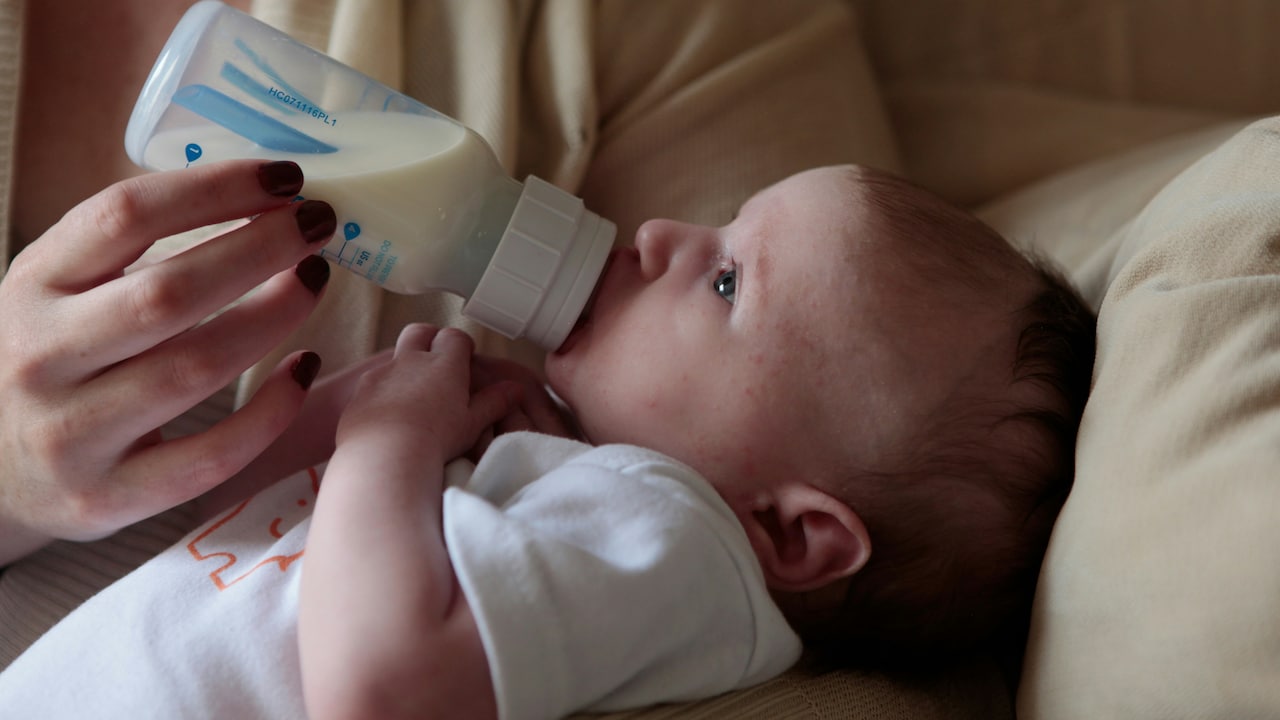
Photo Credit: unsplash
What To Do Before Sterilising A Baby’s Milk Bottle
Immediately after feeding, wash the bottle, teat and other feeding equipment in hot, soapy water.
Use a clean bottle brush to scrub the bottle. Keep this brush exclusively for bottle cleaning. Use a small teat brush to clean the inside of the teat.
Rinse all items thoroughly under clean running water before sterilising them.
You can also clean baby bottles in a dishwasher. Separate the bottle, teat and cap before placing them in the dishwasher. Once cleaned, rinse them well under running water. While a dishwasher can clean the equipment, it does not sterilise it. This is why sterilisation remains an important step.
According to NHS guidance, baby milk bottles can be sterilised at home by boiling them. Here’s how to do it correctly.
Also Read: How To Deep Clean Lunch Boxes Made Of Plastic, Steel And Glass
How To Sterilise Baby Milk Bottles At Home
First, make sure that all the feeding equipment you plan to sterilise is safe to boil.
Next, place the bottles, lids and teats in a large pot filled with water. Ensure that all items remain fully submerged and boil them for at least 10 minutes.
It may help to set a timer so you do not forget to switch off the stove.
Keep in mind that repeated boiling can cause teats to wear out more quickly. For this reason, check them regularly for cracks, splits or other signs of damage and replace them when necessary. Alternatively, you can also use a store-bought steriliser to reduce time and effort.
Proper cleaning and sterilisation of baby bottles is a simple step that can go a long way in protecting your baby from harmful germs and infections.


