











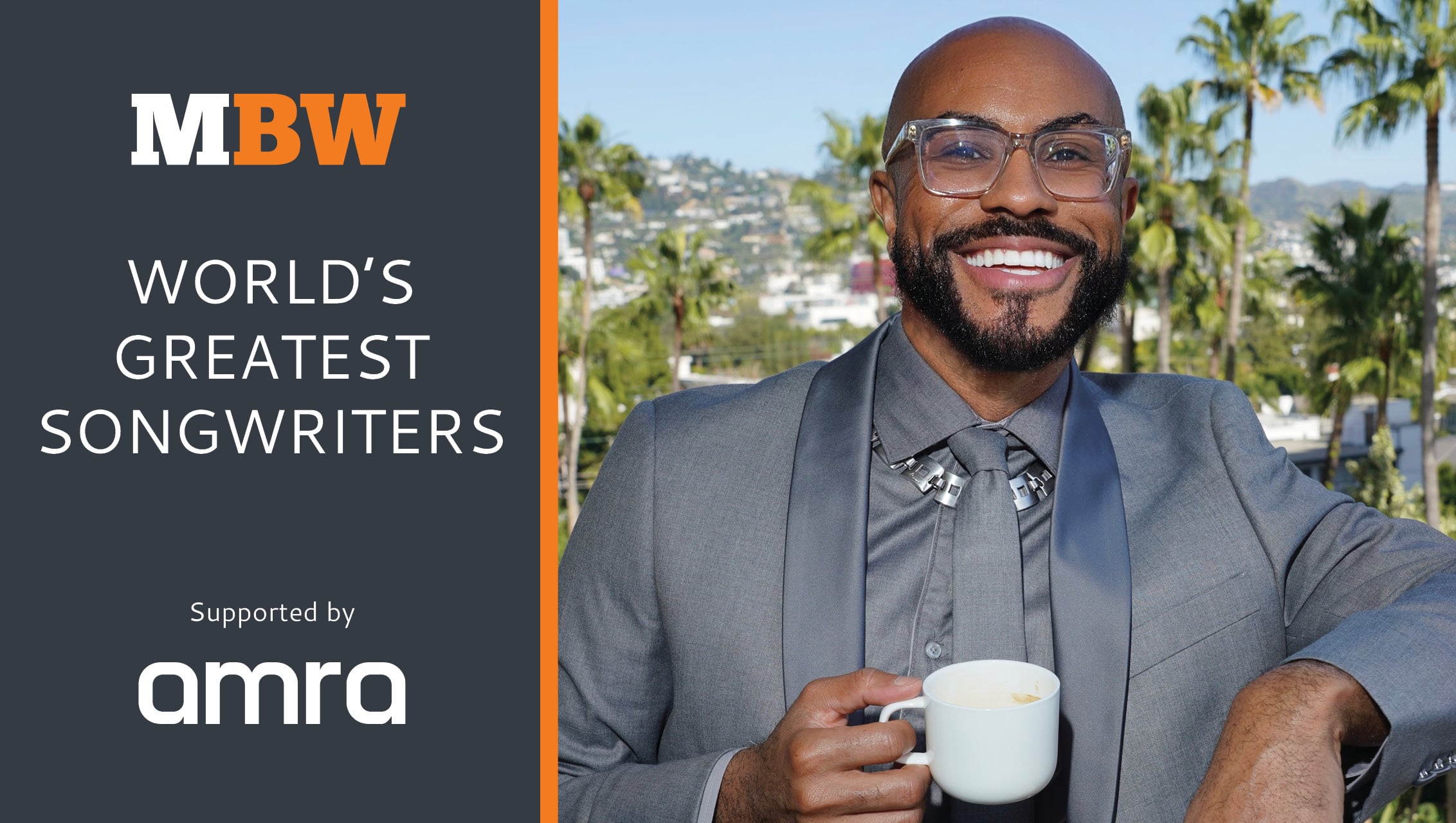
MBW’s World’s Greatest Songwriters series celebrates the composers behind the globe’s biggest hits. This time out we meet Philip Lawrence, Bruno Mars’ key creative partner for more than 15 years. World’s Greatest Songwriters is supported by AMRA – the global digital music collection society which strives to maximize value for songwriters and publishers in the digital age.

Philip Lawrence was one of the leading players in the creative team behind 24K Magic, the Bruno Mars album that won seven Grammys at the 2018 ceremony.
He had co-written every track, and was one third of Shampoo Press & Curl (along with Mars and Christopher Brody Brown), the production team
that shaped the record. This success continued a golden partnership between Lawrence and Mars that, as far as the public is concerned, started with the game-changing Doo-Wops & Hooligans in 2010.
So, January 28, 2018 at Madison Square Garden was an undoubted career high point. But, on a personal level, not so much. Instead, if not actually a low point, it was definitely a turning point.
Lawrence recalls: “I wasn’t happy at that time. I think that God, or a higher power, or a spiritual entity, whatever you want to call it, gives you signals, and talks to you when you need to hear it most.
“You see, I had a vision of what success was going to be ever since I was a kid. I was on that mission, striving for that success – and then I was finally achieving it at the highest level, beyond anything I would have imagined…
“But I had never considered the other side of it, the human side. You see someone holding as many Grammys as they can carry, and you don’t think, I wonder what happens when they go home?
“And for me, at that time, I was having an existential crisis. My personal life was a shambles, because I had forgotten myself. I had focused almost all my energy on the goal, the dream, the drive. My success had become my identity. That was where I found my value and that was how I was going to be accepted.
“But eventually I realized that I’d had it backwards. I had this double life of being on the road as a rock star, and then trying to come home and be a husband and a dad. That’s not a sustainable life, as it turns out.
“So, eight years ago, I went into rehab and I got sober. That process taught me what life is really about. There’s nothing wrong with success and chasing your dreams, but don’t forget to bring your true self with you.”
The first four of those years were spent largely outside the orbit of Planet Mars, with Lawrence prioritizing his family and his sobriety.
In 2022, however, he reconnected with the artist who, by then, he’d known, worked with, jammed with and partied with for 15 years.
He rejoined Mars’ touring band, they started writing together again, had one of the biggest hits of their career with APT., on which Bruno duetted with Blackpink’s ROSÉ, and then set about writing album number four, The Romantic.
It was the first Bruno Mars record for 10 years – and was introduced to the world by lead single, I Just Might, which topped the charts at the start of 2026. The album followed at the end of February and also reached the summit. This time around, Lawrence is enjoying his success on every level.
He grew up surrounded by music. His father was a DJ, filling the house with crates of vinyl including everything from Stevie Wonder and Donny Hathaway to Led Zeppelin and Eric Clapton.
“Not only that”, he recalls, “but my mom was a choir director. All my family sang, all the time. Even the dog sang.”
He only lasted one year at college in Tennessee – “all I did in school was skip class and form singing groups”. From there he went to Orlando and ended up as a theme-park performer at Disney.
In this case, however, “theme park performer” is not a euphemism for a schmuck in a Goofy suit. Lawrence was good, successful and right out front. “Yeah, I was a Swiss army knife for them, and I became their first vocal ambassador, which allowed me to travel the world performing.
“I also opened the Festival of the Lion King show at Animal Kingdom, which was a big deal at the time. I had some incredible experiences.”
It wasn’t, however, what he truly wanted to do – and certainly didn’t match up with that vision of success he’d had as a kid.
He says: “For me it was always about safety or adventure; comfort or discomfort. With Disney, I had a house, I had medical insurance. So that was the first big decision where I left the comfort of a paycheck to try and make something happen in LA.
He went there with two young writers and producers that he’d met in Orlando, Shaun Fisher and Kareem Mills. It wasn’t an entirely speculative relocation, however. They had Steven Seagal on their side. Yep, that Steven Seagal.
“We had the opportunity to write songs for his movies, and he wanted us to be closer to where things were happening. For six months, Steven put us up in this three-bedroom penthouse in Santa Monica. I thought this is what LA is all about, right? People take care of you! Right up until Steven said he wasn’t cutting any more checks and we had to figure things out on our own from now on.
“That’s when reality smacked me in the face. It was sobering, it was scary, and it was hard.”
“That’s when reality smacked me in the face. It was sobering, it was scary, and it was hard. I was just trying to survive and keep the lights on from that point. My biggest goal became not giving up and moving back to Orlando.”
Lawrence moved to the valley and “toughed it out, taking odd jobs, hustling”. He would play shows anywhere that would let him, but often to half-empty rooms. “I was very much on the outskirts of the business and getting a taste of what life was like in LA… when Steven Seagal isn’t putting you up in his spare apartment!”
“Eventually, Anthony Hamilton’s manager hired me to sing backing vocals for him, and that kept me afloat for a couple of years.
“In the end I left that gig because the call of songwriting got louder and louder. I had started to write almost constantly in my time off, to the point where I knew that’s what I should be doing. And, a little while after that is when I met Bruno.”
And that is also, of course, when everything changed…
That’s obviously a major pivot point in your life, how did it come about?
The creative energy at that time was very beat-driven. It wasn’t really, ‘Hey, let’s craft a song together.’ It was more, ‘Can you write to this beat?’ It was a Frankenstein way of creating.
And then one day I get a call from a buddy of mine, Keith Harris, a great songwriter and the drummer for the Black-Eyed Peas.
He had been working with Bruno, and he had been working with me, and he said ‘I’ve met this kid who’s insanely talented. He just moved here from Hawaii, he got signed to Universal [via Motown], but they don’t know what to do with him; I think they’re going to drop him. I think he just needs somebody else in the room to help him get his ideas out, and I thought of you.’ And thank God he did!
On that day I honestly had $5 to my name, which I spent to get a bus ticket, and traveled two-and-a-half hours to Keith’s studio. And there was Bruno.
Had you heard of him at this stage?
I had not. It was very much in the beginning of his arc.
What were your first impressions?
Quite honestly, he reminded me of a younger version of myself. He was funny, he didn’t take himself too seriously, and he had great energy.
All we did that entire session was laugh. Except it can’t have been, because we ended up writing, producing and recording a song that same day. Neither of us had ever experienced anything like that before.
“straight away I knew there was something here with this kid I’d known for eight hours or so.”
Neither of us knew sessions could be that much fun and that productive – or that easy! So yeah, straight away I knew there was something here with this kid I’d known for eight hours or so.
I was blown away by his talent. What’s amazing, when I think back on it, and even how it is today, he’s not trying. By which I mean he’s not trying to impress, it’s all just natural and what he’s doing is enjoying himself.
Even in that first session, he was moving from guitar to bass to drums, and he had this incredible voice. He sounded like Stevie Wonder. I’m like, who is this alien?
Did you hit upon a way of working together pretty much straight away? Has that changed much over the years?
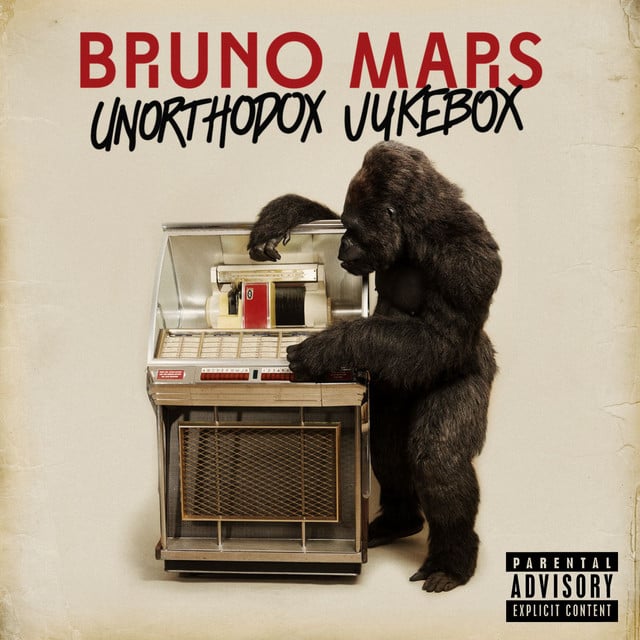
I think it’s still pretty much the same. And it’s part of the reason why we named the second album Unorthodox Jukebox, because that’s how we write, in a very unorthodox, unpredictable, non-formulaic way.
We’re both very much guys who understand the value of the moment, and what it means to really be present and listen to each other. So, a song can start with him on keys, and I’ll sing a melody. Or I could show up with something that I sang freestyle as a voice note in the car and ask him what he thinks. If something sparks, we’ll hear it, and we’ll run with it, because we’re always on and always listening out for each other.
There’s this real trust that we can put our ideas in the same pot, and then we’re gonna both give it the proper seasoning to make it a meal.
Did you have a plan in terms of becoming a partnership? Performing together? Writing together?
Because of Bruno’s immense talent, my immediate thought was, ‘Let’s go get a deal. I don’t know what happened with Universal, but obviously something was up; let’s fix that.’
So it was less about songwriting, and more about, we’ll get you signed, the label will help develop you, we’ll put an album out and life will be grand.
So that’s what we tried. We tried a lot. And it didn’t work; it was no after no. People just didn’t see it. And yes, it was embarrassing at times, it was humbling at times, but it was always informative, because – and this is something else we have in common – we’ve learned not to take things personally.
So, okay, we’re not getting signed, there must be something up with what we’re presenting. We never really doubted ourselves, in terms of talent, but we figured there must be a missing ingredient.
What do you think that was?
I think there was an identity issue. They didn’t know who he was, or who we were. And, in truth, the songs were good, but they weren’t great. You know, Whitney Houston still needs The Greatest Love of All, otherwise she could be an incredible singer the world never discovers.
We learned that no one’s going to hand us anything on a platter, and no one’s going to develop us. We were going to have to do that on our own.
I’m really grateful that we did, because it gave us some years in the studio. And in our downtime from writing, we started a band for fun because we missed being onstage. Little by little, we kept getting better. Eventually I convinced my friend and A&R Aaron Bay-Schuck to come check us out – and down the line, he ended up signing us to Atlantic.
And at this point are you a band? Are you looking to get Bruno signed as a solo artist?
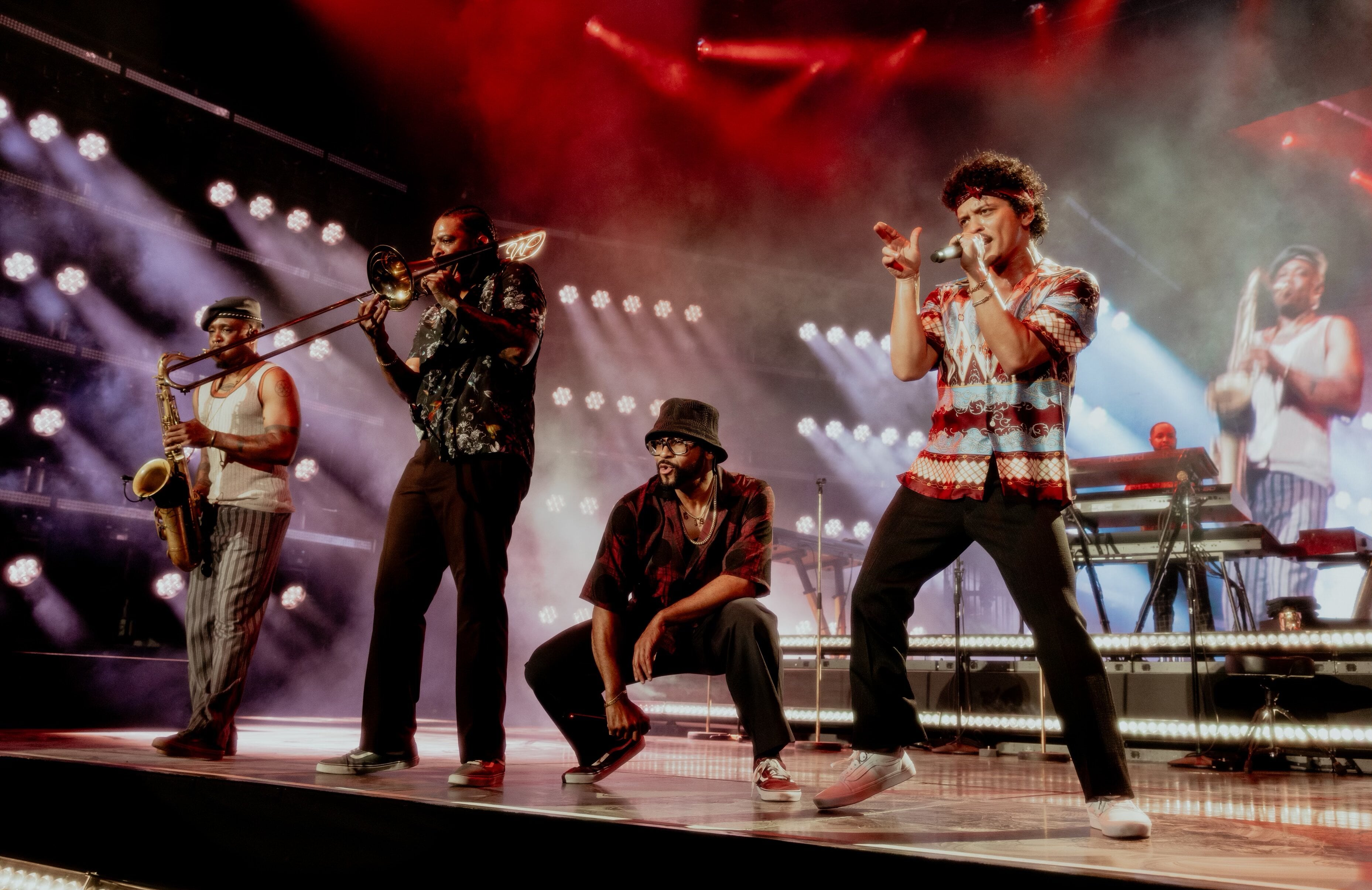
We always saw ourselves as a band. At the same time, I was such a fan of Bruno’s and had so much belief in him as an artist. Everything people see now, I saw early on.
And if my boy is shining, that’s all good with me—because if he wins, we win. That was always the philosophy. There wasn’t some calculated decision to take a backseat; it was just part of the natural evolution of who we became.
Around that time, we were bouncing from producer to producer and realizing that wasn’t the path for us. We needed to become masters of our own destiny and start writing songs on our own.
That’s when we met our third writing partner, Ari Levine, and formed The Smeezingtons. He and his brother Josh had a studio, Levcon, and we worked there every single day for hours on end, writing, for about two years.
Then one week in 2009, we wrote Billionaire and Nothin’ on You – and with those records, it became clear who Bruno was and what our sound was.
How did it feel when that first album [Doo-Wops & Hooligans, 2010] went on to top international charts and sell over 15 million copies?
It was incredibly rewarding, because we took a risk on doing it our way, creating an album analog, with live instruments, which, at the time no one was really doing.
The charts were very pop- and EDM-heavy at the time, and we were warned, maybe add some more digital elements. But that’s not how we write, and it’s not how we produce. So we made a decision: if it doesn’t work the way that we do it, so be it – but we’re doing it the way we do it.
The through line to me as a songwriter, and to me as a human being, is about belief and courage. And how belief really gives courage a place to stand.
What was that level of success like?
It was exciting, and fun. We were on the road, and it was a new world, a new way of living. I remember lots of early morning radio station appearances! So it was also an education on the not so glamorous side of being a star.
Because of the success of the debut, was there even more pressure on you when it came to writing the follow-up?
Incredible pressure! Nobody wants to succumb to the sophomore slump. The worry was that pressure has the ability to suck the joy out of creating. And joy is where we create. Our job, personally and professionally, has always been to remind each other of that joy, to bring some fun to the studio, some levity, at that time maybe some drinks! Anything to remind us why we do this and how good it feels to do it together. And if it feels good to us, hopefully it’ll feel good to the rest of the world.
Around that time, we also began surrounding ourselves with incredible creators like Mark Ronson and Jeff Bhasker, who helped shape the sound of that second album [2012’s Unorthodox Jukebox].
There was a hiatus in the Bruno projects after 24K. There was Silk Sonic etc., but there’s a 10-year gap between 24K and The Romantic. Is that down to the personal circumstances you referenced?
I did step away. I stepped away to save a family, try to save a marriage, the whole deal. Bruno learned so much in that time, about production and instrumentation and orchestration. He really grew as a songwriter and as a performer. And I was really growing as a human being.
So when we reconnected in 2022, a lot had changed. I had gone through some major life transitions, including sobriety and a divorce, but I was coming back stronger, more grounded, and more aligned with who I am.
We were both different people. To the extent that there was this period where we had to sort of re-learn each other. But not in a friendship way, the friendship picked up right where we left off.
I remember the first day I was back in the room with the band, we were rehearsing for a tour coming up in the fall of 2022. We took a lunch break that was supposed to be 30 minutes. Bruno and I went to get something to eat, and we spoke for three hours. Because we’d gone from seeing each other 10 hours a day every day to not seeing each other for years. That was incredibly emotional for me, for both of us.
Just before you got back on the train, you sold your catalog to Tempo Music. What prompted that and how do you feel about it now?
I think every person has to decide what’s important to them at the time. With the perspective I have now, I would have approached it differently, particularly around long-term ownership and infrastructure.
You have to be spiritually, mentally, and emotionally ready to receive an amount of money like that at one time.
The advice I would give someone today is make sure you’re doing it for the right reason, and that you have an infrastructure to protect what you’re building.
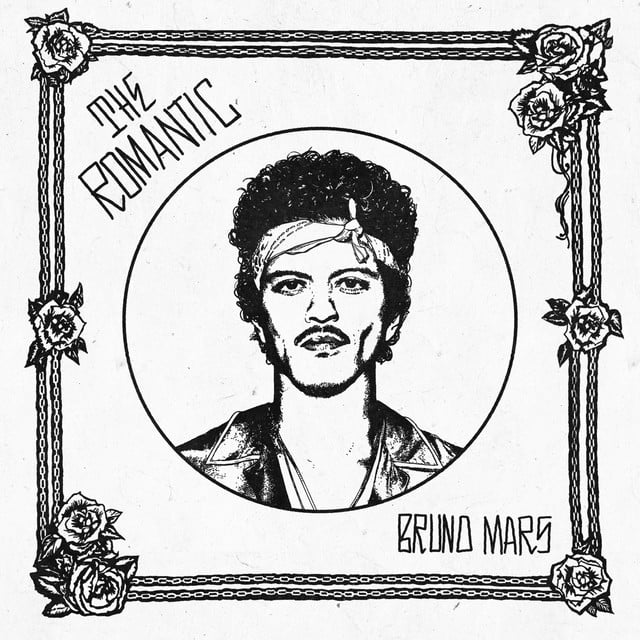
How did you go about starting work on the new record, The Romantic? Were you straight back into the old groove?
The same foundation was there in terms of how we create – jamming, building ideas together. We were also coming
off one of the biggest records we’d worked on, APT., which was a huge moment for us.
During that time, Bruno had been collaborating closely with the incomparable D’Mile, so the creative circle had expanded in a really elevated way. So there was a real excitement in asking: who is Bruno Mars now, ten years after 24K Magic? And what do we feel like now?
It also helped that we were on tour, so we were around each other a lot and we got a chance to jam out some ideas during soundchecks.
As a songwriter, what do you feel about the looming and growing presence of AI in music?
I think AI is going to challenge us to define what makes us human more clearly than ever before.
Naturally, there’s fear – artists and songwriters already carry that feeling of wanting to be seen and not replaced, so the instinct is to think, ‘Is this going to take my place?’
But at the same time, it’s here, and it’s not going away. So the real question becomes: how do we exist alongside it and use it in a way that still honors what we do?
A big part of that is going to be about rights, making sure creators are protected and acknowledged.
And from a human standpoint, we still need each other. We still need to sit in rooms together, to feel something, to connect. That’s not going anywhere.
So I think the opportunity is to use AI in a way that brings us closer, not replaces us. At the end of the day, what makes us human is still irreplaceable.
What advice would you give to a young songwriter who’s starting out in the business today?
Remember that you are unique. There is not another you in the entire world, and the world needs you to show up as you.
So, every time you’re in the studio, even in the face of doubt, even in this face of discouragement or ridicule, remember that there’s no copy of you,
and that if you can find the belief followed by the courage to lean into who you are, then the world will be a better place because of that. There’s magic in you, tap into it.

All MBW+ subscribers get digital access to our Music Business Worldwide magazine, with six issues released each year.Music Business Worldwide



