



Want to bookmark your favourite articles and stories to read or reference later? Start your Independent Membership today.
Already a member?
Log in
It’s 1:50am and I’m in a queue down some stairs into what I think is a gay club, but can’t yet be sure.
Ahead are several Turkish men. Within this giant complex are two nightclubs; across the street, a huge mosque casts a shadow over the venue. On the ground floor, down a long corridor, is a straight club. The basement supposedly hosts a gay club.
I’m slightly confused though: surely, these would be closed, dead, or more discrete following recent intense events. It’s a queue I didn’t expect to be in.
Arriving in Istanbul the weekend after the sweeping crackdown on LGBTQ+ clubs, individuals, groups, activists and protesters, I felt a mix of trepidation and defiance.
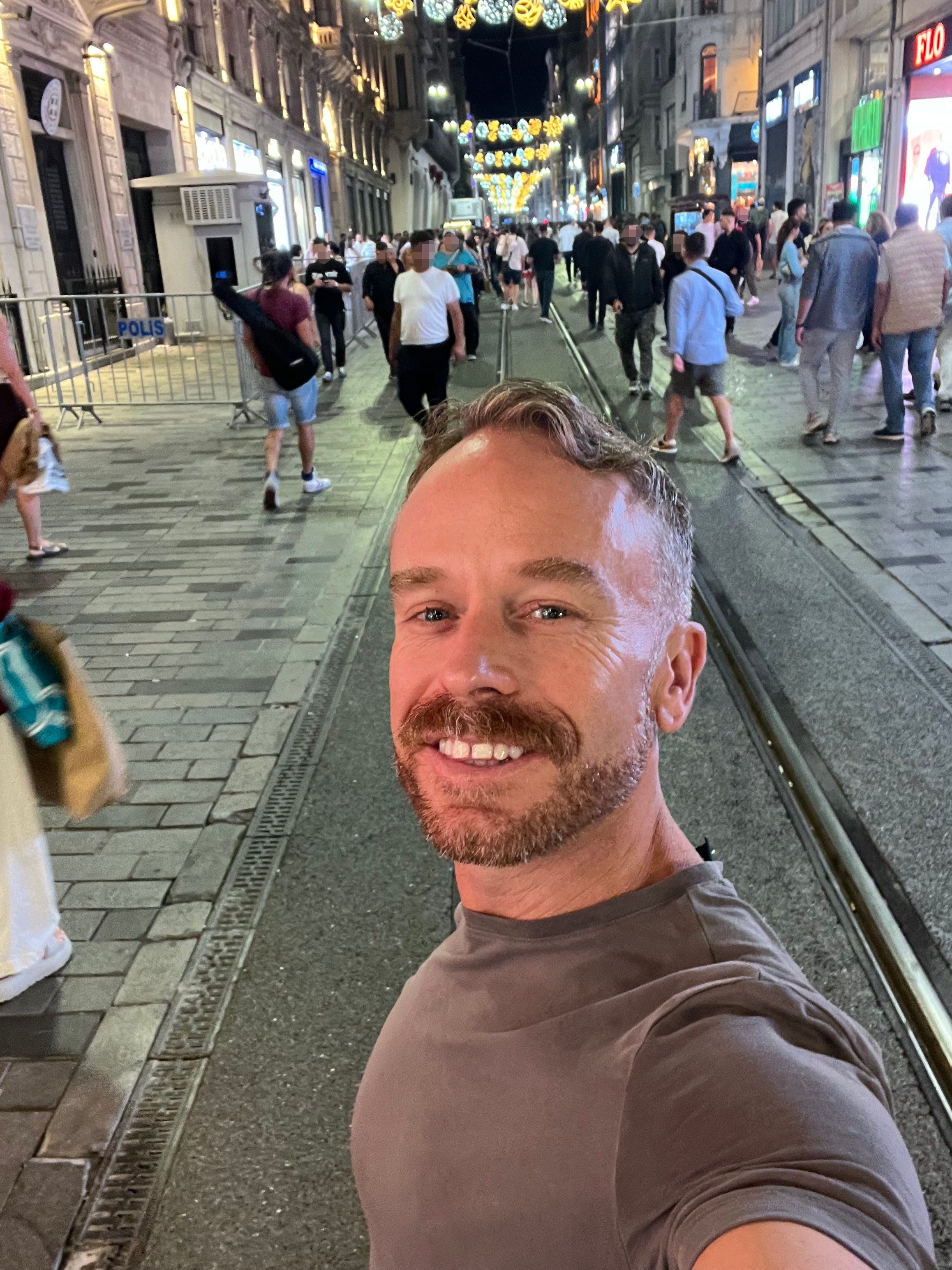
I’ve been coming here annually for 20 years, always as an openly gay man, never hiding who I am. In 2006, mum bought a house in Yalikavak, outside of Bodrum in Turkey. It was intended as a retreat for her and her two kids, irrespective of who they are or who they love. My mum and I were both feeling deeply concerned about the homophobic raids ahead of our trip.
Last September I was at a busy gay bar, Haspa Club, near Bodrum, watching a non-binary belly dancer. I’ve partied at big gay clubs in Istanbul, where you sometimes transit to get to Bodrum, which is what I’m doing now.
Yet, in Istanbul on Saturday night, it feels like I needn’t have worried. Stay Club is packed full of smiling, dancing, openly gay men and the occasional woman. Some men snog, others grind, few seem deterred. The only hint of nervousness is when staff quickly ask me to put my phone away as I sneak in a photo, which I immediately respect. I ensure nobody’s identifiable in the picture.
I had an inkling it might be like this from two gay bars I visited before the club. One – Sahara Bar – which I visited at peak time (1am Saturday) was as dead as I predicted; just six people in the whole place which, on Google maps, looks erstwhile pumping.
Yet the other bar – Ex Bar – was rammed. It’s Bear Week in Istanbul and nothing, not even intimidating, gun-carrying Turkish police, will prevent the Turkish community of larger, hirsute men from enjoying their special week, which has a packed itinerary of events.
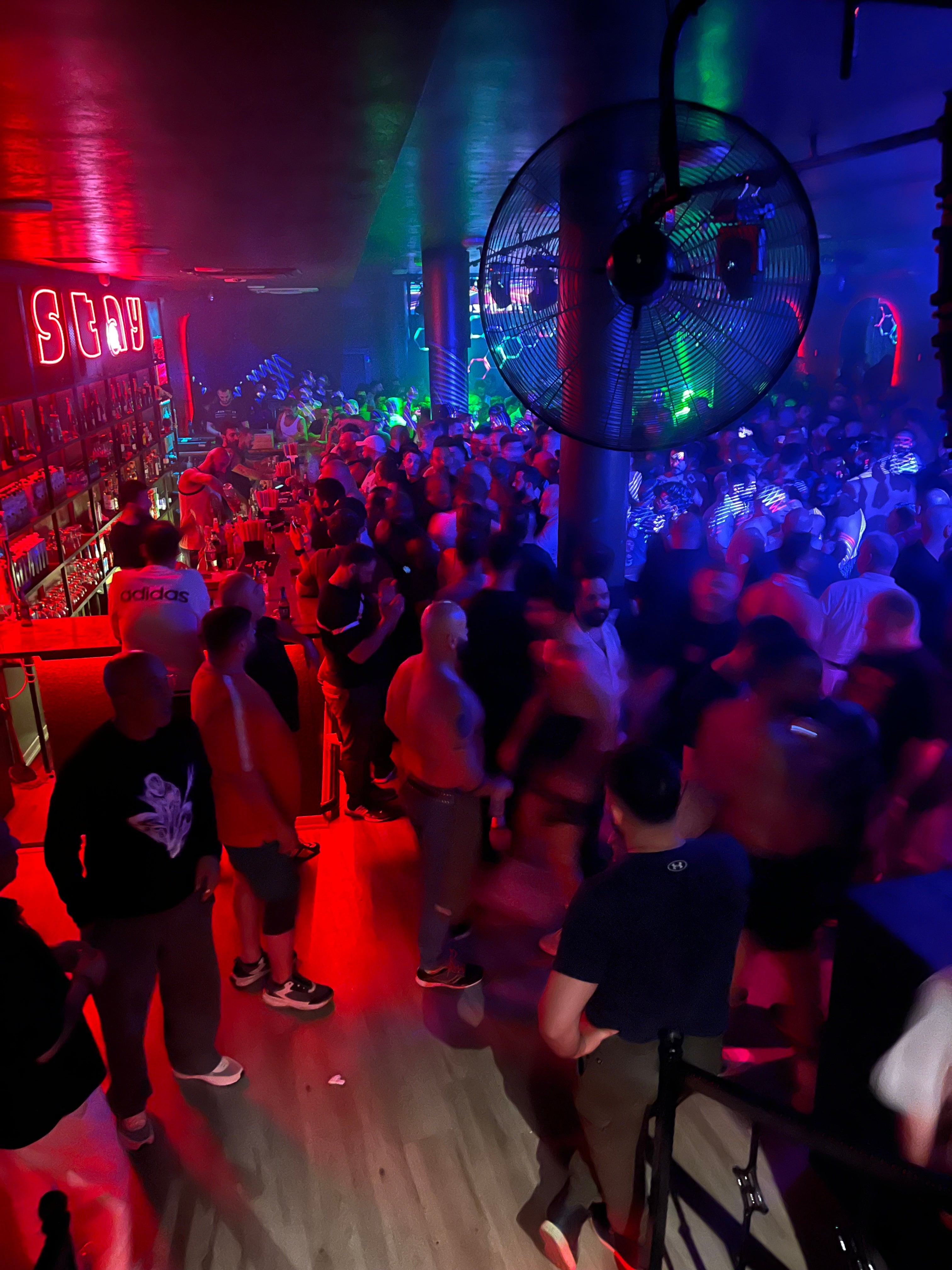
One man is asked to stop filming bears partaking in a traditional Turkish-style dance, holding hands in a circle, arms horizontally outstretching in time to the dramatic quintessentially Anatolian rock music. I’m invited to join, and take the large hands of two grinning bears for the dance. This is more the Turkey I know and love. There are three rooms of bears and non-bears, dancing like this, and also kissing, smoking, riotously singing and flirting.
Many bears leave Ex Bar to venture to Stay Club, where male gogo dancers on podiums entertain the crowds.
Shouting over the music, partygoer Mustafa* tells me: “They raided this club last week. They checked all our IDs.”
“It’s just politics,” he says, shrugging. “They want to enforce Islam.”
Another reveller I speak to is less nonchalant. Ahmet*, 31, a flight attendant for Turkish Airlines, says he was rattled by a police raid at Ex Bar at 1am the previous Saturday. “They checked all our IDs then sent us home and the bar closed,” he says. “It’s the first time in my life this happened. I was really upset.”
In Cheeky Club, a late night gay venue, the downstairs dancefloor is open but upstairs – usually a darkroom for discrete sexual activity – has closed since the raids.
I wasn’t naive about visiting Turkey; I knew about its conservative streak – partly Islam, partly its longstanding right wing leader, President Erdogan. His government banned Pride events in 2015 and has called gay people like me “deviants”. The country left Eurovision in a huff in 2012, and has since stated it refuses to rejoin because the contest contravenes traditional values, naming Conchita Wurst’s 2014 win as an example.
The recent crackdown is part of a campaign dubbed “My Family is Safe”, which the government alleges protexts “family values and public order” from “obscenity.” It’s part of their “Decade of the Family” initiative to address declining birth rates.
It interrupts the more on-the-ground laissez-faire attitude towards gay people I’ve experienced in Bodrum and Istanbul, in a country where homosexuality isn’t illegal.
Istanbul has long been known amongs LGBTQ+ people as a thriving hive of homosexual activity. It’s the city where Europe meets Asia and traditional values sit harmoniously alongside distinctly more metropolitan modern ones. It’s the reason I love it.
Similarly, Bodrum has long been a stop on the LGBTQ+ Atlantis cruise, as it was on the one I took in 2022. I told fellow gays on the ship about Bodrum’s live-and-let-live attitude. Nobody reported any problems.
Then, in July, ports in Turkey then Egypt blocked the same LGBTQ+ cruise from docking there, citing “behaviours incompatible with … our moral values.”
A disturbing change was underway for British tourists like me who’d mostly felt safe here.
On 13 September, Turkish authorities raided LGBTQ+ organisations, bars, businesses and homes across the country, arresting 162 people.
Two days later, 126 LGBTQ+ activists protesting the raids were detained in Istanbul and the capital, Ankara.
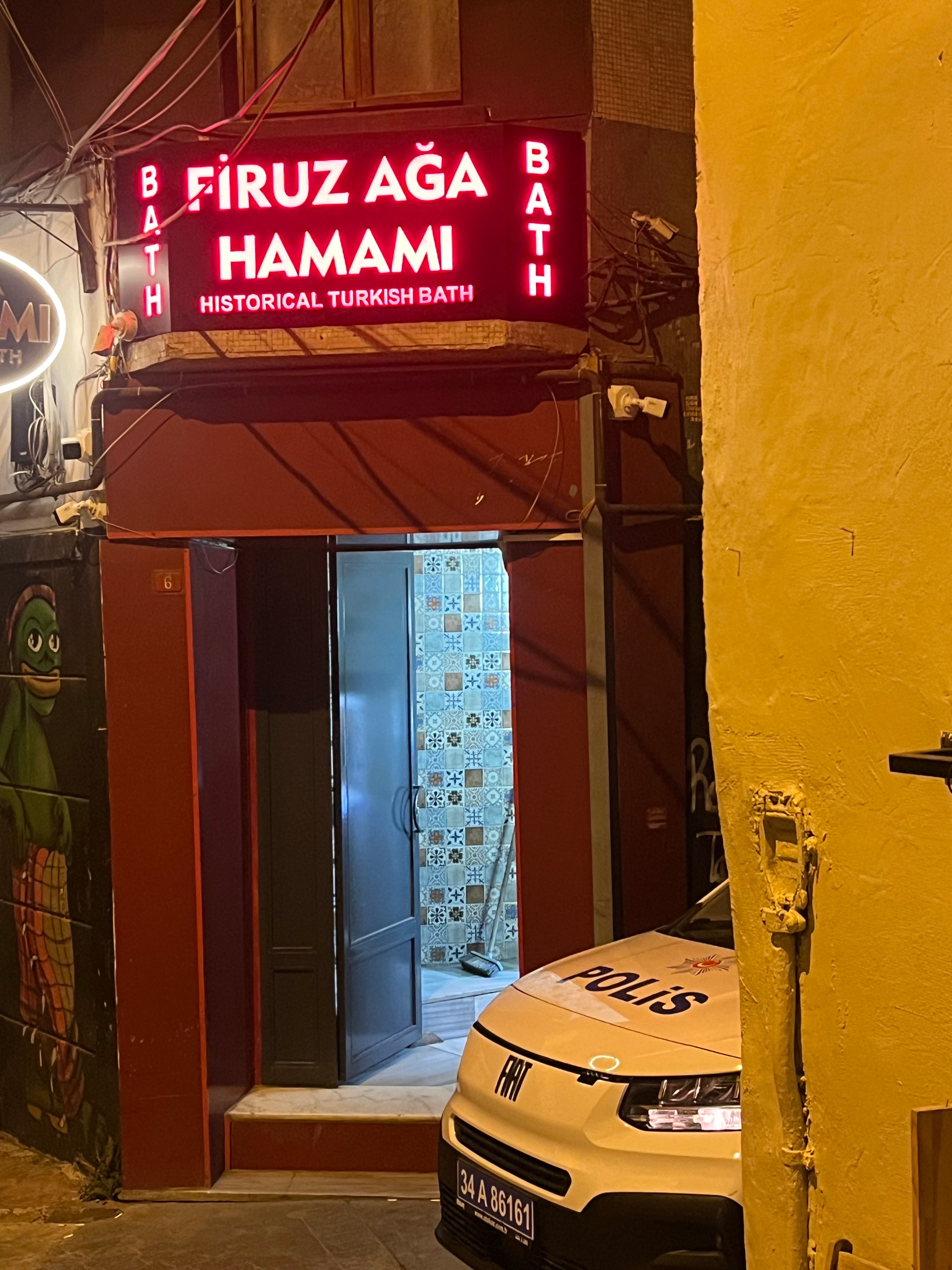
On the Sunday night I visit, outside Istanbul’s “gay-friendly hamam” Firuz Ağa Hamami, a police van waits menacingly the entire night. Inside, gay hamam visitors discuss the raids. One claims the police van is there to protect against gangland violence.
Another – a visitor from Egypt – disagrees. He says police filmed him the night before entering the hamam. He’s still back tonight, but isn’t happy. “This was the wrong week for me to visit Istanbul,” he says. “Police raids shut my favourite gay club – and I’m not attracted to bears.”
Back at my accommodation, Novelty Hotel, Istanbul, I meet a Kurdish man who cannot be out in his country. For him, Istanbul remains the place he escapes to for gay liberation.
The crackdown has led to global pro-LGBTQ+ protests in solidarity and Lord Michael Cashman calling for action in the House of Lords.
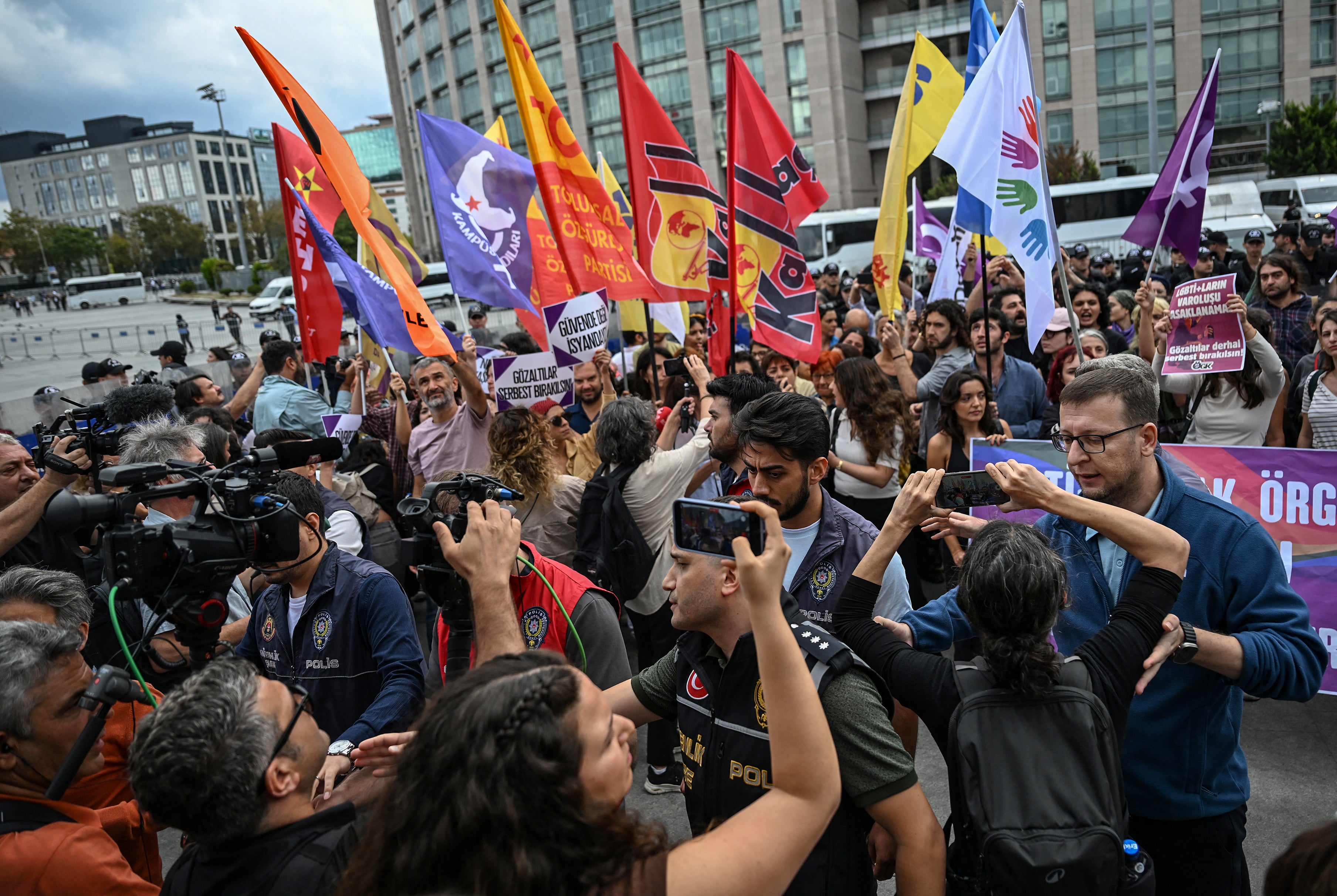
At the time of writing, arrests targeting the LGBTQ+ community have grown to include journalists, making me doubly cautious.
Yet I’m also defiant. Some are choosing to take their pink pound elsewhere. As Aidy Smith wrote following the cruise ban: “The [same sex] couple weighing up a package holiday to Bodrum next summer will remember this, as will their friends.” This week, Uncloseted Media’s Spencer Macnaughton wrote: “In 2024, when I flew to Turkey for a hair transplant, I wasn’t too concerned going there as an openly gay man … today, there’s no way in hell I’m travelling back to Istanbul for a touch-up.”
Part of me feels like I’d be doing a disservice to the LGBTQ+ people on the ground in Turkey by boycotting their country at a time they most need international solidarity.
Two bears on Saturday night brought this home for me. “Don’t worry, you’re always safe here,” one said, patting my back. “It’s just cultural stuff.” The other sounded almost triumphant in his resilience. “Last week they raided here, torch lights shining in our eyes, demanding IDs, sending us all home.”
“But look around,” he said, gesticulating to the pumping club. “Tonight, we are all back.”
*names changed


