



Want to bookmark your favourite articles and stories to read or reference later? Start your Independent Membership today.
Already a member?
Log in
Work to tackle England’s road surfaces are “starting to turn a corner” as almost 7,000 miles of resurfacing work is scheduled for completion this year, the government has stated.
The Department for Transport (DfT) said the combined work is equivalent to travelling the distance between London and Singapore. It includes close to 5,000 miles of preventative maintenance alongside nearly 2,000 miles of structural maintenance set to be completed during this financial year.
Local authority figures show a rise of more than 10 per cent in the volume of resurfacing carried out this financial year compared to the previous 12 months, with £4.9 billion spent in total, according to the DfT.
Ministers have also pledged an additional £220 million for councils in England that satisfy performance-based targets for tackling potholes.
Transport secretary Heidi Alexander said: “For too long potholes have been a source of national embarrassment, forcing hard-working people to fork out for repairs and posing a danger to all road users.
“But today’s figures show that we are starting to turn a corner.
“While we know there is much more to do, our record funding, combined with tough new rules holding councils to account, mean that drivers are making smoother journeys while giving people roads they can rely on.”
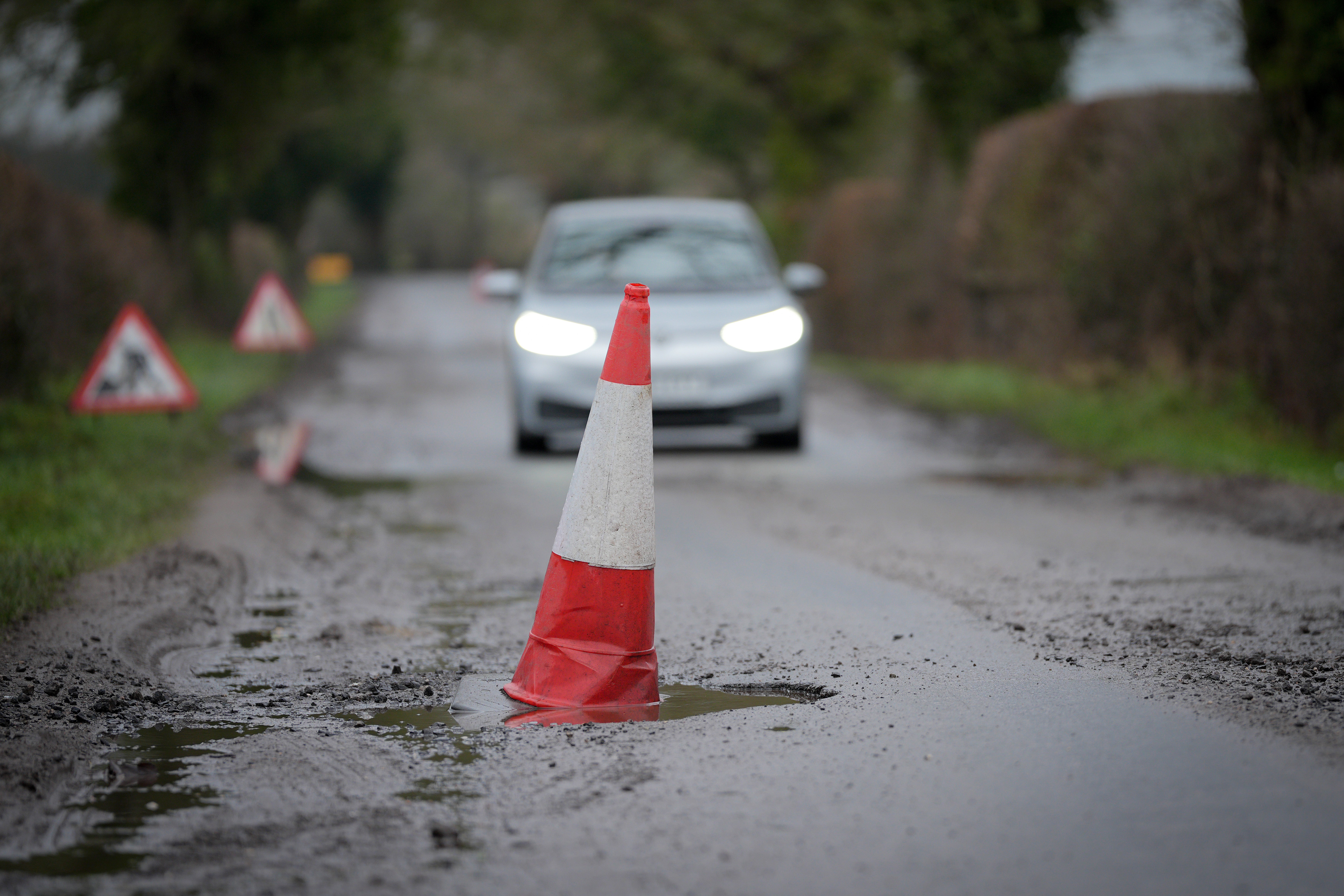
Reports submitted by councils to the government show that 94 per cent of councils will complete preventative roadworks this year with the aim of stopping potholes forming and the same part of road being repeatedly patched over, the DfT said.
This is up from 76 per cent in the previous financial year.
The average family car repair bill can be up to £590 for a vehicle that suffers damage more serious than a puncture after hitting a pothole, according to data compiled by the RAC.
“It’s good to see so many miles of road being resurfaced, but it’s also positive that the preventative maintenance message has got through as we’ve long argued that councils need to take steps to stop potholes appearing in the first place, and not just patch them up,” the RAC’s head of policy Simon Williams said.
“Surface dressing, if done properly, is a very cost effective way of improving more roads for the long term.
“The proof, of course, will be in whether drivers and other road users notice the difference.
“Getting the country’s roads up to a decent standard, and keeping them there, isn’t an overnight job.
“But at least we’re now on the right track.”

Edmund King, AA president and member of the Pothole Partnership, said of the £220 million funding increase: “The journey to get our roads back to a smooth and safe condition is a long one, but there are some early signs of positivity.
“However, this boost in cash comes at a crucial moment as the nation is about to enter peak pothole season.
“While councils have made good progress so far, sadly we have seen a 4.6 per cent increase in pothole-related incidents between January and September this year compared to the same period last year.
“The challenge for councils will be to use this money wisely, and as advocated by the Pothole Partnership, focus on long-term resurfacing solutions and act quickly to protect drivers, motorcyclists and cyclists as we head into winter.”
Dan Joyce, operations director at garage chain Kwik Fit, said: “Kwik Fit teams across the country have been repairing damage from potholes all too often, with tyres, wheels and suspension components most frequently suffering from the impact.
“Potholes not only cause costly damage, they can also present a significant risk to road safety.
“We welcome this increased investment, especially the additional focus on proactive maintenance as this helps prevent potholes before they become a danger to road users, or a drain on drivers’ wallets.”