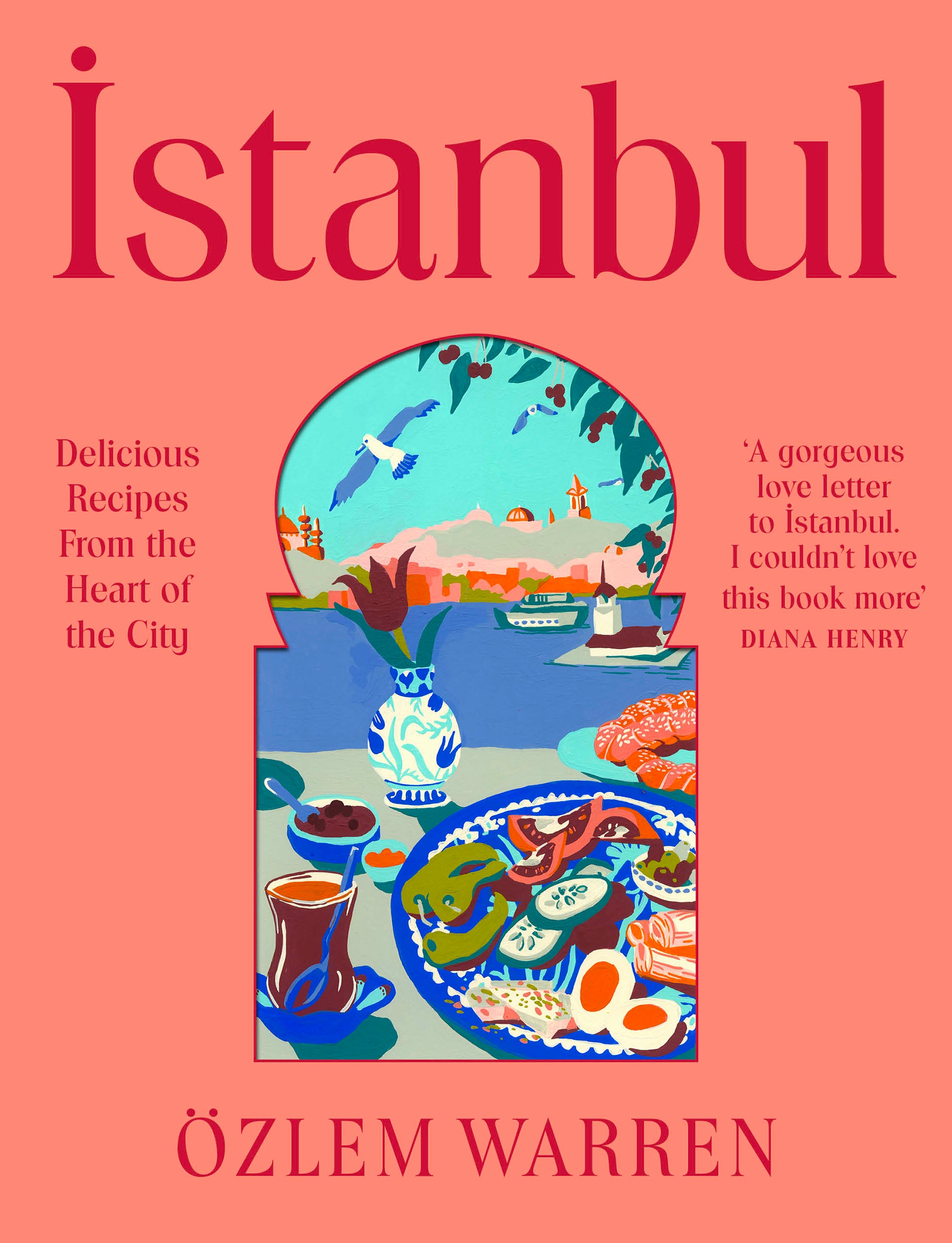
Boiled eggs with golden yolks, fresh tomato wedges, plump olives and a glass of Turkish tea (çay) sit against the purply-blue of the Bosphorus, the strait that splits Turkey across two continents. The cover of Özlem Warren’s third cookbook, Istanbul: Delicious Recipes From the Heart of the City, is a beauty, one that thoroughly champions the joys of a Turkish breakfast spread.
“My favourite Turkish breakfast had to be there. It really is a very, very special meal. It is more than a meal, to be honest,” she says, smiling with joy. “The moment I touch down in Istanbul, the very first thing I dream about is gathering family and friends and heading down to the Bosphorus, to the breakfast houses and gözleme (Turkish flatbread) places, especially if it’s a weekend.
“Everyone gathers there and it is a moment of connection. Everyone has busy lives, but life slows down at that time. There’s the continuous flow of çay, juices, honey, kaymak (clotted cream), eggs done different ways. Slow, not rushed. A little bit of conversation here, some olives and cheese and peppers and tomatoes there. I have such special memories of this, and I absolutely love it.”
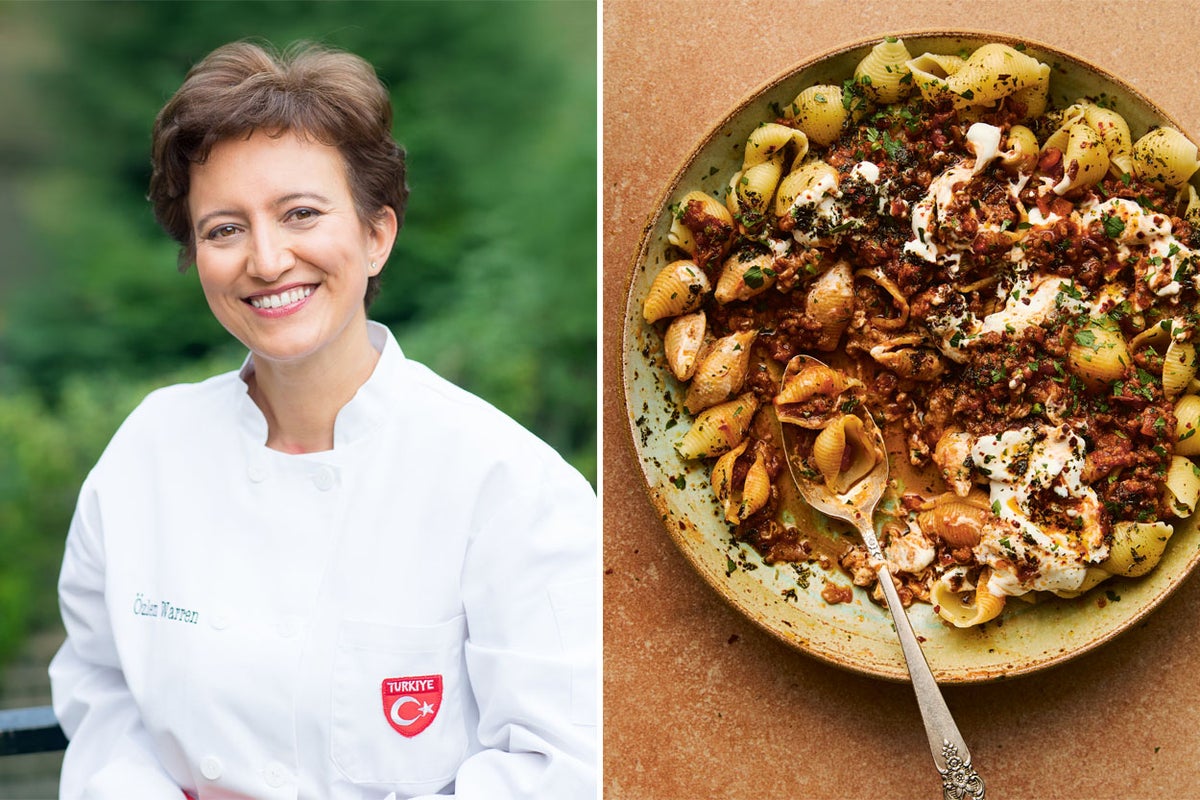
Born and raised in Turkey, Warren has lived in the US and now in the UK. You might think the classic fry-up would feel like a rushed, greasy, ketchup-covered thing in comparison, but she is adamant: “Done properly, I think it’s great. I love all sorts of breakfast. I loved the pancakes [in the US] too.”
The appeal of a Turkish breakfast is how versatile it is, she explains. It’s that nourishing, wholesome and diverse, you can have it for brunch, lunch or supper. That versatility and diversity is the thread that runs through Istanbul itself, where Warren lived for more than 15 years.
“It is multi-layered, it is diverse. It’s not just about kebabs. When you land in Istanbul, perhaps the very first thing you see is all the döner joints and yes, it is there, and it’s important, but it has incredible layers of heritage,” she says proudly. “You need to be open and dig deep.”
She says there’s a reason why Istanbul (formerly Constantinople) is called the “queen of cities”. “It is because of the Byzantines and the Ottomans, the Turkish nomads, everyone brought something to the table and it is something worth celebrating.” As a result, her new cookbook is as much a recipe collection as it is a travel and history guide. “I could never write a quick, easy fix, five-ingredient recipe book,” says Warren with a laugh. “I had to honour all these different influences that really shaped what the city’s cuisine is.”
She misses Istanbul (although loves being able to fly there in under four hours) and Turkey as a whole, but that’s one of the reasons she turned to cooking. “When we started living abroad, I terribly missed the food, terribly missed the hospitality, so I would cook it for my neighbours. I would turn my kitchen into a cookery class, invite friends,” she says. “If I lived in Istanbul, I might still be in some corporate world, trying to do something corporate.”
“That’s a piece of home when you make something from your homeland and share it with family and friends,” she adds. “I have two adult children and they speak the language, but it’s through food that they find connection to their Turkish roots. Food does that to you.
“You create your own little Istanbul, wherever you are. There is a magic of that city that takes you in.”
Certain ingredients make it easier to transport you there. Warren “lives” for pul biber pepper, biber salçasi – a southern Turkish pepper paste – and sivri peppers (long, gnarly Turkish peppers, but padrón peppers make a good substitute). Then there’s pomegranate molasses, “a lovely, tangy condiment I’m very attached to”, and she is, of course, “a big fan of Turkish coffee” (learn how to make it properly in the book).
Warren doesn’t have professional cookery training, but, like so many chefs and food writers, “had an incredible mum, an incredible grandma”, who gave her a taste for a life of cooking and sharing food. What she loves, as a cookery teacher, is seeing people realise, “‘Oh gosh, this wasn’t as difficult as I thought’. They feel they’re not that intimidated. It’s not rocket science, really.” Warren hopes that is made clear throughout the book, whether you make her grilled mackerel sandwiches (a street-food staple), baked filo rolls with parsley and cheese, or lahmacun (thin flatbreads with spiced lamb topping).
She wants to give people a “chance to read and learn about this incredible city and [its] heritage. If they’ve ever been to Istanbul, I hope it brings good memories for them, or maybe it may inspire them [to go],” she says, smiling hugely. “Above everything, [I want it to] bring joy, and I would really love them to have some happy memories, or knock up something from the book and feel good about it.”
Start with breakfast, and see where it takes you.
Tavuk şiş – chicken shish kebabs with roasted vegetables
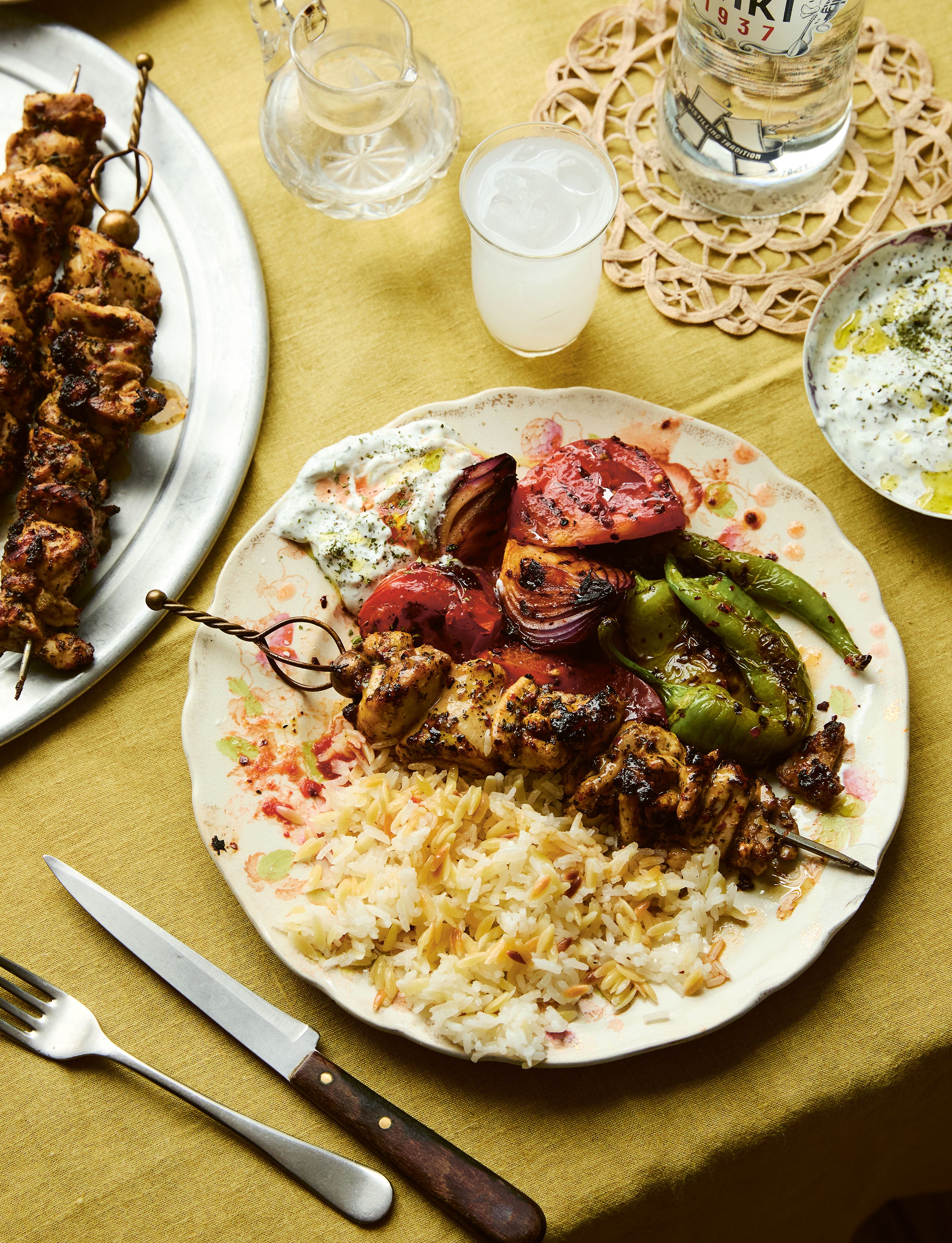
“For these succulent kebabs, tavuk (chicken), marinated in yogurt, olive oil and spices, is threaded onto şiş (skewers). Often served with pilav and roasted vegetables, they are popular throughout Turkey and in Istanbul,” says Warren.
“My father, Orhan, was a lawyer with Karayolları, the Turkish Government’s transport department. The department has an employee lokanta (restaurant) in Ortaköy, İstanbul, which has mesmerising views of the Bosphorus, and I have very fond memories of enjoying tavuk şiş with my family there.”
Serves: 3-4
Ingredients:
560g boneless, skinless chicken thighs, cut into 4x4cm pieces (remove excess fat)
2 tbsp olive oil
4 tbsp full-fat Turkish or Greek yoghurt
1 tsp dried oregano
½ tsp pul biber
Salt and freshly ground black pepper, to taste
For the roasted vegetables:
130g sivri biber, halved lengthways and cut into chunks or padrón peppers, kept whole
2 medium red onions, each cut into 6 wedges lengthways
3 medium tomatoes, quartered lengthways
4 tbsp olive oil
For the cacık:
400g (preferably) full-fat Turkish or Greek yoghurt
145g cucumber, diced
1 tsp dried mint
Method:
1. Put the chicken in a large bowl, add the olive oil, yogurt, dried oregano and pul biber, season generously with salt and black pepper, then use your hands to combine. Cover and marinate in the refrigerator for at least 30 minutes (or longer, even overnight, if you can).
2. Preheat the oven to 200C fan/220C (425F).
3. Place the vegetables on a large baking tray (pan), drizzle over the olive oil, season with salt and black pepper, then use your hands to combine, spreading the vegetables evenly over the tray in a single layer, so they crisp up around the edges.
4. Line a separate large baking tray with baking parchment. Thread the chicken onto skewers, leaving 1 cm between pieces, so that they cook evenly and are able to char. Place the skewers on the tray, spacing them 3 cm apart.
5. Place the trays in the preheated oven for 20-25 minutes, until both the chicken and the vegetables are fully cooked and beginning to char around the edges. Take the roasted vegetables out of the oven and cover with foil to keep warm.
6. Preheat the grill to high. Turn the chicken skewers over so the undersides are now at the top and grill for two to three minutes until nicely charred. Once ready, take out of the oven and roll the skewers up in the baking parchment so they keep warm and moist.
7. While the chicken and vegetables are cooking, make the cacık (dip). Put the yogurt and cucumber in a bowl, stir in the dried mint, season with salt, then set aside.
8. Serve the shish kebabs with the roasted vegetables and cacık side by side on the same plate, along with rice, if you wish.
Yoğurtlu, kıymalı makarna – cheat’s mantı
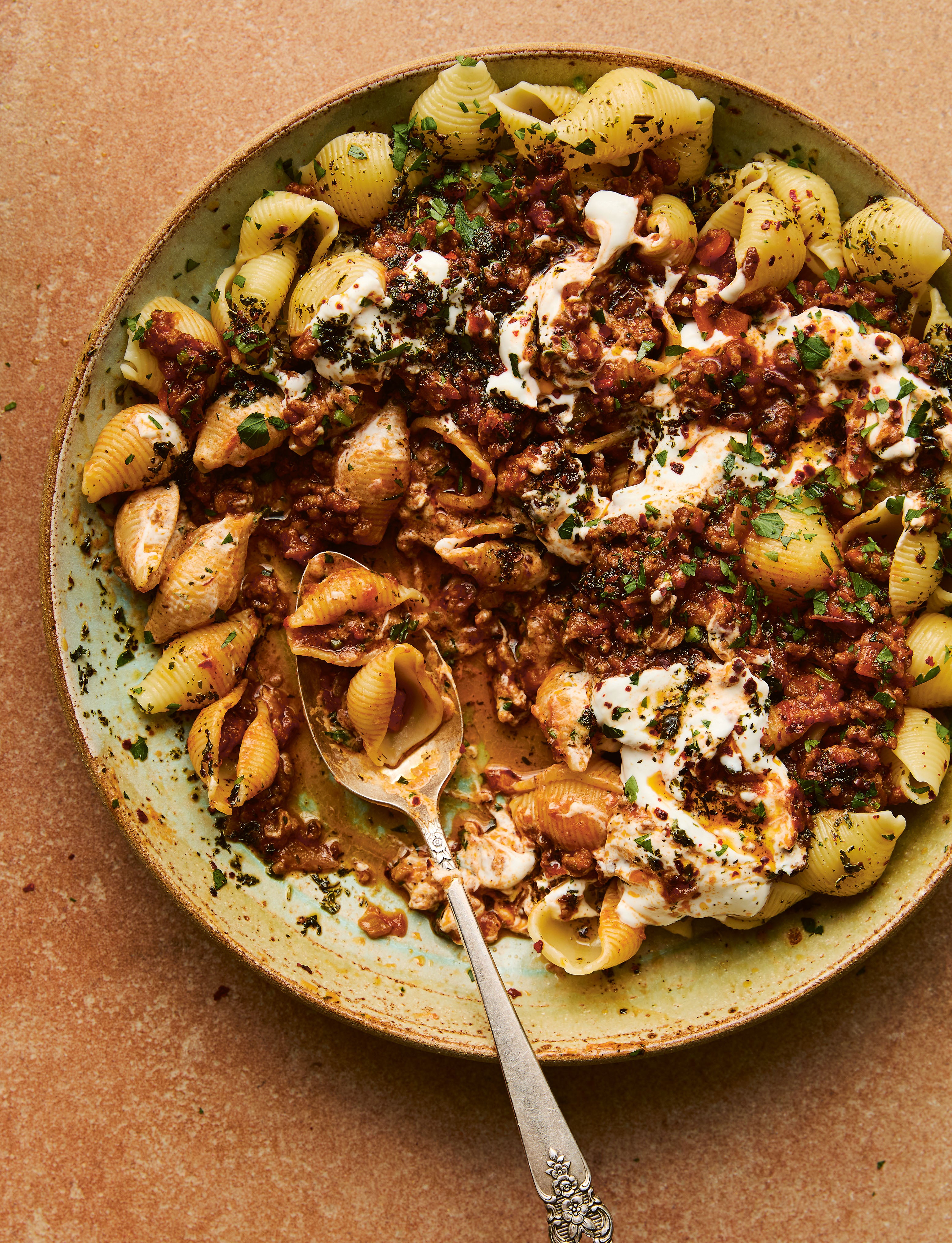
“I love mantı (a type of dumpling), but when I am short of time, I make this cheat’s version, using shell-shaped conchiglie pasta (which holds the sauce well and also resembles mantı),” says Warren.
“Kıymalı makarna is a staple in many households in Istanbul, including ours; it can also be found in eateries that serve home-style food. Topped with garlicky yogurt and spiced oil, it is absolutely delicious and certainly delivers comforting mantı vibes in considerably less time.”
Serves: 4-5
Ingredients:
3 tbsp olive oil
1 medium onion, finely diced
1 small carrot, finely diced
2 sivri biber or 1 medium green (bell) pepper, deseeded and finely diced
450g minced (ground) beef or lamb
3 garlic cloves, finely chopped
1 tbsp tomato purée (paste)
200g can chopped tomatoes
200ml water
1 tsp ground cumin
Small bunch of flat leaf parsley, finely chopped
400g dried conchiglie or pasta of your choice (use gluten-free, if preferred)
Salt and freshly ground black pepper, to taste
For the garlic yoghurt:
400g full-fat Turkish or Greek yogurt
2-3 garlic cloves, crushed with salt and finely chopped
For the spiced oil:
4 tbsp olive oil
1 tsp pul biber
2 tsp dried mint
Method:
1. About 40 minutes before you plan to serve, take the yogurt out of the fridge and place in a bowl. Stir the garlic into the yogurt, then taste and adjust the seasoning, if needed. Cover and set aside to bring to room temperature.
2. Pour the three tablespoons olive oil into a wide heavy pan and place over a medium-high heat. Stir in the onion and sauté for five minutes, then stir in the carrots and peppers and sauté for a further two to three minutes. Add the minced meat and garlic and sauté for four to five minutes until the meat is browned, stirring continuously.
3. Add the tomato purée, chopped tomatoes and water, swirling a little of the water in the can to get any remaining bits of tomato. Season with cumin, salt and black pepper, stir to combine and bring to the boil, then reduce the heat to low and simmer for 20-25 minutes, stirring occasionally. The sauce will have thickened; check the seasoning and add more salt or black pepper, if needed.
4. Stir in the parsley and turn off the heat.
5. About 10 minutes before the meat sauce will have finished cooking, bring a pan of salted water to the boil, then add the pasta and cook according to the packet instructions. Drain the pasta then return it to the pan and drizzle over a little olive oil, so the pasta doesn’t stick.
6. Pour the four tablespoons of olive oil into a pan, place over a low-medium heat, stir in the pul biber and dried mint and gently infuse for 35-40 seconds.
7. Distribute the pasta amongst your serving bowls. Ladle over three to four serving spoonfuls of the meat sauce then scatter over dollops of garlic yogurt. Drizzle over some spiced olive oil and serve immediately.
Mozaik kek – mosaic cake with chocolate, dried cherries and nuts
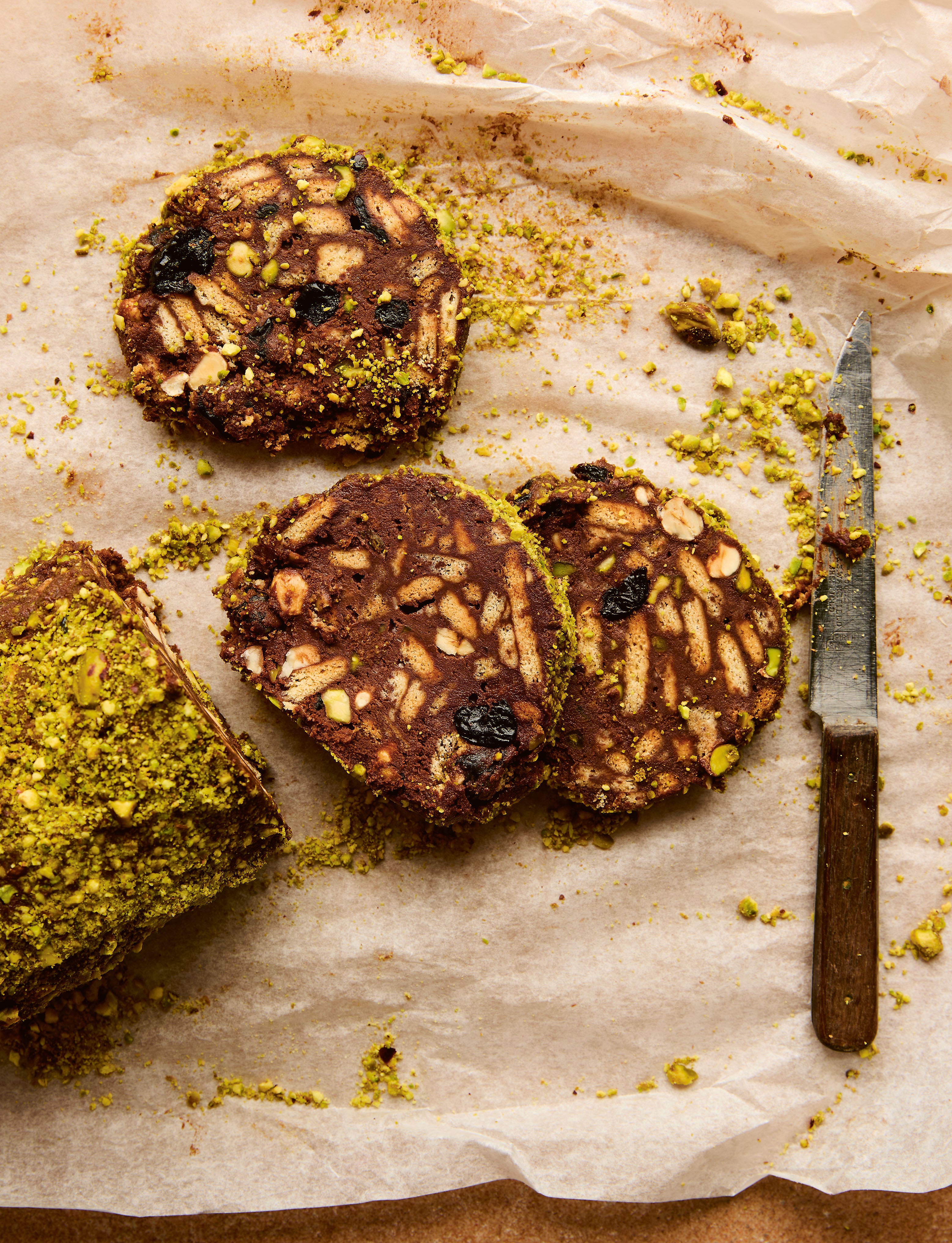
“Istanbul has a vibrant café culture and every neighbourhood has a pastane (patisserie) selling a variety of traditional sweets and puddings, as well as elaborate cakes (kek) and cookies (kurabiye), including this mozaik kek – mosaic cake. A feature, always, of my mother’s afternoon tea gatherings, it is similar to the chocolate salami that can be found in Italy, Romania and Portugal, also to Greek mosaiko,” says Warren.
“Made with petit beurre biscuits that are crushed and combined with a chocolate sauce to resemble a mosaic (hence the name), it requires no baking. I like to add pistachios, hazelnuts and dried cherries, for an extra layer of texture and flavour, but feel free to use other dried fruit and nuts, as well as other biscuits (cookies), such as digestives (graham crackers). Delicious enjoyed with Turkish coffee, a glass of çay (Turkish tea) or, if you’re feeling indulgent, sour cherries soaked in sour cherry liquor.”
Makes: 10-12 slices
Ingredients:
300g petit beurre or Rich Tea biscuits (cookies) (or a gluten-free option, if preferred) broken into pieces roughly 2.5 x 2.5 cm
70g dried cherries, halved
45g shelled, unsalted pistachios, coarsely chopped
45g blanched hazelnuts, coarsely chopped
115g unsalted butter
60g sugar
170g dark chocolate (with 70% cocoa solids), coarsely chopped
1½ tbsp cocoa powder
200ml whole milk
1½ tbsp shelled, unsalted pistachios, finely ground for decoration (optional)
Method:
1. Place the biscuits, dried cherries and nuts in a large bowl and combine well.
2. Put the butter in a small pan and melt over a low heat. Add the sugar, chocolate and cocoa powder, and stir until the sugar has dissolved and the mixture is smooth. Remove from the heat and slowly pour in the milk, whisking as you do so, until you have a smooth, glossy sauce. Pour the chocolate sauce (which should be at about room temperature) over the biscuits, nuts and cherries and combine well with a large spoon. Then, use your hands to crush the biscuits a little (without crumbling them) and to ensure everything is coated with the chocolate sauce.
3. Lay two sheets of cling film (plastic wrap) measuring 60 x 30cm on top of each other on a clean, dry surface. Pile the mixture in the middle, press it together with your hands and shape into a neat, compact log. Fold over the cling film, roll into a tight log and seal both ends. Place in the freezer for two hours to set.
4. About 20 minutes before you wish to serve, remove from the freezer and, if you wish, sprinkle the top with ground pistachios, then cut into slices. You can also spread the ground pistachios on a small plate and roll the edges of the slices to coat.
‘Istanbul: Delicious Recipes From the Heart of the City’ by Özlem Warren (Quadrille, £28).