


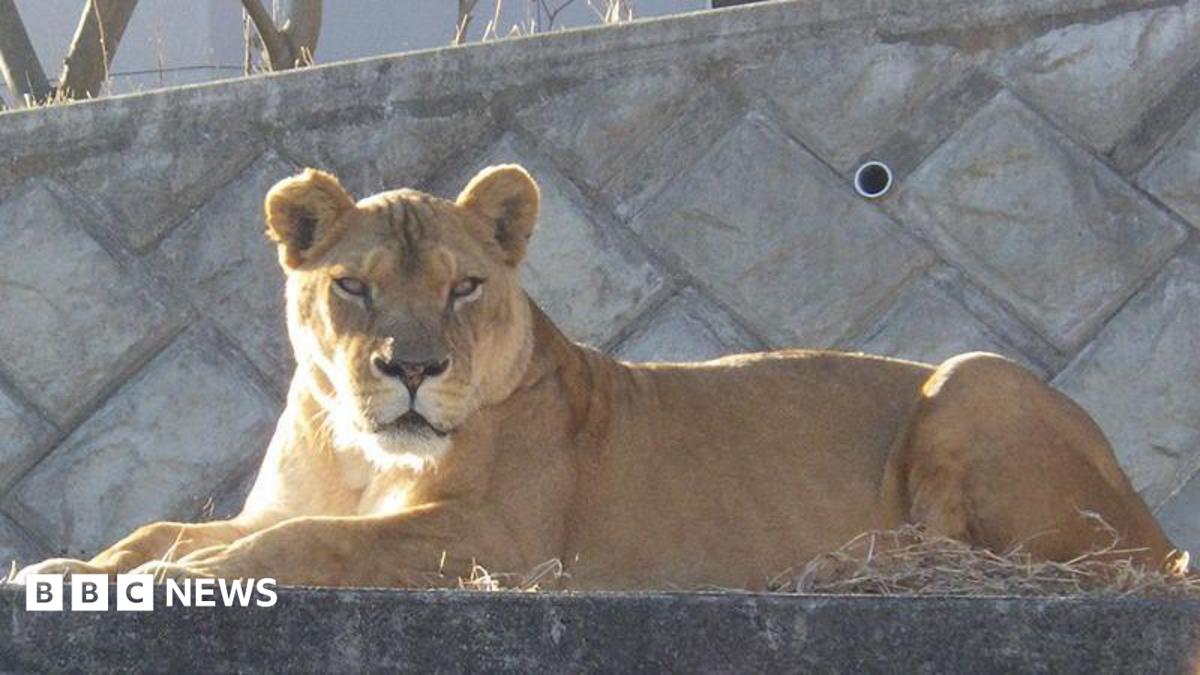
Three female lions at a Tokyo zoo have died of suspected heat-related illness, as Japan battles punishing summer temperatures.
The three lions died within a week at the Tama Zoological Park in western Tokyo. Autopsies show that the lions, aged three to 15, had suffered from dehydration and multiple organ failure – suggesting heat was the cause, said the zoo.
“This is the first time we’ve experienced anything like this. Last year was also hot, but none of our lions fell ill like this,” Miwa, Kosaka, a zoo representative, told the BBC.
Japan’s summers are getting hotter and more dangerous, with some cities seeing several “cruelly hot days” – a term used for days when temperatures rise above 40C.
According to Tama Zoo, Mugi, a three-year-old female lion, had a loss of appetite on 19 July and was unable to stand up the next day.
Zoo staff provided ventilation and water to cool her down, and later administered subcutaneous fluids, liver tonics and vitamins. But she ultimately died on 28 July.
Ichigo, an 11-year-old female lion, died days later on 31 July. Luena, a 15-year-old female lion, died on Sunday.
Autopsies show systemic dehydration and multiple organ failure in all three lions, suggesting that heat stress was a cause, the zoo said. It added that their causes of death can only be determined after test results are out.
There are three lions – two males and one female – that are “still unwell and unable to stand”, the zoo said in a statement on Monday, adding that its staff are administering fluids, medication and vitamins to the felines.
“Some of the lions are showing signs of improvement,” Kosaka told the BBC.
The zoo also said that four lions have shown signs of recovery, while six lions were in good health from the beginning. They will be placed in a private enclosure equipped with portable air-conditioners and industrial fans.
Hideaki Karaki, professor of veterinary medicine at the University of Tokyo, told local media that high humidity makes it difficult for lions to regulate their body temperatures.
He explains that instead of sweating, lions take deep breaths to expel moisture from their airways. When the moisture evaporates, body temperature drops.
But the lions’ body temperatures could not drop sufficiently in high humidity, he says.
Another factor could be the sudden spike in temperature in mid-July, leaving the animals insufficient time to acclimate to the heat, Karaki adds.
Tama Zoo houses around 260 species of animals. Its lions have long been a key attraction, having been bred and exhibited since 1964. According to the zoo’s website, it offers a safari-style bus service for visitors to view the lions in their enclosure.
Tama Zoo announced last month that it would suspend its lion exhibit and lion bus service, due to the “sudden heatwave” making the lions ill.
More than 43,000 people across the country have been taken into hospital for heatstroke in this summer alone.
The government has issued heat warnings and urged residents to take measures to stay cool, including encouraging office workers to ditch formal attire for breezier outfits.
Additional reporting by Chie Kobayashi



