


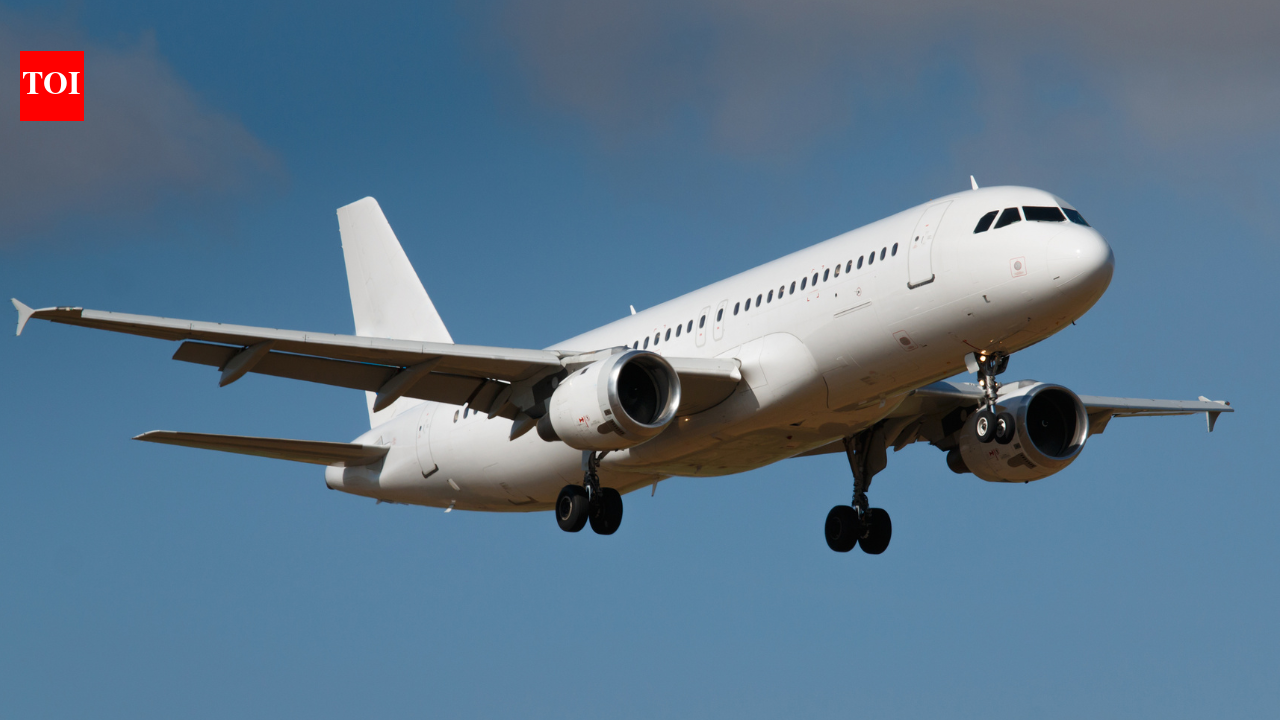
A commercial airline pilot in the UK reported seeing a mysterious disc-shaped object pass alarmingly close to a passenger aircraft while approaching London Gatwick Airport, triggering an official aviation safety investigation. The incident took place on 29 April 2026 but only came to wider public attention after the UK Airprox Board published its report. According to investigators, the unidentified object flew within around 100 feet of an Airbus A319 at an altitude of about 8,500 feet, close enough for the board to conclude that the aircraft’s safety had been reduced, although there was no actual risk of collision. Despite reviewing radar data and other available evidence, officials were unable to determine exactly what the object was.
How did a pilot spot the ‘flying saucer’ near Gatwick Airport?
The incident occurred at approximately 11:30 a.m. on 29 April 2026 as an Airbus A319 operating a commercial passenger flight was descending towards London Gatwick Airport. While flying over the Sussex countryside near the village of Hangcross, about seven miles south of Gatwick, the pilot noticed an unusual object approaching from the opposite direction at roughly the same altitude. The object passed very close to the aircraft’s right wing while the plane was already turning as part of its landing approach.According to the pilot’s report submitted to the UK Airprox Board, the object appeared to be a disc or “flying saucer”-type suspected drone with darker markings around its rim. Although the pilot believed it could possibly have been a drone, they were unable to identify it with certainty. The object was reported to have passed within around 100 feet of the aircraft. No evasive action was required because the aircraft was already in a turn, but the sighting was considered significant enough to warrant a formal investigation.
Officials consider it a safety concern
The UK Airprox Board investigates incidents in which aircraft come dangerously close to other aircraft, drones or unidentified objects that may pose a risk to aviation safety. In this case, investigators concluded that although there had been no actual risk of collision, the proximity of the unidentified object meant that the safety of the aircraft had been reduced. The Airbus was carrying out a routine commercial flight into one of the UK’s busiest airports, making any unidentified object in its flight path a serious matter.
Investigators identify the object
Following the pilot’s report, investigators reviewed radar information and checked whether any authorised drones or other known aircraft matched the sighting. They found no radar contact corresponding to the object, and no other pilots in the area reported seeing it. Air traffic controllers did issue a warning after the sighting, but there was insufficient evidence to determine the nature of the object. As a result, the UK Airprox Board officially classified it as an unknown object.Despite widespread headlines referring to a “flying saucer”, the official report does not suggest that the object was extraterrestrial. Investigators noted that it was possibly a drone, but there was not enough evidence to confirm that explanation. In aviation terminology, an unidentified object simply means that authorities could not determine what it was based on the available evidence.
What is the UK Airprox Board?
The UK Airprox Board is an independent organisation funded by the UK Civil Aviation Authority and the Ministry of Defence. It investigates Airprox incidents involving aircraft, helicopters, drones, birds and other unidentified objects to improve aviation safety. The board’s role is to analyse the circumstances surrounding near misses and publish recommendations where appropriate. It does not investigate UFOs or make conclusions about extraterrestrial activity.
Why has the incident attracted so much attention?
The combination of a commercial passenger aircraft, a disc-shaped unidentified object and the phrase “flying saucer” has generated widespread interest online and in the media. The case has also revived discussions about unidentified aerial phenomena and the challenges of detecting small objects near busy airports. Aviation experts, however, note that many unexplained sightings are eventually attributed to drones, balloons, birds or atmospheric effects, even if some cases remain unresolved due to a lack of evidence.Unless new evidence emerges, the investigation into the Gatwick incident is considered complete. Although the object remains unidentified, the UK Airprox Board concluded that the encounter temporarily reduced the aircraft’s safety without creating a direct collision risk. The incident serves as a reminder that even unexplained objects in controlled airspace are treated seriously, as maintaining safe separation around commercial aircraft remains one of aviation’s highest priorities.



