


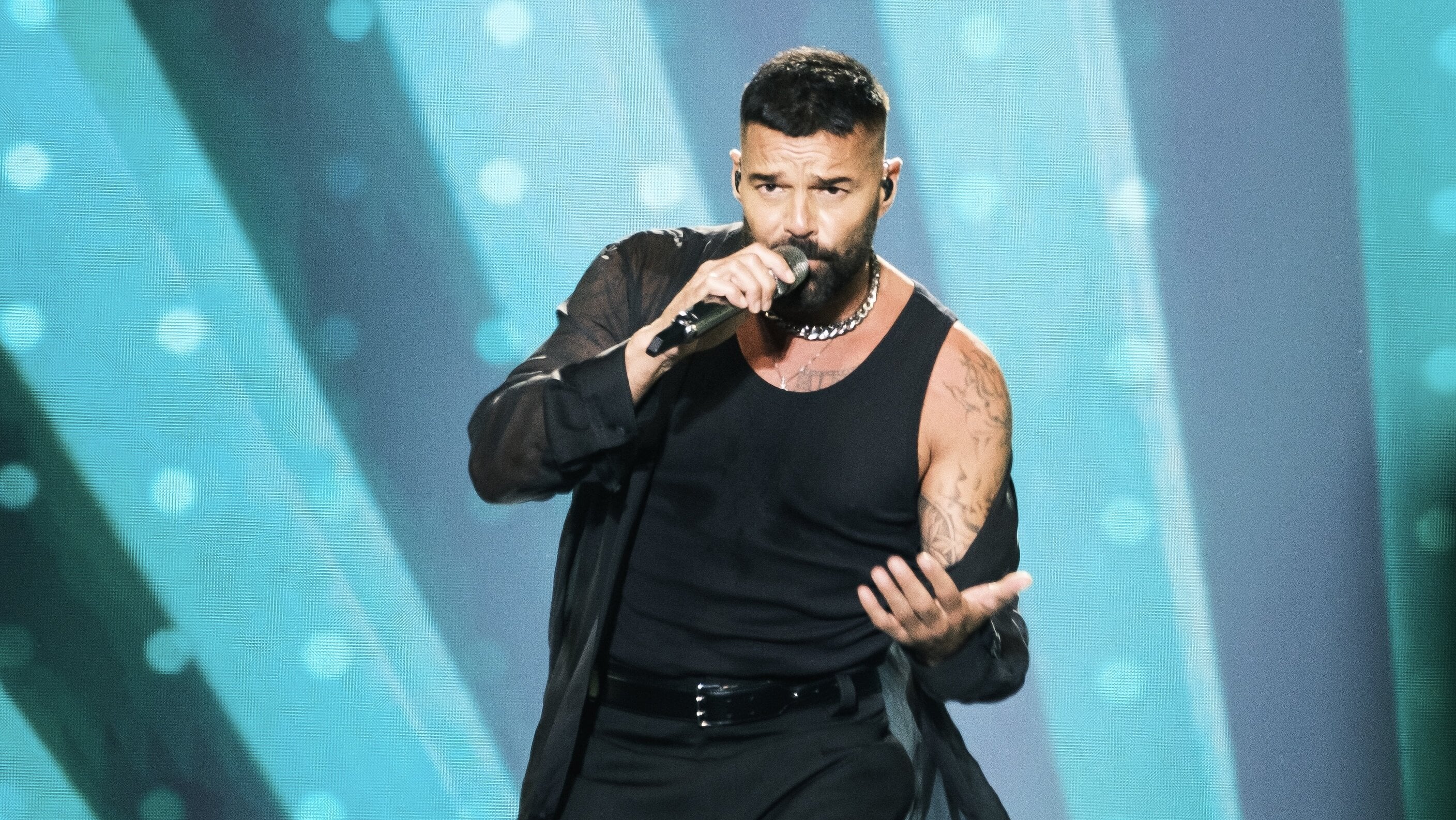
A US federal appeals court has revived the copyright infringement lawsuit against Ricky Martin over his 2014 song Vida.
The ruling sends a case that has run for nearly 12 years back to a lower court for more litigation.
In its decision on Friday (June 12), which you can read here, the US Court of Appeals for the First Circuit vacated a lower court order that had granted Martin summary judgment against songwriter Luis Adrián Cortés-Ramos.
“Today, we consider another chapter in the perpetual quest of plaintiff/appellant Luis Adrián Cortés-Ramos … for good ol’ fashioned copyright justice,” wrote Circuit Judge O. Rogeriee Thompson.
“This isn’t the first time Cortés has ended up before us in his David-versus-Goliath copyright battle – in fact, it’s his fifth appeal in twelve years across three cases arising from the same core facts.”
“This isn’t the first time Cortés has ended up before us in his David-versus-Goliath copyright battle – in fact, it’s his fifth appeal in twelve years across three cases arising from the same core facts.”
O. Rogeriee Thompson, US Circuit Judge
Thompson‘s opinion uses music terminology throughout: the standard-of-review section is headed “Our Beat,” the discussion “Our Verse,” and the conclusion “Outro.”
Cortés-Ramos has maintained for more than a decade that Martin copied a song and music video he had submitted to a 2014 contest and turned it into Vida.
The dispute stems from the SuperSong contest, co-sponsored by Sony, which invited entrants to submit an original composition and accompanying music video.
Under the contest, the winning track would be performed by Martin and could feature on the 2014 FIFA World Cup official album.
Cortés-Ramos was selected as one of 20 finalists but did not win.
Martin released Vida in April 2014, a track from One Love, One Rhythm – The 2014 FIFA World Cup Official Album.
The song peaked at No. 5 on Billboard‘s Hot Latin Songs chart.
The question is whether, by entering the contest, Cortés-Ramos assigned any copyright in his submission to Sony – which would leave him without the ownership needed to sue for infringement.
A magistrate judge recommended granting Martin summary judgment on that basis, and the district court adopted the recommendation and declared Cortés-Ramos‘s copyright registration invalid.
The district court had moved straight to summary judgment, denying Cortés-Ramos‘s requests to open discovery, including a motion for an initial scheduling conference.
The First Circuit found that it had done so without giving Cortés-Ramos a chance to pursue discovery, the pretrial stage where each side obtains documents and testimony from the other.
“Yet it took those sweeping actions without giving Cortés the benefit of a chance to pursue discovery, despite his repeated pleas for such an opportunity,” Thompson wrote.
“Cortés appeals on that ground … and we agree with him on the discovery issue, so we vacate and remand for more litigation, yet again.”
The court applied Rule 56(d), which allows a judge to delay ruling on summary judgment when a party cannot yet access the evidence it needs.
Cortés-Ramos first sued over Vida in July 2014.
That case was dismissed because he was bound by an arbitration clause in the contest rules, a finding the First Circuit upheld in 2016; but before that ruling came down, he had already filed a new suit against Martin alone. In 2018, the appeals court found that Martin was not covered by that clause.
After further argument over whether he had registered his copyright in time to sue, Cortés-Ramos refiled, and in 2024 a district judge granted Martin summary judgment.
The June 12 ruling was not unanimous: Chief Judge David Barron dissented in part.
“Because I do not understand Cortés to have made the Rule 56(d) arguments that the majority attributes to him, I respectfully dissent in part,” he wrote.
The First Circuit vacated both the summary judgment and the order invalidating the registration, returning the case to the US District Court for the District of Puerto Rico.
There, Cortés-Ramos will get the chance to conduct discovery before the court again weighs whether to grant Martin a final judgment.
“Only after Cortés has had a ‘full and fair opportunity’ to pursue some discovery … should the district court proceed to summary judgment,” the opinion stated.
Similar copyright claims have tested other artists in the US courts in recent years.
In March 2026, Cardi B won the dismissal of a lawsuit alleging her track Enough (Miami) copied an earlier song.
That case, like Cortés-Ramos‘s, turned in part on copyright registration, with the judge finding the plaintiffs had not registered their work when they filed.
Dua Lipa prevailed in a copyright suit over her track Levitating in 2025, when a New York federal judge granted her summary judgment.
Ed Sheeran, meanwhile, has fended off claims that his track Thinking Out Loud copied Marvin Gaye‘s Let’s Get It On.
That fight ran through multiple trials and appeals, with one strand taken to the US Supreme Court in 2025.Music Business Worldwide



