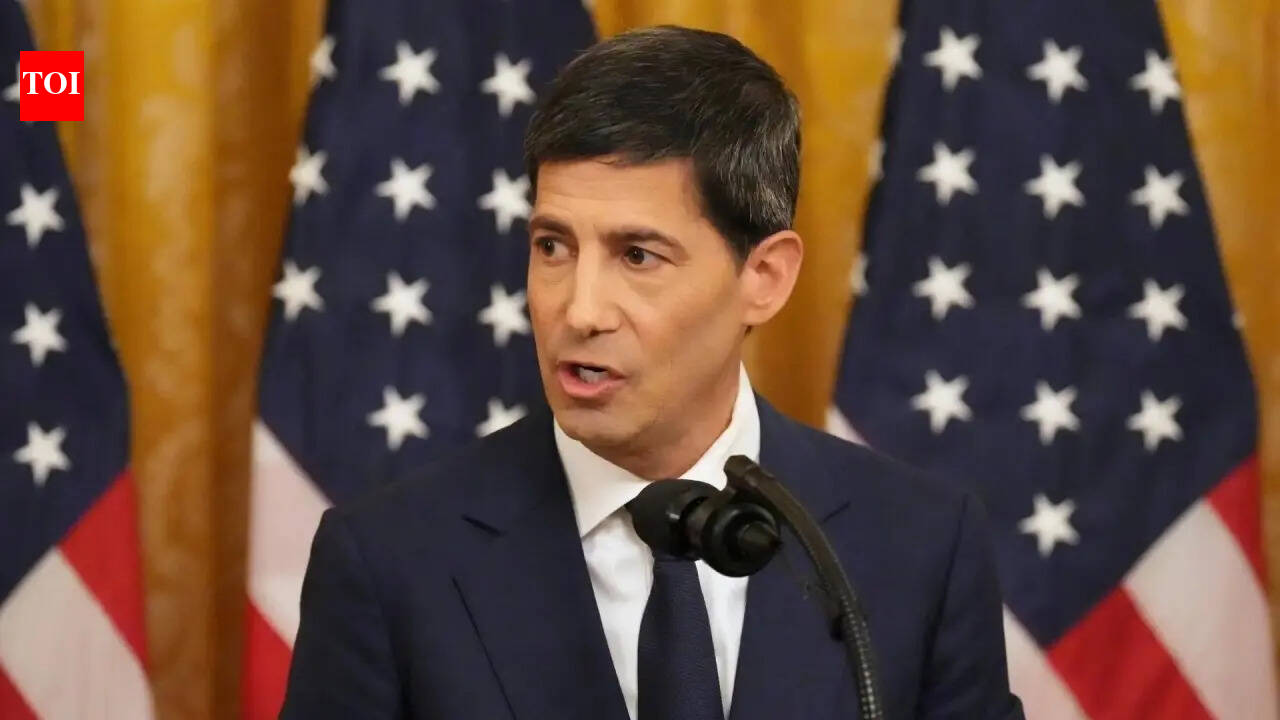
US Federal Reserve chairman Kevin Warsh-led FOMC on Wednesday kept the key interest rate unchanged in the 3.5% to 3.75% range. This is Kevin Warsh’s first policy review after taking over from Jerome Powell as US Federal Reserve chair.“The Committee decided to maintain the target range for the federal funds rate at 3-1/2 to 3-3/4 percent, in support of the Federal Reserve’s dual mandate. Economic activity is expanding at a solid pace despite elevated uncertainty that owes, in part, to the conflict in the Middle East. Productivity growth and capital investment are strong. Job gains have kept pace with the workforce, and the unemployment rate has changed little,” the FOMC release said.“Inflation remains elevated relative to the Committee’s 2 percent goal, in part reflecting supply shocks that have driven price increases in certain sectors, including energy. The Committee will deliver price stability,” the statement added.
Rate hike expected by year-end, inflation forecast raised
According to the Federal Reserve’s statement, the decision on interest rates received unanimous support from policymakers for the first time in a year. The central bank also removed its forward guidance on the future path of interest rates.However, the Summary of Economic Projections indicated that policymakers largely expect borrowing costs to move higher. Of the 19 officials who participated in the exercise, 18 projected at least one rate increase before the end of the year, while one policymaker chose not to submit a forecast.The US Federal Reserve also revised its inflation outlook higher, signalling that price pressures are expected to remain elevated for longer. Inflation is currently running at its highest level in three years and, according to the central bank’s latest projections, is not anticipated to return to its 2% target before 2028.In its Summary of Economic Projections, the Fed increased its forecast for the Personal Consumption Expenditures (PCE) price index to 3.6% by the end of 2026, compared with the 2.7% estimate it had issued in March.Markets had broadly expected the US Federal Reserve to keep its benchmark interest rate unchanged, extending the pause that has been in place throughout the year.Until recently, traders had increasingly priced in the possibility of a rate hike as the conflict with Iran pushed oil prices higher and fuelled inflationary pressures. However, those expectations eased after crude prices retreated to around $80 a barrel following a preliminary agreement between the US and Iran to end the conflict.Since US President Donald Trump nominated Kevin Warsh to head the Federal Reserve in late January, investors and economists have been debating the direction he may take on monetary policy. A key question has been whether he would favour higher interest rates to combat inflation or move towards rate cuts, something Trump has repeatedly advocated.
High inflation makes situation tougher for US Fed
Government data released last week showed inflation climbing to a three-year high of 4.2%, driven largely by increased fuel costs, according to an AP report. Even Trump has moderated his stance somewhat, shifting away from persistent calls for lower rates and instead arguing that additional rate increases are unnecessary.Elevated inflation has effectively ruled out any immediate reduction in borrowing costs, as lower rates could further stimulate demand and add to price pressures. At the same time, an improvement in hiring trends since the start of the year has weakened another major argument for easing policy. Views within the Fed’s rate-setting committee remain divided, including among members such as former Chair Jerome Powell, over whether rates should eventually move higher or remain where they are.Speaking on NBC’s “Meet the Press” earlier this month, Trump described Warsh as “fantastic” and said he wanted him to make his own decisions, while reiterating that he saw no need for higher interest rates.Any future reduction in rates would gradually influence borrowing costs across the economy, including mortgages, vehicle loans and corporate financing.Beyond monetary policy, people familiar with Warsh’s approach expect him to bring a different leadership style to the central bank. They say he prefers fewer public speeches by policymakers, more extensive internal deliberations and less commentary on short-term economic fluctuations. While Powell was known for a relatively direct and accessible communication style, Warsh has indicated that he admires the more measured and enigmatic approach associated with Alan Greenspan, who led the Federal Reserve from 1987 to 2005.