


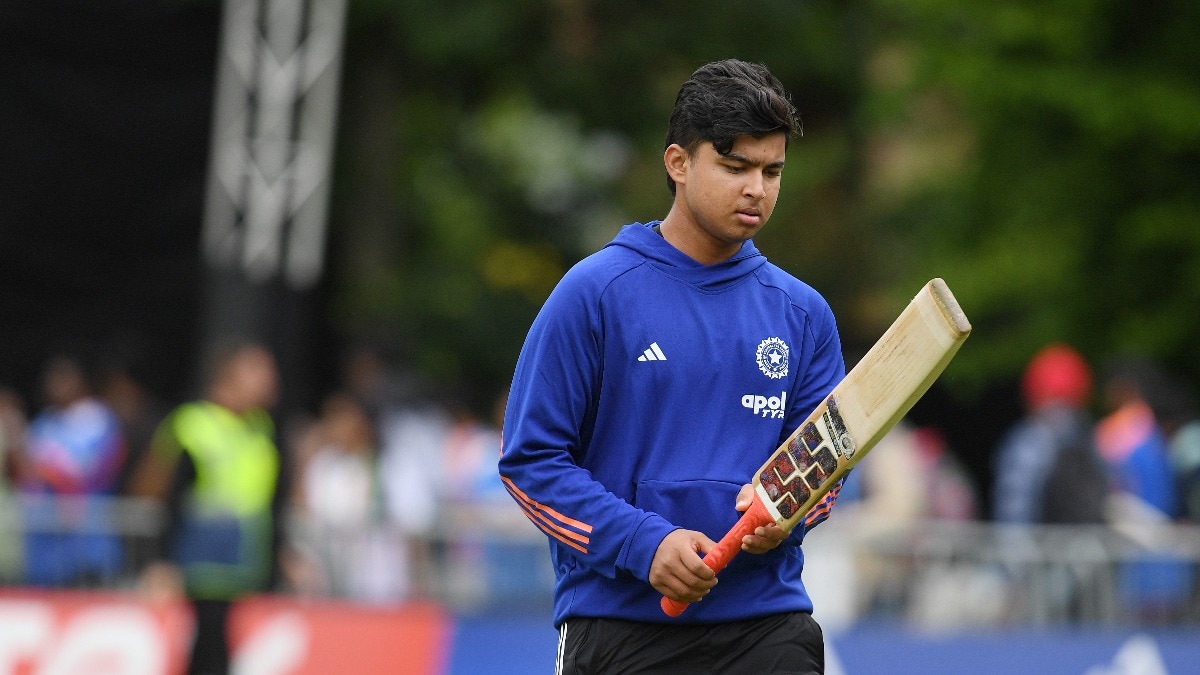
There is a fine line between protecting a young player and actively stalling their momentum. By leaving 15-year-old batting sensation Vaibhav Sooryavanshi out of the playing XI for the opening T20I against England in Durham on Wednesday, hot on the heels of benching him through a historic 0-2 series defeat in Ireland, India’s team management has invited fierce criticism.
To many, keeping the country’s most explosive young batsman on ice feels like administrative timidity. Yet, as the online discourse grows toxic, a vital counter-narrative has emerged from the modern game’s realists: in a meritocracy, how do you drop established players who have done absolutely everything asked of them?
The frustration surrounding Sooryavanshi’s omission is entirely understandable. On the eve of the UK tour, batting coach Sitanshu Kotak indicated that the management did not wish to “disturb the current hierarchy,” a conservative sentiment echoed by captain Shreyas Iyer. Critics immediately pointed to the Ireland series, historically the ideal canvas to test bench strength, as the missed opportunity.
Even the legendary Sunil Gavaskar lamented the hesitation, noting before the squad arrived in England:
“For a month, I had been saying that Vaibhav Sooryavanshi could have played both games because of his form… If you had to try a young player, these two matches were the ideal opportunity.”
Following the Durham fixture, Gavaskar warned that delaying the debut only compounds the pressure on the teenager, who now knows he may have to deliver almost immediately when finally called upon. Speaking on Sony Sports after the series-opening T20I in England ended in a no-result due to rain, Gavaskar said:
“It will put him (Sooryavanshi) under more pressure whenever he gets an opportunity. But at 15 years of age, you don’t think too much about pressure. He knows that if he gets the opportunity in the second or third game, he will have to deliver almost immediately. That’s there.”
WHOM WILL YOU DROP?
Yet, look closely at the top three blocking Sooryavanshi’s path, and the management’s reluctance becomes entirely reasonable. Head coach Gautam Gambhir has become an easy punching bag for impatient fans, but his underlying philosophy is sound: no player thrives in an environment of radical insecurity.
Consider the staggering pedigree of the men currently holding the fort. Since the start of the last T20 World Cup cycle, Abhishek Sharma has bludgeoned more than 1,500 T20 runs at a breathtaking strike rate of 193, deservingly climbing to the summit of the ICC T20I batting rankings. Sanju Samson may be enduring a three-match slump, but immediately prior to this, he came up with a trio of all-time-great innings in the T20 World Cup knockouts.
Then there is Ishan Kishan, who has climbed to the No. 1 spot in the T20I rankings with consistent performances ever since he was brought back into the team before the T20 World Cup. After having been dropped a couple of years ago, Ishan broke the door down through the gruelling domestic gauntlet of the Syed Mushtaq Ali and Vijay Hazare Trophies to earn his recall.
How does a management group look at any of these three and say, “Thank you for your historic service, but you are being cast aside for the next shiny object”?
To ruthlessly discard players of this calibre after a handful of failures would completely wreck dressing-room confidence, creating a toxic environment where players perform out of a fear of survival rather than the freedom to express themselves. They have earned a long rope.
Even Cheteshwar Pujara aligned with this protective view even after Sanju Samson failed in Durham on Wednesday. The Chennai Super Kings batter has made just six runs across three T20Is on the UK tour, and quite a few on social media have argued that Samson should make way for Vaibhav Sooryavanshi. Speaking to JioHotstar, Pujara stated:
“I think India should persist with Sanju Samson. I don’t think he should be feeling any pressure. He has proved himself in the T20 World Cup and, with the kind of talent he possesses, he should be there in the playing XI. There shouldn’t be a lot of noise about dropping Sanju Samson. He is a quality player and should get a longer run. Sanju just needs to bat naturally and not think too much.
“If Vaibhav needs to play, he should play, but not at the expense of dropping someone, rather by resting someone. If you want to give him an opportunity, that is fine. But you shouldn’t be dropping any of India’s top three players, whether it’s Sanju, Abhishek or Ishan Kishan. Having said that, Vaibhav does deserve an opportunity, and his opportunity will come.”
MERIT OR HIERARCHY?
Sooryavanshi is already the toast of the nation, if not the cricketing world, but his arrival shouldn’t introduce an intimidation factor into the dressing room. The youngster needs a conducive environment where he neither feels threatened by the hierarchy nor actively threatens the existing order – though whether such delicate equilibrium can truly survive in an ultra-competitive modern environment remains to be seen.
Yet, acknowledging the validity of dressing-room stability does not completely absolve the management. It merely brings us to the ultimate, inescapable question: if the pecking order was so unyielding, why select Vaibhav Sooryavanshi in the 15-man squad at all?
The selection committee, led by Ajit Agarkar, openly admitted that Sooryavanshi’s performances made him impossible to ignore. He was not fast-tracked into the senior touring party as a developmental luxury or an apprentice sent to carry drinks and absorb the atmosphere. He was picked on sheer, unadulterated merit.
If the last few months are any indicator, culminating in a historic IPL campaign where he systematically dismantled the world’s best bowling attacks, Sooryavanshi is not just a bright prospect; on pure form and tempo, he is currently the most destructive opening batsman in T20 cricket.
International cricket cannot be run like a fantasy league game where underperforming players are instantly swapped out, and protecting team culture is paramount. But equally, a meritocracy cannot function if undeniable, world-class form is forced to sit in the dugout.
If the leadership truly believed that exposing a fifteen-year-old to the intense glare of the international game was premature, they should have left him to dominate domestic cricket instead of drafting him simply to watch it from the bench.
– Ends



