


As NATO leaders meet in Turkey for their annual summit, the Russia-Ukraine war is a top issue on the agenda. On the eve of the summit, Moscow bombed Kyiv, killing at least 24 people and causing heavy damage to the city’s infrastructure. Monday’s bombardment was the second deadly attack on the Ukrainian capital in four days, exposing the country’s helplessness against powerful Russian ballistic missiles. Ukraine’s president, Volodymyr Zelensky, is expected to plead at the summit for more air-defence batteries from the US and other NATO members.
Ukraine, however, is not doing too badly at the moment in the war. In fact, it has managed to push the war deep into Russia, with escalating attacks on energy infrastructure that have created nationwide fuel shortages and miles-long queues at petrol stations. Only two of Russia’s 83 regions have avoided such shortages. Last week, Russia began importing petrol from India to try to mitigate the deepening crisis. Although the Kremlin didn’t comment on imports from India, it did confirm that Moscow was in talks with other countries to purchase petrol. The fact that Russia, the world’s second-largest exporter of crude oil and third-largest exporter of refined petroleum products, has been forced to import petrol suggests the tide may be turning in favour of Ukraine in the conflict, now in its fifth year.
Advertisement – Scroll to continue
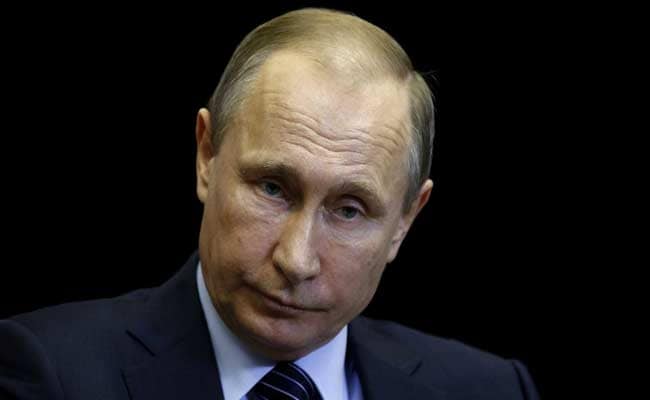
The Russian leader, Vladimir Putin, has not looked so vulnerable since he came to power more than 25 years ago. The Ukraine war has shattered the myth of Russia’s strength and invincibility as well as Putin’s image as a strong leader. The conflict he called a “special operation” in the hope of quickly occupying Ukraine has already lasted longer than the First World War and the Soviet Union’s fight against Nazi Germany in the Second World War. In WW2, Russia pushed back Hitler’s forces by up to 1,800 kilometres west, from the outskirts of Moscow to Berlin, but in Ukraine its gains are limited to tens of kilometres from the Russian border in the east and south. Russia has been unable to capture the Donbas region, which it has claimed since 2014.
How Ukraine Has Hit Where It Hurts Most
Ukraine’s attacks on Russia’s oil refineries and other energy infrastructure are just one part of its strategy to bring the war to Russia and force its closure. Following its audacious June 2025 drone attack on air bases deep inside Russia, which destroyed dozens of strategic bombers, Kyiv has not looked back. Developed by its own engineers, its long-range drones have been highly effective at penetrating Russian air defences, hurting Moscow economically and psychologically, particularly in recent weeks.
Last month, Kyiv launched two major attacks in Putin’s hometown, St. Petersburg, and the capital, Moscow, both of which have huge symbolic and strategic significance. St. Petersburg was attacked as Putin was about to start an important international economic conference. Guests saw large plumes of smoke rising from a nearby burning oil terminal. Two weeks later, a massive attack on Moscow targeted the capital’s largest oil refinery, reportedly disabling it for at least six months.
On Saturday, Ukraine’s drones struck a prominent oil depot and a military base in St Petersburg, undeterred by Moscow’s major attack on Kyiv two days earlier. Kyiv has even attacked oil refineries in Siberia, nearly 2,000 kilometres from its borders. Several refineries across multiple Russian regions have been repeatedly hit. In the Black Sea city of Novorossiysk, home to Russia’s largest oil export terminal, authorities have suspended petrol sales to individuals. Petrol shortages have affected businesses as well as individual households. According to the Russian newspaper Kommersant, up to a fifth of the nation’s taxi drivers are staying home because of long queues at petrol stations. Russia’s older population may remember food rationing during Soviet rule, but younger people have never experienced anything like it.
Crimea, The Russian Jewel
In an attempt to persuade Putin to resolve the conflict, President Trump last year agreed to recognise Russia’s claim to Crimea, which it annexed from Ukraine in 2014, along with other major concessions. Putin and Zelensky didn’t agree for different reasons. The annexation of Crimea has been a major success for Putin, boosting his popularity in the country. Since the days of Catherine the Great, Crimea has served as a Russian military stronghold. It has also been the main supply route to Russia’s military in occupied southern Ukraine. Thus, Ukraine’s targeting of Crimea has hit Russia’s nerve.
Attacks on the peninsula have risen sharply in recent weeks, prompting questions about whether Russia can retain what it considers its crown jewel. Crimea’s biggest city, Sevastopol, once the proud home of Russia’s Black Sea Fleet, has seen the fleet withdraw after repeated Ukrainian strikes. Ukraine has frequently attacked the isthmus linking Crimea to the Russian-occupied part of the Kherson region on the mainland. So the only route – the Kerch Strait Bridge – could be catastrophic for Moscow if destroyed.
Long queues on routes out of Crimea suggest that many residents no longer consider the peninsula safe to live in. On Sunday, Ukraine’s attacks on power stations there plunged much of the peninsula into darkness again. Two weeks ago, Russia had to declare a state of emergency in the Russian-occupied region after Ukraine’s strikes shut down petrol stations, power supplies and logistics chains.
Human Cost
Ukraine’s drones are also killing machines, used to target Russian soldiers, the main reason for the growing number of their deaths. The war has cost Russia at least 230,407 soldiers, according to a new BBC report based on analysis of cemeteries, war memorials, government registers and obituaries. Western intelligence agencies estimate the figure at more than twice that. Ukraine’s losses are also very high. A Ukrainian website reports 213,000 military deaths, while Dutch military intelligence puts the number of dead, wounded and missing at about 500,000.
The Putin administration is finding it increasingly difficult to recruit new soldiers. Now, students have been offered a special one-year contract to serve in a new branch of the military known as “unmanned systems troops” or drone operators. The military has been seeking recruits under 35, who are considered more receptive to “new technologies and speeds”, said Russia’s defence minister Andrei Belousov in November 2025. In April, the student publication Groza reported that almost 270 universities and colleges had promoted contracts for the drone forces. But many of these young recruits are killed within days of joining the military. Receiving the body bags of their loved ones is a major reason Russians are turning against the war.
What Can Putin Do?
From Ukraine’s perspective, it’s clear that President Zelensky wants to end the war quickly. His pressure is intended to force Putin to agree to a ceasefire deal. But none of Russia’s war aims have been achieved. Trump spoke to both leaders on Saturday night and offered to mediate again. Putin must be regretting that he didn’t accept the 26-point solution the US offered to both sides, which was more favourable to Russia. As events since then have shown, Kyiv has gained an advantage over Russia through its continued drone attacks. Zelensky and his European partners are unlikely to allow Putin to get the original deal, which they opposed even at that time. Trump’s position also appears to have changed as he has praised Ukraine’s recent attacks in Russia.
Putin doesn’t have any good options left. Although political opposition in Russia is limited, he can’t afford to let Ukraine’s drone attacks on Russian infrastructure continue. Russia’s economy is in considerable pain because of the West’s sanctions and the cost of the war. GDP growth has slumped to 0.4 per cent, and prices continue to rise. In September, elections will be held for the Duma, the lower house of the Russian parliament. Putin has been hoping that Ukraine will eventually grow exhausted by the war and give up. But that doesn’t appear to be happening any time soon.
Putin is unlikely to follow Trump’s example in Iran by cutting his losses and pulling out of Ukraine. He is more likely to continue the war until he can claim victory. That would mean more deaths among his soldiers, worsening military morale, and further devastation of the economy. As the Russian position weakens, there is also the possibility of a coup against Putin. Some Russians are warning of unrest similar to that of 1917, which led to the Bolshevik Revolution.
The Nuclear Option
Putin’s allies and hawks may want him to escalate and even consider the nuclear option. In 2024, he revised his country’s nuclear doctrine, which stated that an attack by a non-nuclear state, if backed by a nuclear power, would be treated as a joint assault on Russia. However, the use of a nuclear weapon would be a terrible option, and there is no guarantee of its success. A nuclear attack on Ukraine could risk NATO retaliation. That option will also not be approved by India and China, Russia’s friends. So, the chances of Putin using the nuclear option are pretty dim. He is more likely to continue with the war. Russian military is still far superior and more powerful than Ukraine’s, despite Kyiv getting all the support from Western countries. In fact, Russia’s European neighbours still see Moscow as their main threat.
Russia’s plight in Ukraine is not good news for India. Despite diversification in recent years, India still depends on Russian military hardware and spare parts. Growing pressure on the Russian military will affect the availability of that equipment. Putin’s deepening troubles will make him even more reliant on China, which is again not in India’s interest. The Modi government has walked a tightrope during the conflict, resisting Western pressure to take Ukraine’s side while also disapproving of Putin’s invasion. The ongoing war is also adversely affecting India’s relations with Europe. India’s help in supplying petrol will be welcomed by Russians. Perhaps India can play a bigger role in finding a just settlement of the conflict acceptable to both sides.
(Naresh Kaushik is a former editor at the BBC and Associated Press. He is based in London)
Disclaimer: These are the personal opinions of the author



