


Ask what English food actually is and you’ll start an argument. Is it the Sunday roast? The chicken tikka masala we’ve claimed as our own? The tasting menu doing something clever, and slightly unkind, to a swede?
It sounds like a simple question until you try to answer it – and it gets harder every year, because English cooking refuses to sit still long enough to be photographed.
There is no shortage of competitions willing to have a go at pinning it down. Most, though, are really about the cook: the steadiest knife, the coolest head, the most architecture balanced on a plate before the buzzer.
Chapel Down’s inaugural Taste of England set out to do something else.
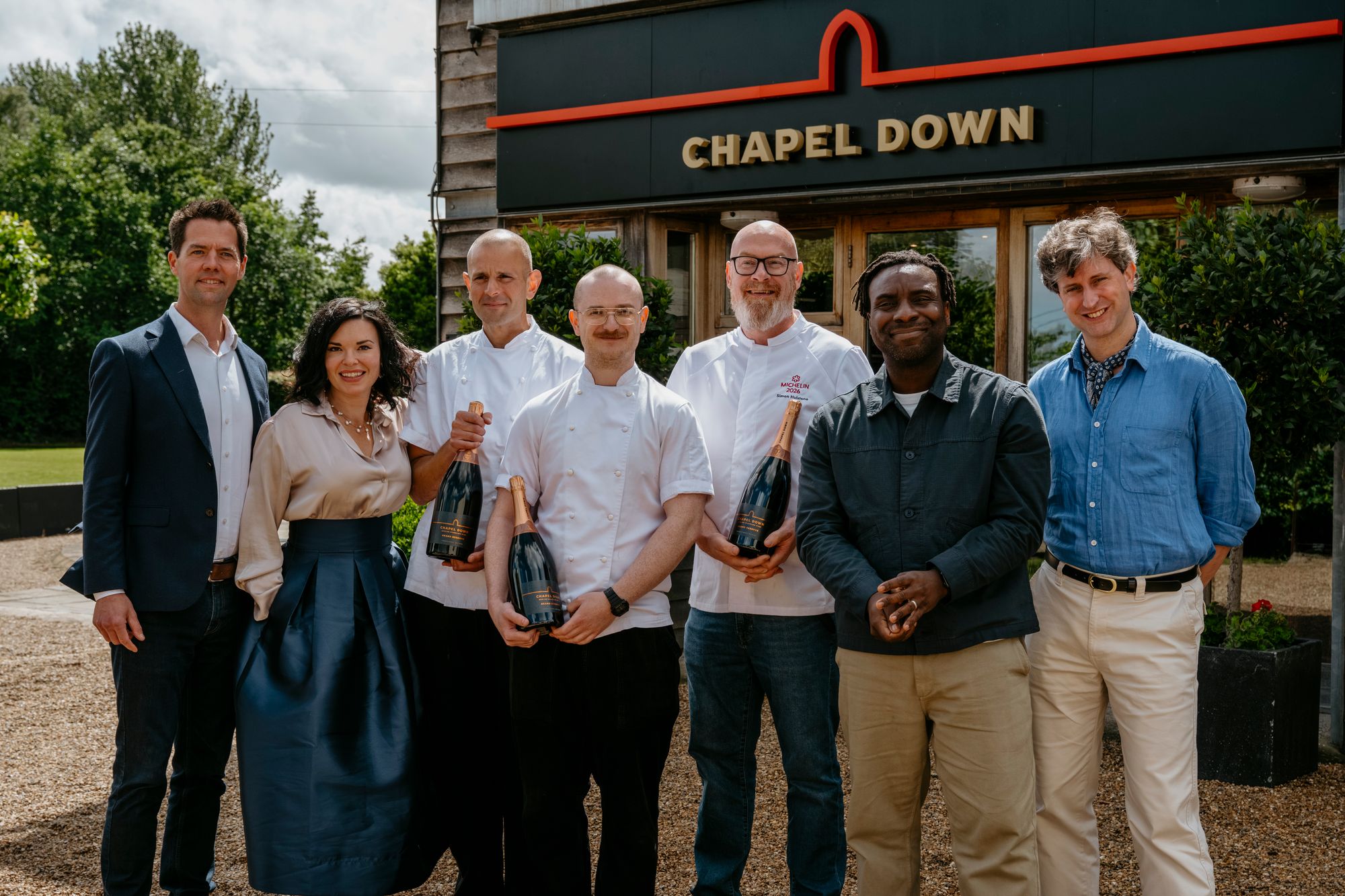
Rather than crown the best technician, the Kentish winery – England’s leading wine producer, and no longer shy about saying so – went looking for the chefs whose food best captures how the country eats now, and handed the questions to a panel paid to have opinions on the matter: restaurant critics David Ellis and Jimi Famurewa, wine columnist Libby Brodie, Ascot’s food and beverage director Jonathan Parker and Chapel Down’s own head winemaker Josh Donaghay-Spire.
They pored over a long list of entries. They came back not with one name, but three.
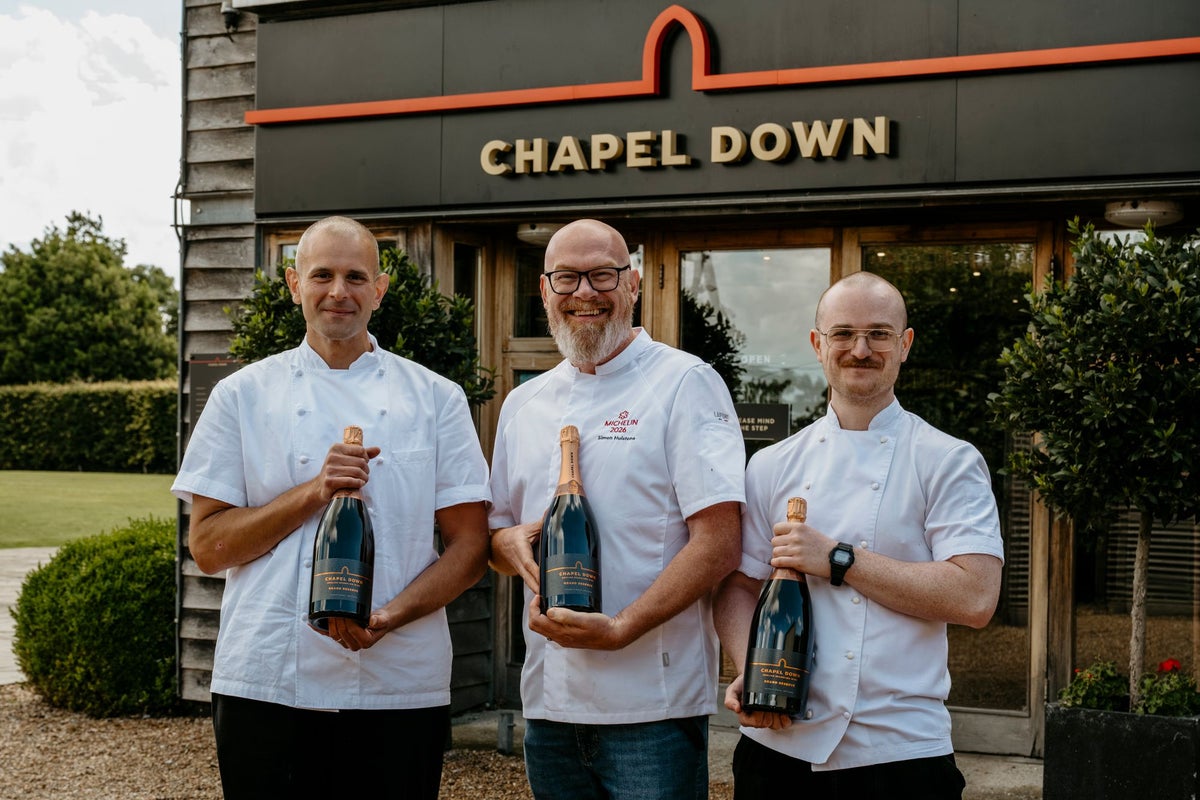
Martin Carabott of Gravetye Manor, Simon Hulstone of The Elephant in Torquay and Ethan Pack of Three Sheets in Soho cook three versions of England that, on the plate, look nothing like one another. Which is rather the point – there is no single answer.
But listen to all three and the same word keeps surfacing: produce. It is the oldest thing you can say about English cooking and still the truest. We are, at heart, a larder – an island with good things growing on it and better things swimming around it – and what you do with that larder is the whole argument.
Carabott makes the most literal case. At Michelin-starred Gravetye Manor in Sussex he has kept up the estate’s garden-to-plate philosophy, much of his menu drawn from 35 acres of historic gardens: a salad of 25 vegetables, herbs and edible flowers; John Dory barbecued in laver. “My cooking is rooted in seasonality, provenance and the landscape around us,” he says, aiming for dishes that are “distinctly English, ingredient-led and refined through modern technique”. That is about as close to the soil as an answer gets. On his plate, England is the ground beneath your feet.
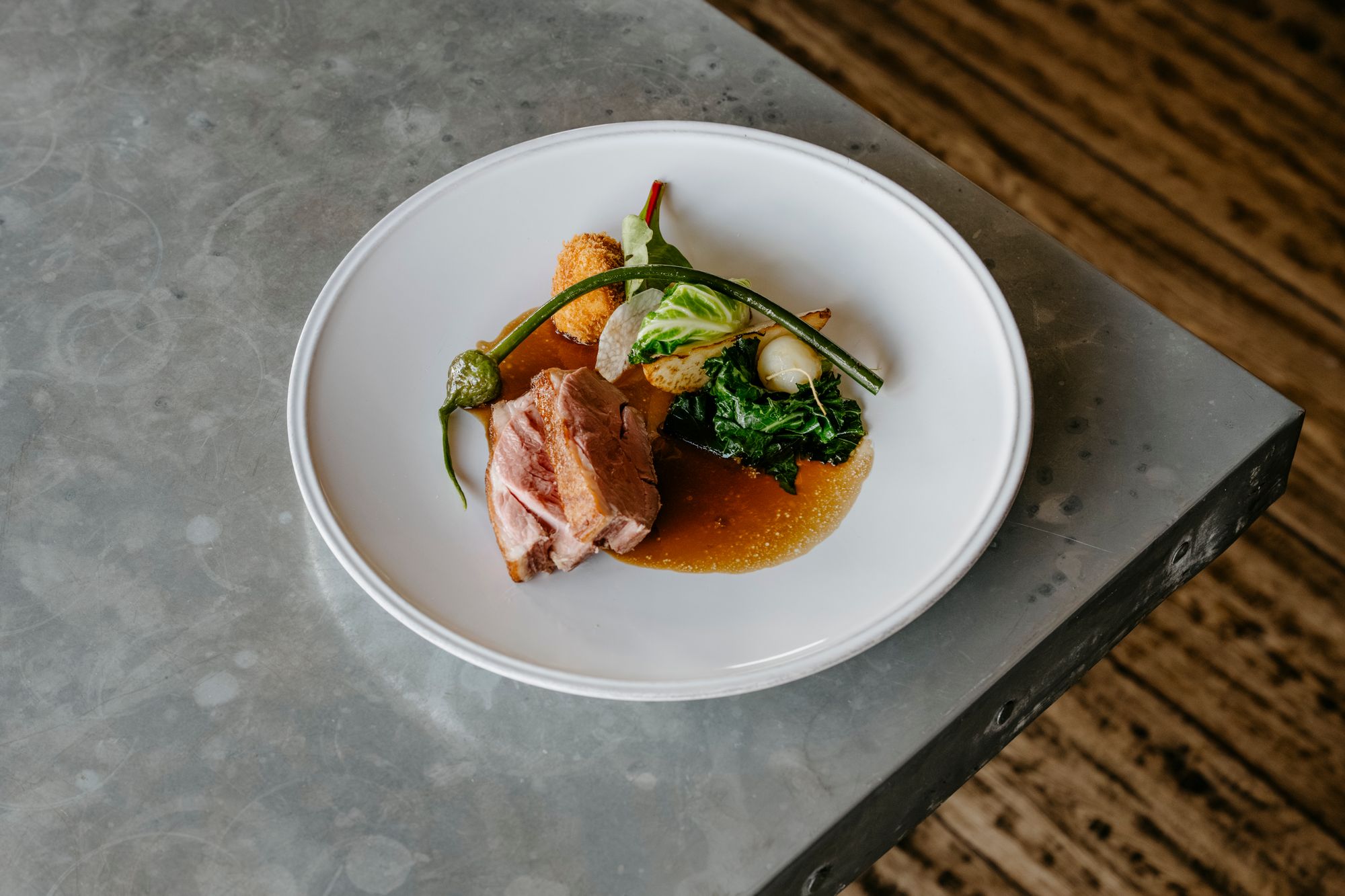
Hulstone widens the lens from a garden to a region. He has held a Michelin star at The Elephant for 20 years – a run of consistency that seems almost un-English – cooking the coast, countryside and his own farm in Devon. His menu reads like a love letter to the West Country: hand-dived Brixham scallops, Devon clotted cream, and the Exmoor lamb whose recipe you’ll find below, with caramelised turnip, rainbow chard, crisp sweetbread and an elderflower vinegar jus.
There’s thrift in it (those sweetbreads), hedgerow in it (the elderflower) and not a scrap of apology. “I wanted to create a menu that showcases some of the outstanding ingredients being produced across the country, paired with English sparkling wines that bring something unexpected to the dining experience,” he says. It is, as Brodie put it in judging, a menu that excites as much as it comforts.
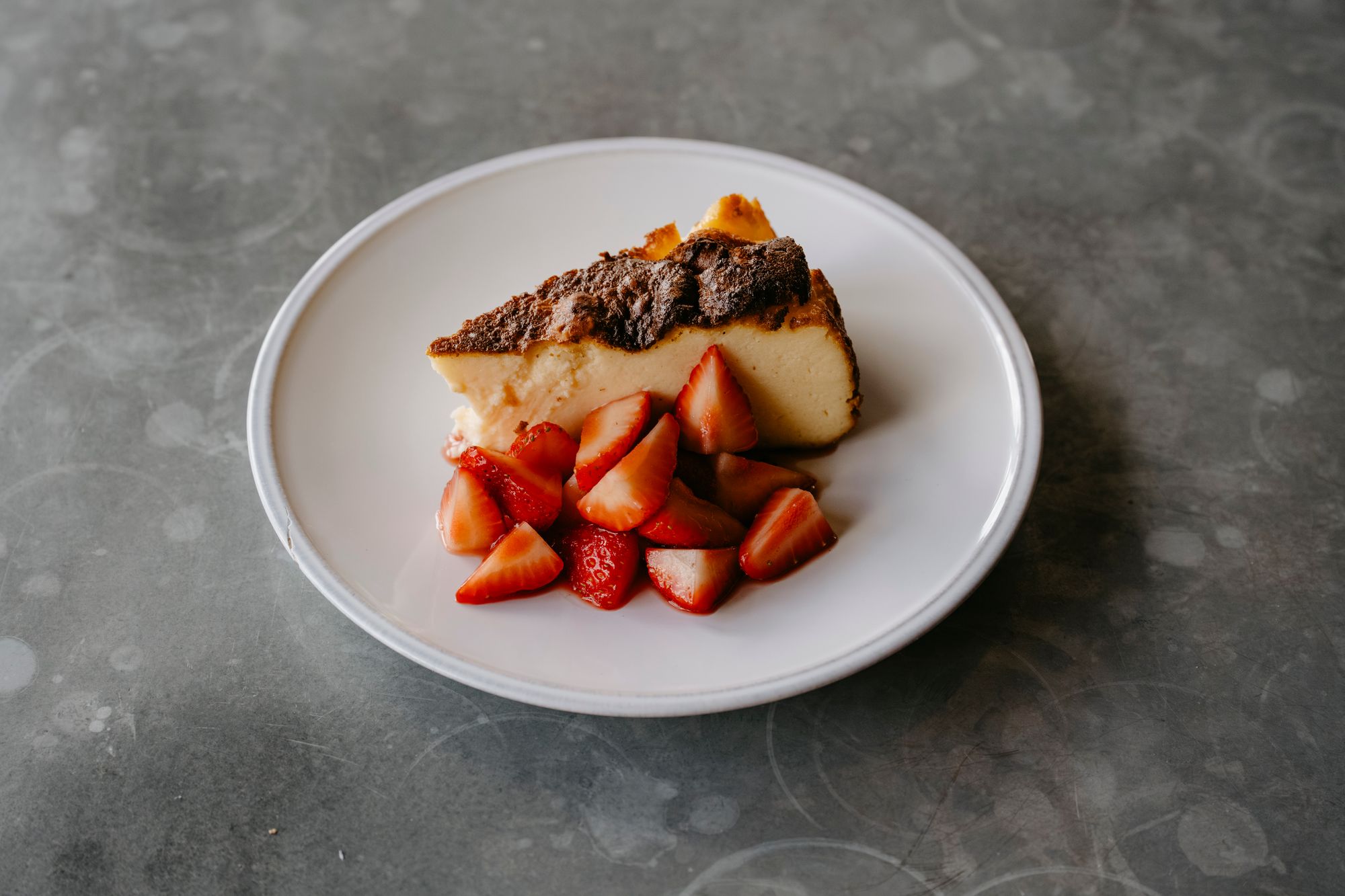
Pack, meanwhile, throws the doors open. Head chef at Three Sheets – the Soho restaurant from the team behind one of London’s most influential cocktail bars, with stints at Fera at Claridge’s and Davies & Brook behind him – he treats British produce as a starting point rather than a destination. A Basque-style burnt cheesecake made with Neal’s Yard goat’s curd and Kent strawberries (that recipe is below, too); pork with sauerkraut, oyster cream and strawberry ketchup.
The same reverence for the larder, sent through a global filter and out the other side. “To me, modern English cuisine is about celebrating the outstanding produce available across the British Isles while remaining open to inspiration from around the world,” he says. Donaghay-Spire, judging, found it full of pairings he’d never come across before.
So what unites a garden in Sussex, a farm in Devon and a Basque cheesecake in Soho? Not a style – the plates could hardly be less alike – but two things underneath them. First, produce: all three begin with superb raw materials and refuse to muck them about. Second, technique: a Roux Scholarship, two decades of Michelin precision, a fine-dining CV deployed behind a cocktail bar.
What separates them is only how far they’ll travel from the source for an idea – from Carabott, who barely leaves the garden, to Pack, who treats the whole world as fair game. And that travelling is the most exciting thing about eating in Britain now: our produce, viewed through a cultural and global lens, with nobody apologising for the borrowing.
Which is the answer, more or less. English food in 2026 is a produce culture that has stopped apologising: sure of its larder, sharp on technique and increasingly happy to look beyond, with no need to choose between the field and the world.
“Taste of England was created to celebrate the very best of English food and wine,” says Susie Goldsmith, Chapel Down’s head of PR. “The winning chefs each presented a unique vision of modern English cuisine, united by outstanding produce, creativity and thoughtful pairings.”
For their part, the three winners each get a one-night-only dinner at The Swan at Chapel Down, cooking their full menus paired with the winery’s sparkling wines – Carabott on 7 July, Pack on 4 August, Hulstone on 15 September, tickets £75 – with dishes from the menus also turning up at Ascot across the summer.
Below are two to make at home. Hulstone’s lamb is a project for a weekend with time to spare; Pack’s cheesecake, mercifully, asks for little more than a blender and a night’s patience, then takes all the credit.
Lamb with caramelised turnip, rainbow chard, sweetbread and elderflower vinegar
By: Simon Hulstone
Serves: 4
Ingredients:
For the lamb rump:
2 x 12oz lamb rumps, cleaned, trimmed and debarked
Garlic
Thyme
Seasoning
For the rainbow chard:
250g rainbow chard, washed
Crispy Lamb Sweetbreads
200g lamb sweetbreads, peeled and soaked
100g panko breadcrumbs
100ml milk
2 large eggs
100g plain flour
For the caramelised turnip purée:
2kg Tokyo turnips
100ml sherry vinegar
100g butter
150g caster sugar
300ml double cream
For the elderflower vinegar jus:
150ml lamb sauce
50ml elderflower vinegar
1 large shallot
For the turnip garnish:
2 Tokyo turnips
Garlic Scapes
4 garlic scapes (or asparagus if unavailable
Method:
1. Begin by preparing the caramelised turnip purée. Peel and chop the Tokyo turnips. In a saucepan, caramelise the butter and caster sugar until golden. Deglaze carefully with the sherry vinegar. Add the turnips and cook until soft. Pour in the double cream and blend until completely smooth.
2. For the elderflower vinegar jus, peel and finely dice the shallot. Sweat gently in a saucepan until softened. Add the elderflower vinegar and reduce slightly. Pour in the lamb sauce and bring to a gentle simmer.
3. Trim the rainbow chard, keeping the stalks and leaves separate. Cut the stalks into batons and blanch until tender. Wilt the chard leaves in a little butter and season to taste.
4. Peel both turnips for the garnish. Cut one into 8 wedges and roast until golden. Thinly slice the second turnip and cut into neat circles using a cutter. Marinate the slices lightly with salt and olive oil.
5. Blanch the garlic scapes in boiling salted water until tender. Refresh in iced water and drain well.
6. For the sweetbreads, blanch gently in simmering water until cooked through. Trim to the desired size and allow to cool. Coat first in flour, then egg and milk mixture, followed by panko breadcrumbs. Deep fry until golden and crisp.
7. Season the lamb rumps well. Seal in a hot pan with garlic and thyme until golden brown. Continue cooking until medium. Remove from the pan and allow to rest before slicing.
8. To serve, slice each lamb rump into 6 pieces. Swipe the caramelised turnip purée down the centre of each plate. Arrange 3 slices of lamb per plate. Add the roasted turnip wedges and crispy sweetbreads on top of the purée. Garnish with the garlic scapes and marinated turnip slices. Spoon around the elderflower vinegar jus and finish with wild herbs such as buckler sorrel or lovage.
Burnt cheesecake with strawberry syrup
By: Ethan Pack
Serves: 12-16
Ingredients:
For the cheesecake:
750g cream cheese
380g goats curd (can be substituted with extra cream cheese)
640g double cream
500g caster sugar
75g plain flour (can use gluten free flour)
10 eggs
5g salt
For the strawberry syrup:
1.4kg strawberries
320g verjus vinegar
6g orange blossom water
To finish:
Fresh strawberries
Method:
1. Preheat the oven to 200C.
2. Line a 10-inch (260mm) springform cake tin with two layers of baking paper.
3. Combine the cream cheese, goats curd, double cream, caster sugar, flour, eggs and salt in a large bowl or container. Blend until completely smooth using a hand blender.
4. Pour the mixture into the prepared cake tin.
5. Bake at 200C for 40 minutes, 170C for 20 minutes and 160C for 20 minutes.
6. Before removing from the oven, check that the cheesecake still has a slight wobble in the centre but does not appear liquid.
7. Allow to cool completely, then refrigerate overnight to set.
8. For the strawberry syrup, add the strawberries and verjus vinegar to a saucepan. Cook slowly over a low heat until the strawberries become completely soft and mushy. Pass the mixture through a fine sieve. Stir through the orange blossom water and transfer to a squeeze bottle or container. Chill until needed.
9. To serve, slice the cheesecake and spoon over the strawberry syrup. Finish with fresh strawberries.
The winning menus run as one-night-only dinners at The Swan at Chapel Down through the summer; details at chapeldown.com



