

New Delhi:
Poland has spent more than four years watching drones reshape warfare on its border and, as its prime minister visits New Delhi, India’s Army is rebuilding itself around the same lesson.
Polish Prime Minister Donald Tusk arrived in New Delhi on Wednesday, bringing with him lessons from a country that has seen the Russia-Ukraine war up close. Defence is among the areas the Ministry of External Affairs has listed for the visit, and Poland’s Finance and Economy Minister, Andrzej Domanski, has said representatives from the country’s defence companies have travelled with the delegation. Tusk will meet Prime Minister Narendra Modi on Thursday.
The war across its eastern border has pushed Warsaw to spend almost 5 per cent of its GDP on defence. Polish drones are now in such demand abroad that some manufacturers are not being able to keep pace with orders. The Polish industry has also been active in Ukraine for over a decade, with the WB Group, for example, supplying reconnaissance systems there since 2014. The European Commission also chose Poland as one of nine founding members of the EU-Ukraine Drone Alliance.
Three lessons from the Russia-Ukraine war stand out. First, drones have moved from the margins of the battlefield to its centre. Cheap, numerous and expendable, they now do work once reserved for artillery and aircraft. Second, the decisive advantage lies less in any single platform than in how quickly a target spotted by one system can be struck by another. Third, electronic warfare punishes systems that cannot adapt, so designs must be updated constantly and supported close to the front.
India’s terrain, however, sets a test Europe does not. Thin air in the Himalayas strains propulsion, communications and navigation, and the Army wants loitering munitions that can be used in mountain warfare along the Line of Actual Control.
Joint Venture
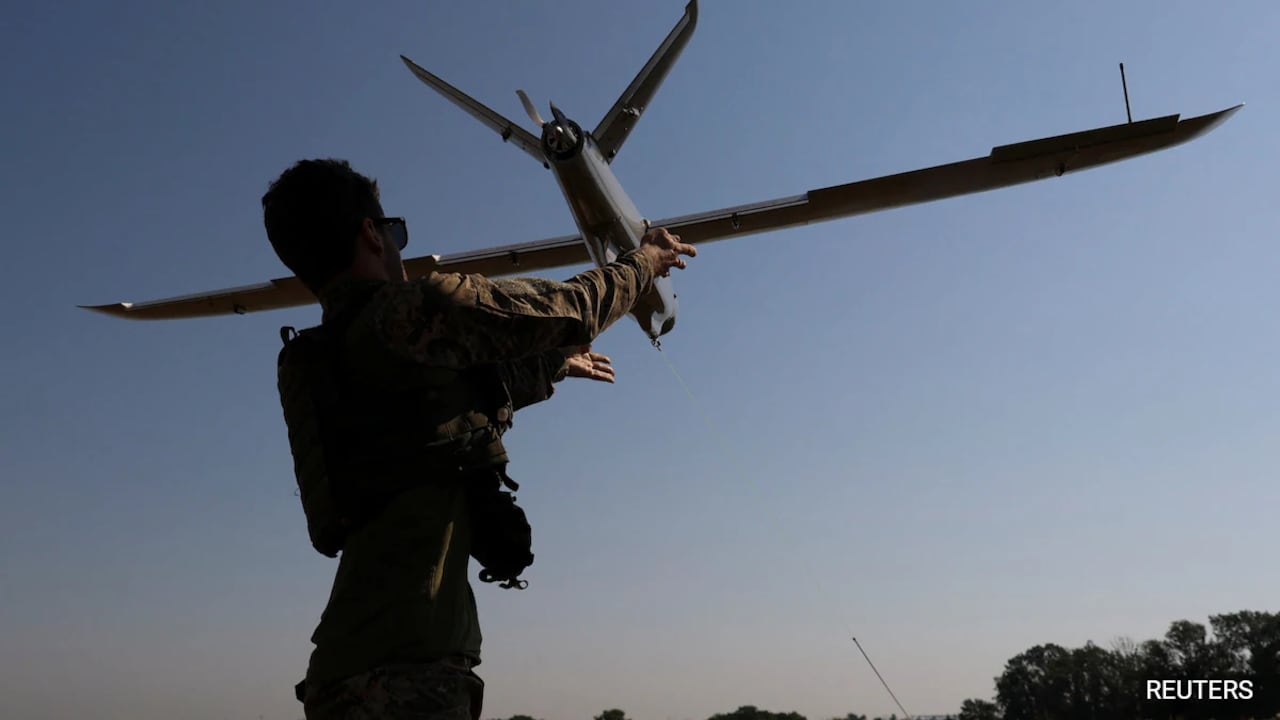
This is where Polish experience and Indian production meet. WB Electronics India Pvt Ltd, popularly known as WB India, is a joint venture with the WB Group, and it already has a system in Indian service. The WB Group is Poland’s largest privately held defence company and its Warmate loitering munition, bought by the Army under emergency procurement, has been through high-altitude trials in Ladakh.
Warmate’s range is 30 km under ground control and can go up to 100 km with the FlyEye reconnaissance drone acting as spotter and relay. It is this kind of sensor-to-shooter pairing that the Army’s new drone formations are built around.
The company’s case rests on that integration. Its TOPAZ battlefield-management system is designed to link reconnaissance and strike assets across land and air. It is also developing concepts that would let a single operator control several platforms. “Our focus is on electronics, integration and the complete system,” a company spokesperson has said.
A production line is under development in the Uttar Pradesh Defence Industrial Corridor and the Indian partner holds the majority stake in the joint venture. The company says it can redesign its systems around Indian components wherever they meet performance requirements. That makes it a complement to Indian manufacturers rather than a competitor.
India’s task is to turn these pieces into a routine. Soldiers should be able to fly drones as naturally as they fire rifles. The Army can buy small systems in bulk, hold precision weapons in reserve and test everything where it will actually be used. Tusk’s visit offers a chance to compare notes with a country which has watched that routine take shape next door.